
 The Standard Group Plc is a multi-media organization with investments in media
platforms spanning newspaper print
operations, television, radio broadcasting, digital and online services. The
Standard Group is recognized as a
leading multi-media house in Kenya with a key influence in matters of national
and international interest.
The Standard Group Plc is a multi-media organization with investments in media
platforms spanning newspaper print
operations, television, radio broadcasting, digital and online services. The
Standard Group is recognized as a
leading multi-media house in Kenya with a key influence in matters of national
and international interest.

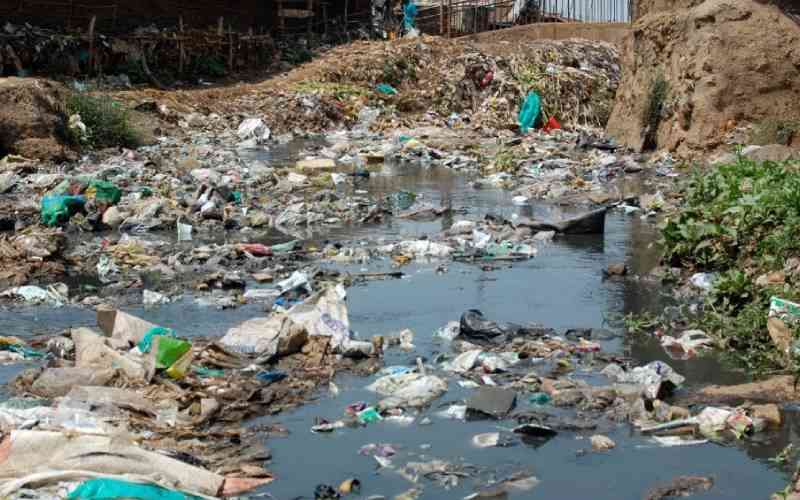
Stagnant sewage sits exposed in open sewer lines. [File, Standard]
In a bid to end one of Kenya's most persistent public health hurdles, the Government of Japan and UNICEF have inked a Sh515 million deal aimed at eradicating open defecation and securing clean water for the nation's most vulnerable populations.
Open defecation is defined by the World Health Organisation as the practice of using open land and waterways as a toilet or latrine. It remains one of the most stubborn barriers to global development and can easily turn a biological necessity into a health gamble, especially during a rainy season when faecal matter can easily be washed over to the land and into nearby settlements.
The three-year initiative, launched in Nairobi, targets the high-risk "frontline" border counties of Garissa, Busia, and Wajir, alongside the densely populated informal settlements of Nairobi. The partnership seeks to overhaul a sanitation landscape where biological necessity has long been a "health gamble.
The deal goes beyond traditional aid, introducing cutting-edge Japanese sanitation and water supply technology to Kenya. Central to the strategy is a "market-based" sanitation approach that focuses on scalable, locally led solutions rather than temporary fixes.
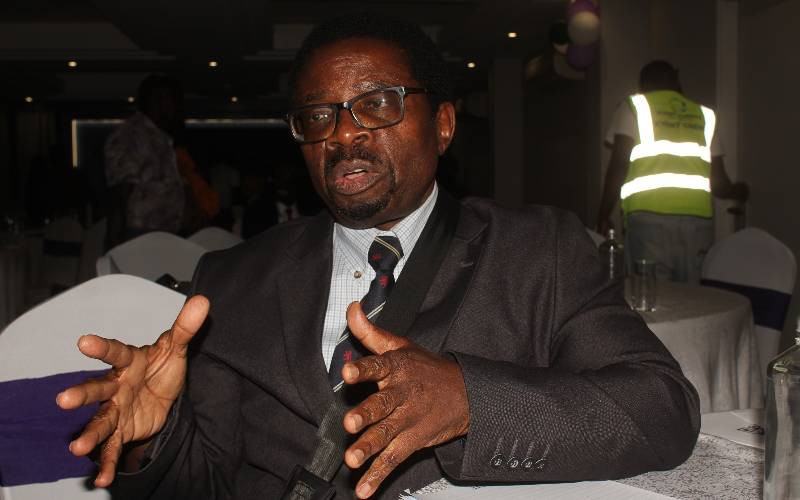
This partnership exemplifies the power of global cooperation in tackling complex health and development challenges," said Dr Shaheen Nilofer, UNICEF Kenya Representative.
H.E. Hiroshi Matsuura, Ambassador of Japan to Kenya, echoed the sentiment, stating the project aligns with the Tokyo International Conference on African Development (TICAD) framework. "Together, we will expand access to WASH services to protect the country's most vulnerable children and families," he emphasized.
The investment comes at a critical time. Despite decades of promises, only 30% of Kenyans have access to a basic, private toilet. This leaves roughly 70% of the population predominantly in rural areas with no choice but to use open fields and bushes.
According to a landmark 2022 study by Egerton University, the sanitation gap is a "perfect cocktail" of economic barriers and infrastructure voids. For a rural household earning less than Sh10,000 a month, a basic pit latrine represents a massive capital investment. Consequently, the poorest Kenyans are 270 times more likely to practice open defecation than the wealthiest.
In Nairobi's informal settlements like Kibera and Mukuru wa Njenga, the crisis shifts from a lack of "will" to a lack of "way." High population density and insecure land tenure make digging pits impossible, while municipal sewer lines remain out of reach.
The result is a grim paradox: residents often pay a "daily tax" to use private toilets, or resort to unhygienic "bucket" methods. A 2018 report found that over two-thirds of women in these settings rely on plastic bags or buckets at night a choice driven by safety and comfort, despite the health risks.
In urban informal settlements like Kibera or Mukuru wa Njenga, the problem isn't necessarily a lack of "will," but a lack of "way." High population density and insecure land tenure often mean there is no space to dig a pit, and no municipal sewer line to connect to. When private "pay-per-use" toilets are the only option, the cost becomes a daily tax on the poor.
While referring to an article published in The Conservation back in 2018, it was discovered that a third of women and girls who share toilets rely on buckets, plastic bags as a means of relieving their bowels at least once during the day and over two-thirds rely on those methods at night, a paradox where the less hygienic option feels more comfortable to the user.
According to a report by the World Health Organisation(WHO) IN 2024 open defecation promotes a vicious cycle of disease and poverty. In countries where open defecation is widespread, children under the age of 5 years have high mortality rates, as well as the highest levels of malnutrition and poverty, and large disparities in wealth.
Ending the centuries-old practice of open defecation remains one of the most complex challenges in public health. Experts from WHO and UNICEF argue that the transition to universal latrine use cannot be achieved solely through infrastructure. It requires a sustained behavioral revolution to establish a new community standard, backed by a permanent commitment to the funding, maintenance, and accessibility of sanitation services."
With UNICEF's long-standing presence and track record of working with Kenyan national and county governments, the project is designed to ensure that solutions are locally relevant and sustainable. As the initiative rolls out over the next three years, it seeks to build a more resilient future where a basic biological necessity no longer poses a threat to life.








 join
join