
 The Standard Group Plc is a multi-media organization with investments in media
platforms spanning newspaper print
operations, television, radio broadcasting, digital and online services. The
Standard Group is recognized as a
leading multi-media house in Kenya with a key influence in matters of national
and international interest.

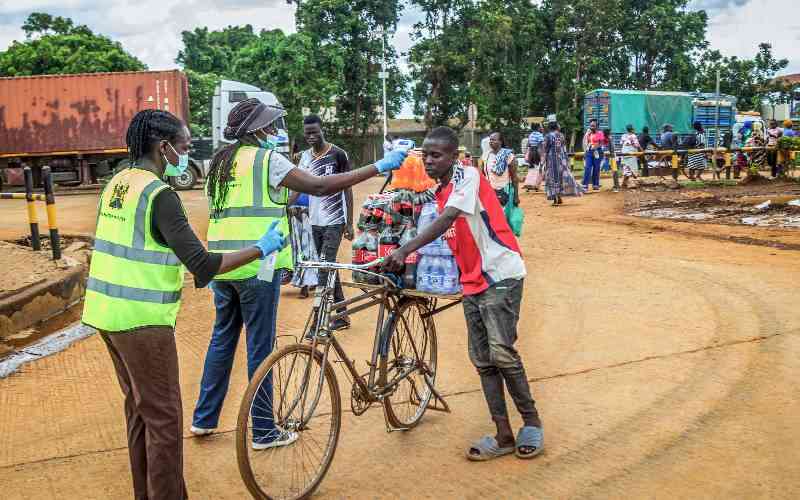
Kenyan Ministry of Health officials check the temperature of travellers and workers at the Busia One Stop Border Post (OSBP) on the Kenya-Uganda border as health authorities step up Ebola screening measures, in Busia on October 12, 2026. [AFP]
Nearly all Ebola cases detected along transit routes in the Democratic Republic of Congo have been identified along informal crossing points, exposing gaps in border surveillance as health authorities intensify efforts to prevent the virus from spreading across the region.
The International Organization for Migration (IOM), the UN migration agency, says 71 confirmed Ebola cases have been identified along population mobility corridors since the outbreak began, with 95 per cent detected along informal routes.
The findings have renewed calls for governments to expand surveillance beyond official border posts to include unofficial crossings, transport hubs, displacement camps and other locations where people gather and move.
Speaking during a UN Geneva press briefing on Tuesday, IOM Regional Ebola Coordinator Dr Andrew Obat Mbala said the findings demonstrated the importance of monitoring population movements in containing the outbreak.
- WHO declares international emergency as Ebola kills over 80 in DR Congo
- Duale: No Ebola in Kenya as DRC outbreak kills 88, reaches Uganda
- Duale: Three suspected Ebola cases tested negative, surveillance upped
- WHO warns of rising Ebola threat as Kenya tightens response efforts
Keep Reading
“The formal points of entry are important, but we need also to look into the informal points of entry and the informal crossing points within points of control within the country,” he said.
IOM said its surveillance work had also identified communities using unofficial routes to move deceased people, bypassing established health controls. Since the outbreak began, the agency has intercepted 258 deceased persons along informal routes and points of control.
The agency is using population mobility mapping to identify high-risk locations, including markets, bus stations, places of worship, displacement sites and major transport corridors, to establish where people are travelling from and whether they have passed through Ebola-affected communities.
Since the outbreak began, IOM has conducted 55 million health screenings across the DRC and 11 neighbouring countries, an average of approximately 350,000 screenings daily.
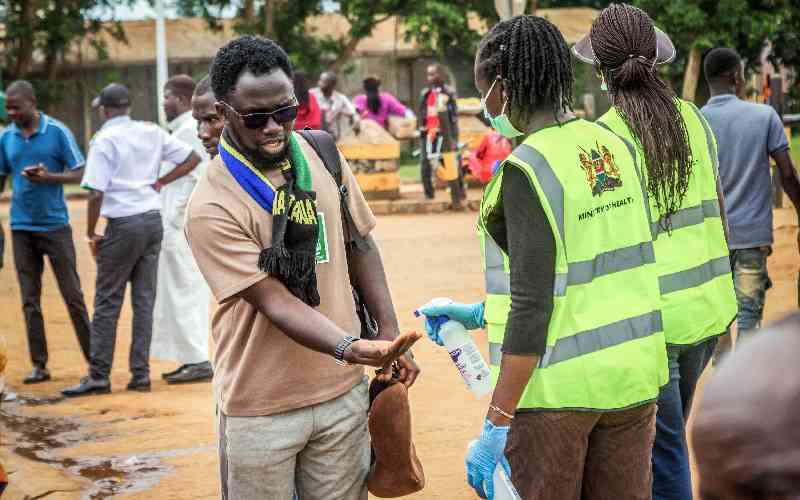
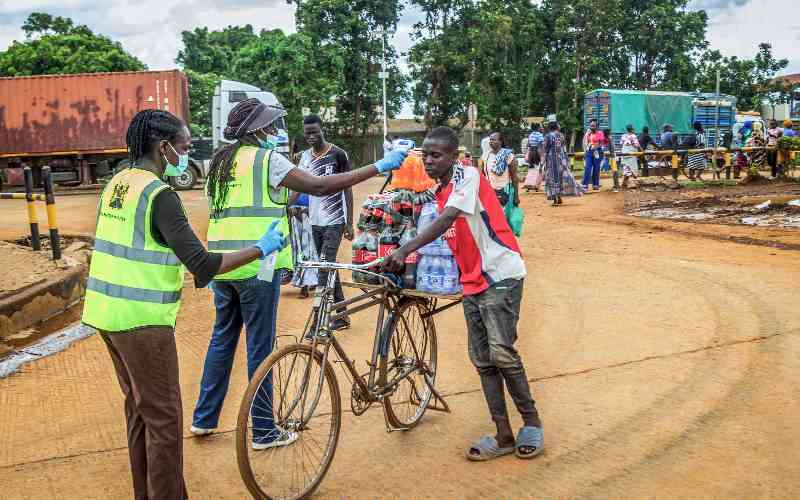
Kenyan Ministry of Health officials check the temperature of travellers and disinfect their hands at the Busia One Stop Border Post (OSBP) on the Kenya-Uganda border as health authorities step up Ebola screening measures, in Busia on October 12, 2026. [AFP]
The agency is also supporting 67 internally displaced persons' sites in the DRC, 50 of which are located in health zones reporting Ebola cases.
However, the expanded surveillance effort faces a significant financial challenge, with IOM reporting a funding shortfall of 59.8 million US dollars against its 110-million-dollar regional preparedness and response plan.
The concerns over informal crossings come as Kenya and Uganda strengthen surveillance at their shared borders, with health officials assessing preparedness at some of the busiest points of entry in the region.
Port health teams from Kenya and Uganda have this week assessed readiness at Busia, Malaba and Lwakhakha crossings under a regional initiative supported by the East, Central and Southern Africa Health Community (ECSA-HC), with funding from the World Bank through the Health Emergency Preparedness, Response and Resilience Programme.
The exercise, conducted in support of the Ministry of Health's Division of Port Health Services, with IOM as a partner, seeks to identify weaknesses in border screening, surveillance, infection prevention and control, and emergency response.
ECSA-HC Director General Dr Ntuli Kapologwe said border crossings remained the first line of defence against the spread of infectious diseases, but their effectiveness depended on the people and systems supporting them.
“Ebola can cross a country, and a continent, in days, by road and by air. A Point of Entry is the first line of defence, and it is only as strong as the people, procedures and information flows behind it,” he said.
After reviewing country preparedness and training on the assessment tool, the teams conducted physical inspections at the three crossings before feeding their findings into a joint readiness calculator to identify gaps requiring urgent attention.
Kapologwe said the preparedness package had already been implemented at nine points of entry along three borders: between the DRC and Zambia, Zambia and Zimbabwe, and Rwanda and the DRC.
“Our ambition is larger,” he said.
The seven-point regional package includes baseline readiness assessments, simulation exercises, harmonised standard operating procedures, event-based and digital surveillance, safe-border infection prevention and control, and laboratory readiness.
Kenya National Public Health Institute Head of Disease Surveillance Dr Daniel Lang'at said strengthening prevention at border points was critical to containing the virus before it spread further.
“If we focus on preventing the disease, this is our priority now we can be able to contain the virus. We believe this package that has been launched today will support our efforts as a country,” he said.
Kenya has so far confirmed nine Ebola cases and two deaths linked to a single transmission cluster, with 211 people in isolation, according to the figures provided by health officials.
Lwakhakha has been identified as a high-risk entry point, raising concerns over the possibility of the virus entering through cross-border movement from neighbouring countries.
The assessment findings are expected to guide further interventions to strengthen screening, surveillance and emergency response along the Kenya-Uganda corridor.
Meanwhile, the Ministry of Health says it has traced 97 per cent of people who came into contact with Kenya's Ebola index patient and subsequent cases, a level it says exceeds global standards.
Public Health and Professional Standards Principal Secretary Mary Muthoni said surveillance had been extended beyond people already in quarantine to identify possible transmission chains early.
“Our surveillance efforts are also being extended beyond those already in quarantine to ensure that any possible chain of transmission is identified early and contained,” she said.
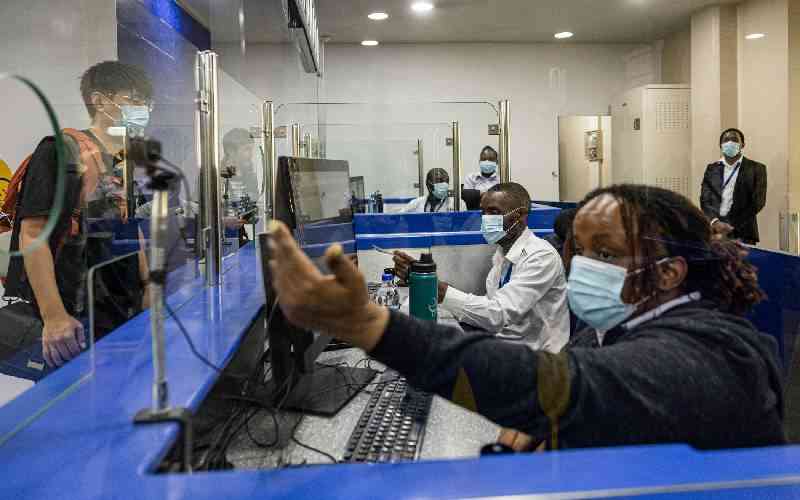
She said counties had also been asked to establish quarantine facilities as a precaution, while personal protective equipment was being distributed to high-risk regions, particularly those bordering neighbouring countries.
“We are also prioritising the distribution of protective equipment to high-risk regions, particularly those around our points of entry,” she said.
The Ministry has urged Kenyans to maintain hand hygiene, avoid direct contact with suspected or confirmed Ebola patients and report suspected cases through its hotline, 719.
Muthoni said early detection remained critical in containing the outbreak, urging the public to remain vigilant without panicking.
The World Health Organisation has cautioned against travel restrictions, warning that measures which discourage people from reporting their movements or seeking screening could push them towards less visible routes and make surveillance more difficult.
It has instead called for stronger cross-border coordination, early detection and community engagement to prevent further transmission.
The questions surrounding the outbreak also extend to the transparency of investigations into the imported cases. Kenya's Ministry of Health is yet to publicly release a detailed epidemiological and genomic investigation report explaining the relationship, if any, between the Bundibugyo virus detected in the Nigerian and Kenyan imported cases.
Questions remain over whether the viruses belong to the same transmission chain, share closely related genetic sequences or represent separate introductions of the strain.
The findings, including any sequencing analysis, should clarify whether there was a link between the two cases, the possible routes of transmission and the implications for regional surveillance.
The Ministry, alongside KEMRI, the National Public Health Laboratory, WHO, Africa CDC and other agencies involved in the investigations, are expected to release the analysis established and when a comprehensive report will be made public.








 join
