
 The Standard Group Plc is a multi-media organization with investments in media
platforms spanning newspaper print
operations, television, radio broadcasting, digital and online services. The
Standard Group is recognized as a
leading multi-media house in Kenya with a key influence in matters of national
and international interest.
The Standard Group Plc is a multi-media organization with investments in media
platforms spanning newspaper print
operations, television, radio broadcasting, digital and online services. The
Standard Group is recognized as a
leading multi-media house in Kenya with a key influence in matters of national
and international interest.

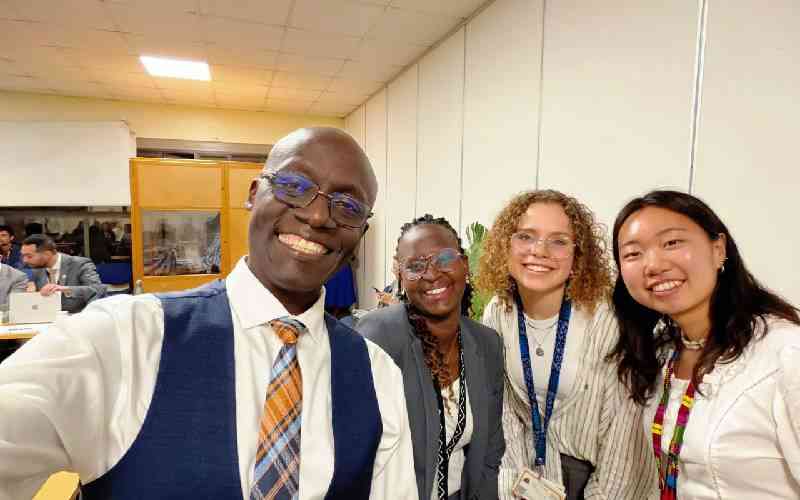
Kenya has cemented its position as a global trailblazer in technology governance following the adoption of the first-ever United Nations resolution on the environmental sustainability of artificial intelligence (AI) systems at the seventh session of the UN Environment Assembly (UNEA-7). The landmark resolution, championed by Kenya and negotiated under the theme "Advancing sustainable solutions for a resilient planet," marks a turning point in global efforts to align AI innovation with environmental protection.
At the forefront of this diplomatic success is Ambassador Philip Thigo, MBS, Kenya's Special Envoy on Technology, whose leadership has been pivotal in elevating Africa's voice in a debate historically dominated by the Global North. The resolution firmly establishes the continent not as a passive recipient of AI systems but as a decisive contributor to their shaping, governance, and sustainable deployment.
"Africa cannot afford to be an observer in the age of intelligence," Amb. Thigo said following the adoption of the resolution. "This agreement ensures that global AI development reflects the needs and realities of the Global South."
The resolution underscores that AI technologies must be developed and deployed in ways that actively support climate resilience, environmental conservation, and ecological restoration. It acknowledges the growing environmental footprint of AI-from energy-intensive data centres to resource-heavy hardware manufacturing-and calls for global standards that ensure sustainability across the AI lifecycle.
A central component of the agreement is the push to strengthen sovereign AI capabilities in developing countries. This includes ensuring equitable access to high-quality, interoperable environmental data, which is essential for climate modelling, biodiversity monitoring, disaster management, and green innovation. The resolution also mandates technical and capacity-building support to help countries build and govern their own AI ecosystems.
Additionally, it tasks the UN Environment Programme (UNEP) with scaling up scientific research and analysis on the environmental effects of AI systems. This evidence will guide policymakers, governments, and industry leaders in crafting AI solutions that contribute positively to the planet rather than harm it.
For Kenya, the achievement is both diplomatic and strategic. It reinforces the country's ambition to serve as a continental hub for ethical and inclusive digital transformation. Through Amb. Thigo's influence and collaborative approach, Africa has secured a defining role in global AI governance conversations-especially those intersecting technology, climate, and sustainability.
The resolution is expected to shape future environmental and technological policies globally, setting a framework that encourages innovation while safeguarding planetary health. It also opens new pathways for African nations to participate meaningfully in the rapidly evolving AI landscape, ensuring that solutions are informed by the continent's unique experiences and ecological priorities.
As the world races deeper into the age of artificial intelligence, Kenya's leadership has signaled that sustainable, inclusive, and equitable AI is not just possible-it is imperative. Through this historic milestone, Africa has stepped firmly into the arena, ready to co-author the technological future that will define generations to come.







 join
join