×

The Standard e-Paper
Truth Without Fear
 The Standard Group Plc is a multi-media organization with investments in media
platforms spanning newspaper print operations, television, radio broadcasting,
digital and online services. The Standard Group is recognized as a leading
multi-media house in Kenya with a key influence in matters of national and
international interest.
The Standard Group Plc is a multi-media organization with investments in media
platforms spanning newspaper print operations, television, radio broadcasting,
digital and online services. The Standard Group is recognized as a leading
multi-media house in Kenya with a key influence in matters of national and
international interest.
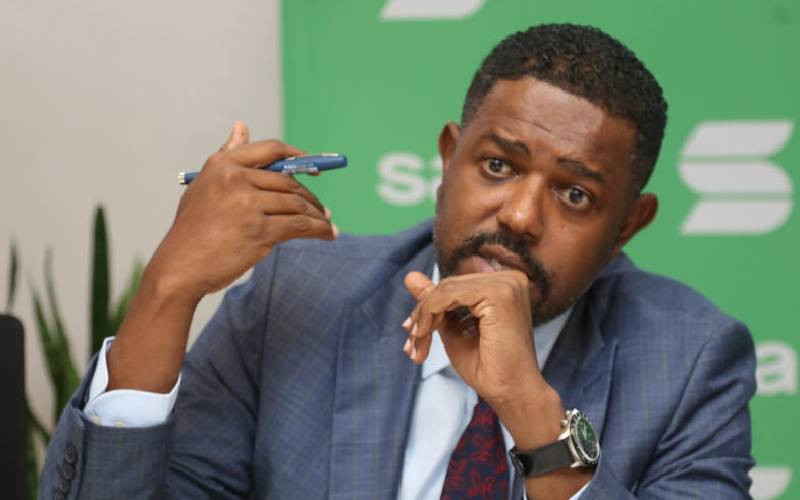
The Kenya National Chamber of Commerce and Industry (KNCCI) has rejected a Bill seeking to establish a statutory body of Business Membership Organisations (BMOs) in the country.
KNCCI officials said the government should instead settle for their business entity and make it a statutory body, as indicated in an earlier letter by President William Ruto.
KNCCI director representing the Coast region Shakir Swaleh and his lower Eastern counterpart Mutavi Kithu asked the Ministry of Investment, Trade and Industry (MITI) to give BMOs a chance to discuss the draft Public-Private Engagement Bill, 2025, and forward their recommendations to the government.
Swaleh argued that KNCCI has membership up to the grassroots in all 47 counties and was therefore best suited to become a statutory body for BMOs.
He called for fresh public participation, claiming that in the Coast region, it was done only in Mombasa County while Nairobi County was skipped. Swaleh claimed that the exercise was done only in five counties.
“KNCCI has membership up to the grassroots level and ought to have been involved fully in the public participation process. We have rejected the Bill, and we have returned it to the sender. We are asking all the BMOs to stand with us,” he said.
Kithu said the president had directed that the Bill be formulated in collaboration with KNCCI and MITI but was only informed about the draft when it was presented to the counties for public participation.
“We only knew about the Bill when the ministry was engaging the counties. The president had clearly indicated the statutory body would be funded by KNCCI for its operation, but this bill is not clear on who will fund Business Council of Kenya,” he argued.
In a statement on Wednesday, Investment Promotion Principal Secretary Abubakar Hassan said a policy and Bill have been developed to strengthen, not diminish, the role of private sector actors in national development.
“The policy and Bill have been developed to strengthen, not diminish, the role of private sector actors in national development. They provide a structured, predictable and transparent framework for collaboration between the government and private sector organisations across all sectors of the economy,” he said.
Hassan explained that Kenya’s current public–private engagement landscape has evolved over time, producing a wide array of BMOs representing different industries, counties and thematic interests, but this has resulted in fragmented advocacy and hence the need for a coherent national dialogue on business reforms.
“These gaps have often slowed the pace of policy reform and undermined the collective ability of the private sector to influence the business environment in a unified and impactful manner,” he said.
The PS said that the Public–Private Engagement Policy therefore, seeks to strengthen coordination, improve coherence and create a clear institutional anchor for structured dialogue.
“Its goal is to foster a transparent and inclusive environment where private sector concerns are consolidated, prioritised and addressed through evidence-based engagement. The policy supports the growth and empowerment of BMOs by enhancing their capacity to participate effectively in national policy formulation processes,” he said.
Stay informed. Subscribe to our newsletter
Hassan further explained that the Bill operationalises the policy by establishing a coordinated mechanism for engagement and provides definitions that safeguard the independence of BMOs and affirm their continued role as the primary voice of the private sector.
“Its object is to establish a national framework for engagement, guide the conduct of these engagements and create an institution: the BCK to facilitate coordination,” he said.
He assured that the BCK will not replace or absorb BMOs but will serve as a platform through which BMOs collectively articulate priority issues that require government attention.
The PS said the Act will apply to the public and private sectors, ensuring mutual accountability and consistency.
“Under the Bill, BMOs retain their autonomy, membership structures, leadership and advocacy mandates,” he said.

Subscribe to our newsletter and stay updated on the latest developments and special offers!










 join
join