×

The Standard e-Paper
Kenya's Bold Newspaper
 The Standard Group Plc is a multi-media organization with investments in media
platforms spanning newspaper print operations, television, radio broadcasting,
digital and online services. The Standard Group is recognized as a leading
multi-media house in Kenya with a key influence in matters of national and
international interest.
The Standard Group Plc is a multi-media organization with investments in media
platforms spanning newspaper print operations, television, radio broadcasting,
digital and online services. The Standard Group is recognized as a leading
multi-media house in Kenya with a key influence in matters of national and
international interest.

Audio By Vocalize
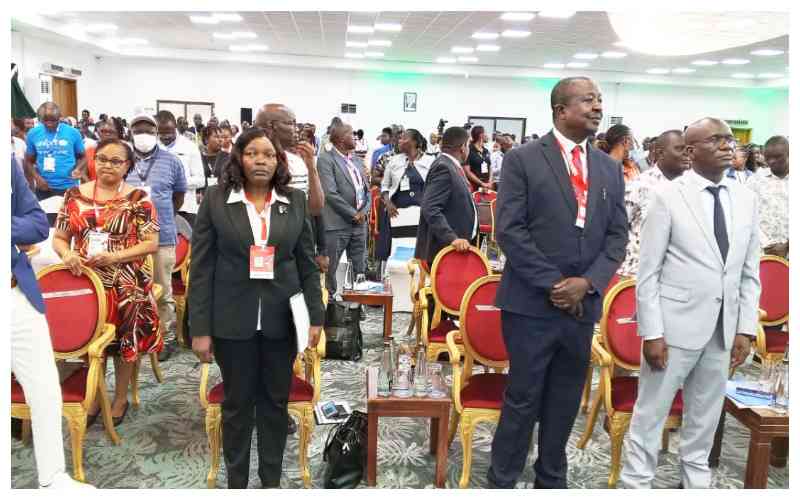
Public policy experts have called for Kenya to strengthen value chains, invest in infrastructure and empower youth to accelerate inclusive economic growth.
The professional who attended this year’s Kenya Institute for Public Policy Research and Analysis (KIPPRA) called for improved competitiveness across key sectors of the economy.
The ninth conference held at the Pride Inn Flamingo beach resort in Mombasa county brought together more than 700 delegates drawn from the public and private sectors, academia, non-governmental organizations, youth groups and marginalized communities.
Speaking during the conference, KIPPRA executive director Dr Eldah Onsomu said the discussions focused on agriculture, manufacturing, the digital economy, blue economy, e-mobility, trade, data ecosystems and competitiveness.
According to Dr Onsomu, the conference generated recommendations aimed at increasing productivity, improving value addition and addressing gaps within production systems and value chains.
Among the proposals discussed were investments in infrastructure development, cold storage facilities and stronger market linkages to reduce post-harvest losses and improve efficiency.
“We have noted there is a need to have investments in infrastructure, cold rooms and markets to deepen industrialisation. It was also noted that a lot of products go to waste because of poor logistics,” she noted.
Delegates also highlighted the need for improved logistics systems, saying weak transport and distribution networks continue to hinder producers and lead to wastage.
The conference further emphasized the importance of regional markets within Africa, especially under the African Continental Free Trade Area, as an opportunity for Kenyan products to access wider markets and boost trade competitiveness.
Youth empowerment emerged as a central theme during the discussions, with delegates noting that Kenyans aged 34 years and below make up about 72 percent of the country’s population.
Dr. Onsomu said young people remain critical both as consumers and providers of labour in the economy, making their inclusion essential in national development.
“We need to focus on groups that have been left behind which include youth, women and the marginalised. One gap that has been identified is that youth have no access to opportunities,” she said.
Participants called for increased investment in technology, digital skills, the blue economy and emerging sectors such as e-mobility to ensure young people and marginalized groups benefit from new economic opportunities.
They also identified lack of access to information as a major challenge facing youth and emerging enterprises. Stakeholders urged institutions to strengthen knowledge sharing, innovation awareness and capacity building initiatives.
Stay informed. Subscribe to our newsletter
Delegates further underscored the importance of collaboration between government, private sector players, academia and development partners in strengthening value chains and implementing effective policy frameworks.
The discussions also highlighted the role of universities and Technical and Vocational Education and Training (TVET) institutions in equipping youth with practical skills required across various industries.
Dr. Onsomu urged counties to identify at least two or three strategic value chains that can spur economic growth, create quality jobs and enhance food security.
During the conference, KIPPRA and partners including UNICEF launched policy products focusing on smarter budgeting for children and the impact of climate change on children.
Meanwhile, representatives from the creative economy sector called for greater inclusion in policy conversations.
Mr James Anzere, co-founder and chief legal officer of Vesa Interactive Entertainment, said the creative industry should be treated as a serious economic sector rather than merely a form of entertainment.
“Africa generated about one billion US dollars from the creative economy last year, with Kenya contributing approximately 46 million US dollars,” he said.
However, he observed that much of the revenue still benefits external players instead of local creatives.
He called for stronger intellectual property protection, market integration and collaboration among creatives, government agencies, researchers and marketers to help Kenya compete globally.
Anzere added that the African Continental Free Trade Area presents an opportunity for African countries to integrate markets, ease mobility and improve distribution of creative products across the continent.
Participants called for sector-specific engagements to ensure recommendations are implemented effectively and translated into policies that strengthen production systems and value chains across the country.
Subscribe to our newsletter and stay updated on the latest developments and special offers!













 join
join