×

The Standard e-Paper
Truth Without Fear
 The Standard Group Plc is a multi-media organization with investments in media
platforms spanning newspaper print operations, television, radio broadcasting,
digital and online services. The Standard Group is recognized as a leading
multi-media house in Kenya with a key influence in matters of national and
international interest.
The Standard Group Plc is a multi-media organization with investments in media
platforms spanning newspaper print operations, television, radio broadcasting,
digital and online services. The Standard Group is recognized as a leading
multi-media house in Kenya with a key influence in matters of national and
international interest.

Audio By Vocalize

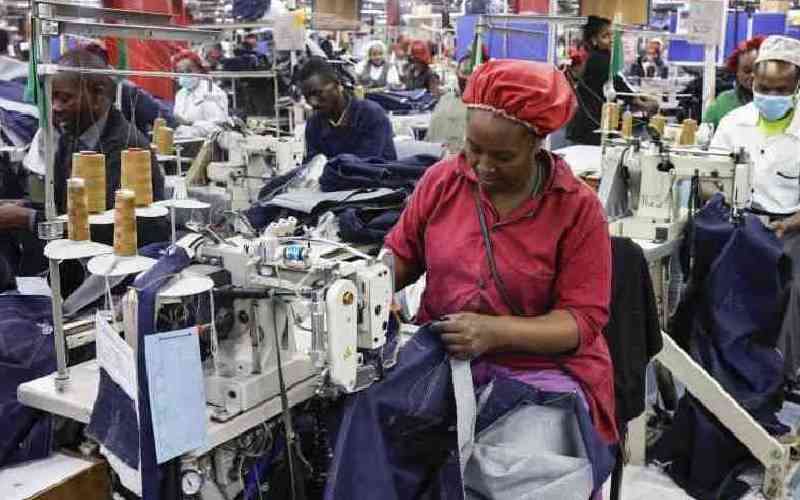
Workers in the United Aryan textile factory at the Export Processing Zone in Nairobi on February 4, 2025. [File, Standard]
Micro, Small and Medium Enterprises (MSMEs), the private sector and young people have been challenged to venture more into manufacturing and value addition.
This, as Kenya seeks to create jobs, expand exports and increase the competitiveness of locally made products in both local and international markets.
Speaking during the World Accreditation Day 2026 celebrations in Nairobi on Wednesday, Trade Principal Secretary Juma Mukhwana said Kenya has already put in place policies and opened up markets, but local production remains too low to meet demand.
“We have opened up markets locally and internationally and put in place supportive policies. We now have a huge market, yet we are unable to supply enough products,” he said.
Mukhwana emphasized that manufacturing remains one of the country's largest employers after the public sector and has the potential to absorb thousands of young people entering the job market every year.
He challenged young people to shift their mindset from seeking employment to creating jobs through enterprise, innovation and value addition using locally available raw materials.
“Many of us leave colleges and universities looking for jobs. We need to reorient our thinking towards creating jobs from the resources that are available around us,” he said.
The PS explained that Kenya can significantly reduce unemployment by moving beyond primary production and investing more in processing, manufacturing and value addition.
He said that industrial growth will not only create jobs but also help the country earn more from exports while reducing reliance on imported goods.
However, Mukhwana emphasized that production alone is not enough, noting that quality and credibility are increasingly becoming key determinants of competitiveness in global markets.
“Production alone is not enough. Competitiveness today depends on compliance with standards, reliable testing and certification, traceable measurements and confidence in regulatory systems,” he said
Stakeholders underscored the role of accreditation in strengthening quality infrastructure, facilitating trade and ensuring consumer confidence.
This year's World Accreditation Day theme, “Innovation, Trust and Sustainability: The Power of Accreditation,” highlights the role accreditation plays in promoting technological advancement, building confidence in products and services and supporting sustainable economic growth.
Stay informed. Subscribe to our newsletter
According to Kenya Accreditation Service (KENAS) Chief Executive Officer Walter Ongeti, strong and credible quality systems are essential for industries seeking to compete effectively in local, regional and international markets.
“For our industries to compete effectively, whether in manufacturing, agro-processing, pharmaceuticals, construction materials, chemicals or emerging green and digital sectors, they must meet clear, credible and internationally accepted quality benchmarks,” he said.
Ongeti noted that accreditation strengthens institutional trust, protects consumers and enhances the long-term resilience of industries and markets.
“It affirms that strong and credible national quality systems are essential not only for competitiveness and consumer protection, but also for fostering innovation, strengthening trust and ensuring long-term sustainability,” he said.
“As we mark World Accreditation Day 2026, let us reaffirm our shared responsibility to build industries that are not only productive, but also credible, competitive and globally trusted,” said Mukhwana.
Subscribe to our newsletter and stay updated on the latest developments and special offers!














 join
join