×

The Standard e-Paper
Truth Without Fear
 The Standard Group Plc is a multi-media organization with investments in media
platforms spanning newspaper print operations, television, radio broadcasting,
digital and online services. The Standard Group is recognized as a leading
multi-media house in Kenya with a key influence in matters of national and
international interest.

Audio By Vocalize
Kenya is seeking private investment to expand its electricity transmission network as rising demand, infrastructure constraints and the cost of new power lines put pressure on the national grid.
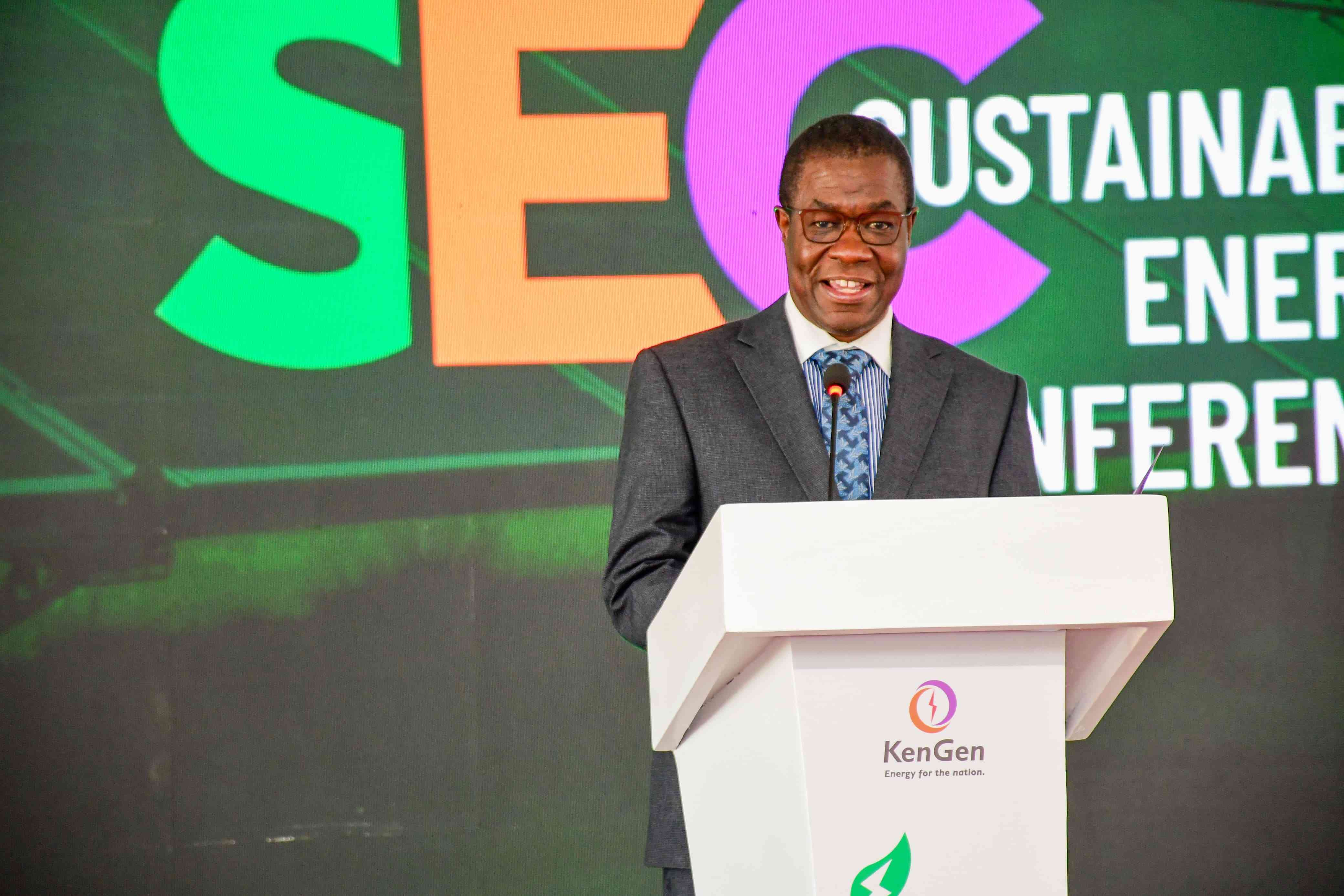
Energy Cabinet Secretary James Opiyo Wandayi said generation capacity must expand alongside transmission infrastructure to meet growing electricity demand and ensure industries and households receive reliable power.
Speaking during the opening of the 2026 Sustainable Energy Conference in Olkaria on Thursday, November 26, Wandayi called on private investors to support the development of transmission infrastructure through public-private partnerships.
He warned that power plants without adequate transmission infrastructure cannot deliver their full generation capacity, while transmission lines without sufficient electricity supply risk remaining underutilised.
The government is also seeking investment in battery storage systems to capture electricity generated from renewable sources, particularly solar and wind, and release it when demand rises.
“I also want to see more storage on our grid. Battery systems will allow us to capture more of our solar and wind energy and release it when Kenyans need it most,” Wandayi said.
The push comes amid infrastructure constraints in Kenya's electricity transmission network.
The Ministry of Energy's draft National Energy Policy 2025–2034 identifies inadequate transmission capacity, funding shortages and high technical losses as challenges affecting the sector.
It warns that insufficient infrastructure can lead to overloaded transmission lines and curtailed electricity generation.
Kenya had 9,484 circuit kilometres of transmission lines rated at 132kV and above as of December 2024, according to the policy document.
The Kenya Electricity Transmission Company (KETRACO) was implementing projects covering about 2,500 kilometres, with completion targeted for 2027.
The government has already begun opening the transmission sector to private investment. In December 2025, KETRACO signed a Sh40.4 billion public-private partnership agreement with Africa50 and India's Power Grid Corporation to construct two high-voltage transmission lines.
The projects include a 180-kilometre Lessos–Loosuk line to evacuate up to 300 megawatts of wind power from the Lake Turkana Wind Power project and a 72-kilometre Kibos–Kakamega–Musaga line to strengthen electricity supply in Western Kenya.
KETRACO has estimated that expanding the country's transmission network by another 8,000 kilometres over 20 years would require about US$5 billion.
The public-private partnership model is intended to bring private capital into infrastructure development, easing the financing burden on the government while supporting the expansion of the national grid.
Stay informed. Subscribe to our newsletter
The International Energy Agency (IEA) has also identified energy storage, access to transmission networks and improved grid flexibility as priorities for Kenya's transition to renewable energy.
In a March 2026 assessment, the agency warned that expanding electricity generation alone would not address the pressures facing the power system, pointing to the need for infrastructure and regulatory changes to accommodate more renewable energy while maintaining a reliable supply.
Kenya generates most of its electricity from renewable sources, including geothermal, hydro, wind and solar. Wandayi put the share at about 90 per cent, attributing the achievement to decades of investment and partnerships between the government and private sector.
He identified geothermal energy as the backbone of the country's electricity supply because it provides reliable power regardless of weather conditions and supports the integration of intermittent wind and solar energy into the national grid.
Kenya's electricity demand has continued to grow alongside economic activity and household connections.
The Energy and Petroleum Regulatory Authority's (EPRA) 2025/2026 Energy and Petroleum Statistics Report recorded peak demand of 2,514.28 megawatts on June 29, 2026, an increase of 8.55 per cent from the previous year.
Wandayi said the next phase of the country's energy development must focus on converting its renewable electricity advantage into industrial production, employment and economic growth.
“The question before us now is how we turn clean power into factories, jobs and prosperity,” he noted.
The government is also pursuing universal electricity access through rural electrification and the Last Mile Connectivity Programme, alongside mini-grids and off-grid solar systems to reach households beyond the national grid.
Wandayi said Kenya's participation in Mission 300, a joint initiative by the World Bank and African Development Bank, would support efforts to connect 300 million Africans to electricity by 2030.
He urged county governments to prepare energy plans in line with national priorities, noting that coordination would accelerate electricity access and development across the country.
The Cabinet Secretary also sought to reassure investors that the government would maintain predictable policies and regulations covering power purchase agreements, licensing and electricity tariffs.
Working with EPRA, the Ministry intends to strengthen the regulatory framework to balance investor returns with affordable electricity for consumers.
“The Government will continue to protect consumers from unreasonable costs. Our task is to strike the right balance, so that power is affordable for Kenyans and investment is rewarding for those who build it,” he said.
Beyond Kenya, Wandayi said the country was strengthening regional electricity trade through existing connections with Ethiopia, Uganda and Tanzania and its participation in the Eastern Africa Power Pool.
He said regional electricity cooperation would allow countries to share clean energy resources and support industrialisation across the continent.
The 2026 Sustainable Energy Conference, organised by Kenya Electricity Generating Company (KenGen), is being held in Olkaria under the theme Powering Africa's Green Industrial Revolution.

Subscribe to our newsletter and stay updated on the latest developments and special offers!