×

The Standard e-Paper
Truth Without Fear
 The Standard Group Plc is a multi-media organization with investments in media
platforms spanning newspaper print operations, television, radio broadcasting,
digital and online services. The Standard Group is recognized as a leading
multi-media house in Kenya with a key influence in matters of national and
international interest.
The Standard Group Plc is a multi-media organization with investments in media
platforms spanning newspaper print operations, television, radio broadcasting,
digital and online services. The Standard Group is recognized as a leading
multi-media house in Kenya with a key influence in matters of national and
international interest.

Audio By Vocalize
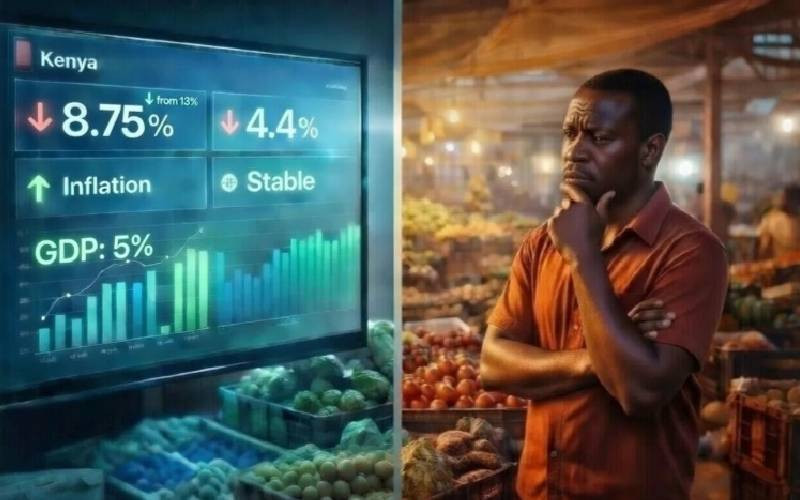
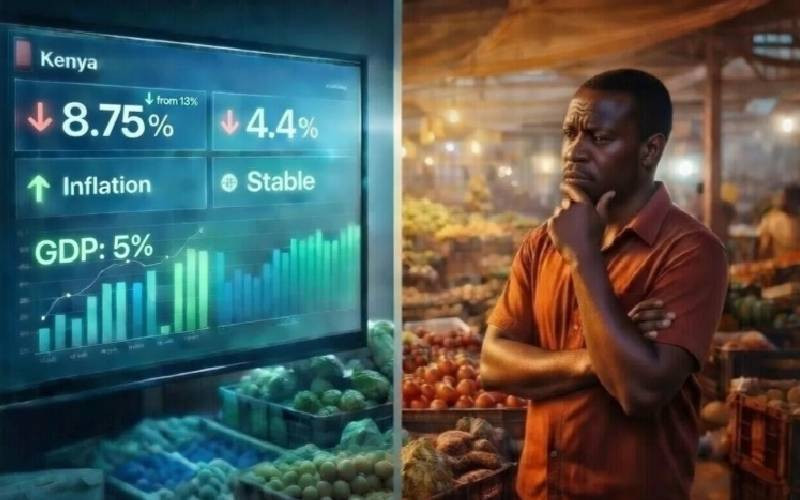
Kenya‘s Central Bank (CBK) just cut rates to 8.75 per cent. This marks ten consecutive cuts and a total of 425 basis points of easing since August 2024. Inflation is at 4.4 per cent.
The shilling remains stable, credit growth is at 6.4 per cent, and the gross domestic product (GDP) growth is expected to exceed five per cent.
By every measure, the patient is recovering. However, if you walk into Nairobi’s downtown before sunrise, you‘ll see traders reorganising their entire business around uncertainty.
Sit in an interview panel at a midsize firm, and you‘ll hear managers explain why three open positions remain unfilled. It’s no longer about expansion; it’s about survival.
The vitals are stable, but the patient is terrified. This disparity represents Kenya‘s main challenge right now. It’s not the rate cuts or growth projections.
It’s the divide between what the data shows and what people think. It’s the difference between recovery on paper and confidence in daily life.
This week’s signal
Kenya’s situation becomes clear when you consider the rest of the continent. Nigeria maintains rates at 27 per cent as it fights inflation that peaked at over 34 per cent.
Zimbabwe keeps rates at 35 per cent, trying to stabilise confidence in a currency that people don’t trust. Ghana cut its rate from 30 per cent to 18 per cent, but not until it rebuilt reserves and nearly saw the currency collapse.
Egypt cut to 25 per cent only after inflation hit 38 per cent. Malawi holds rates at 26 per cent with inflation at 33 per cent.
Kenya has what these countries are still striving for: a stable currency, controlled inflation, and the ability to ease rates without causing capital flight. CBK has built the credibility that allows lower rates to be effective. It didn’t just cut rates and hope for the best; it addressed the underlying issues first.
It ensured exchange rate stability before easing. It anchored inflation before providing stimulus. It reformed the credit market before cutting rates.
What it means about business
For CEOs and boards, this moment favours precision over blind confidence.
The macro situation allows for planning. Rates are down, inflation is contained, and the shilling is stable. But demand is inconsistent, and investment remains cautious. Growth doesn’t stall because ambition is missing.
Stay informed. Subscribe to our newsletter
It falters when leaders confuse improving numbers with solid foundations.
A balance sheet can look healthy while customer confidence is falling apart.
Kenya’s rate cuts created opportunities but not certainty. Cheaper capital doesn’t guarantee better outcomes.
The businesses that will survive are those making decisions based on real market conditions, not on what central bank predictions suggest should happen.
What it means for policy
CBK has done its part. It has reduced inflation without hurting the currency. It has lowered rates without causing capital flight. It has established the credibility that gives Kenya options that other African countries lack.
Now, the focus shifts to fiscal policy, responses to drought, and infrastructure projects. It’s about turning those numbers into trust.
The question remains whether this advantage will translate into tangible improvements for the population, or will be squandered on the false assumption that macro stability will automatically boost household confidence.
For the Cabinet and the presidency, the challenge is credibility. Forecasts won‘t restore trust if families feel vulnerable to unavoidable shocks. Drought management, food prices, job creation, and cost-of-living issues can no longer be sidelined.
When policies reflect the realities people face, trust starts to rebuild. When the gap between announcements and daily experiences narrows, legitimacy is restored. When relief is genuinely felt, momentum returns.
What it means for the people
In Nairobi, a recent university graduate sends out job applications while working part-time. The degree that was supposed to lead to a steady career now feels like a starting point with no clear direction. Generation Z are accepting jobs that don’t match their skills.
In Mombasa, a wholesale trader is calculating whether he should restock inventory. Lower interest rates should simplify that decision, but they don’t. It isn’t about cheaper capital. It’s about whether the demand holds.
Supply chain vulnerabilities in the ASAL regions challenge the executive agenda. A livestock trader used to sell 40 head of cattle every two months. Now he sells eight, maybe ten if he’s lucky. These are what will shape Kenya‘s future more than any growth projection.
Afterthought
Central banks across Africa are watching Kenya’s next steps. Credibility is earned during tight monetary policy, and Kenya has earned that credibility.
The graduate in Nairobi is contemplating whether to stay or look abroad.
The CEO is deciding whether to fill those three open positions. The Cabinet is choosing what to prioritise on the economic agenda.
The real question is, will the patient recover, or will the patient remain terrified? “Decisions happen on the radar screen, but the future is yours”.
-The writer is a human-centred strategist and leadership columnist


Subscribe to our newsletter and stay updated on the latest developments and special offers!









 join
join