×

The Standard e-Paper
Stay Informed, Even Offline
 The Standard Group Plc is a
multi-media organization with investments in media platforms spanning newspaper
print operations, television, radio broadcasting, digital and online services. The
Standard Group is recognized as a leading multi-media house in Kenya with a key
influence in matters of national and international interest.
The Standard Group Plc is a
multi-media organization with investments in media platforms spanning newspaper
print operations, television, radio broadcasting, digital and online services. The
Standard Group is recognized as a leading multi-media house in Kenya with a key
influence in matters of national and international interest.

Audio By Vocalize
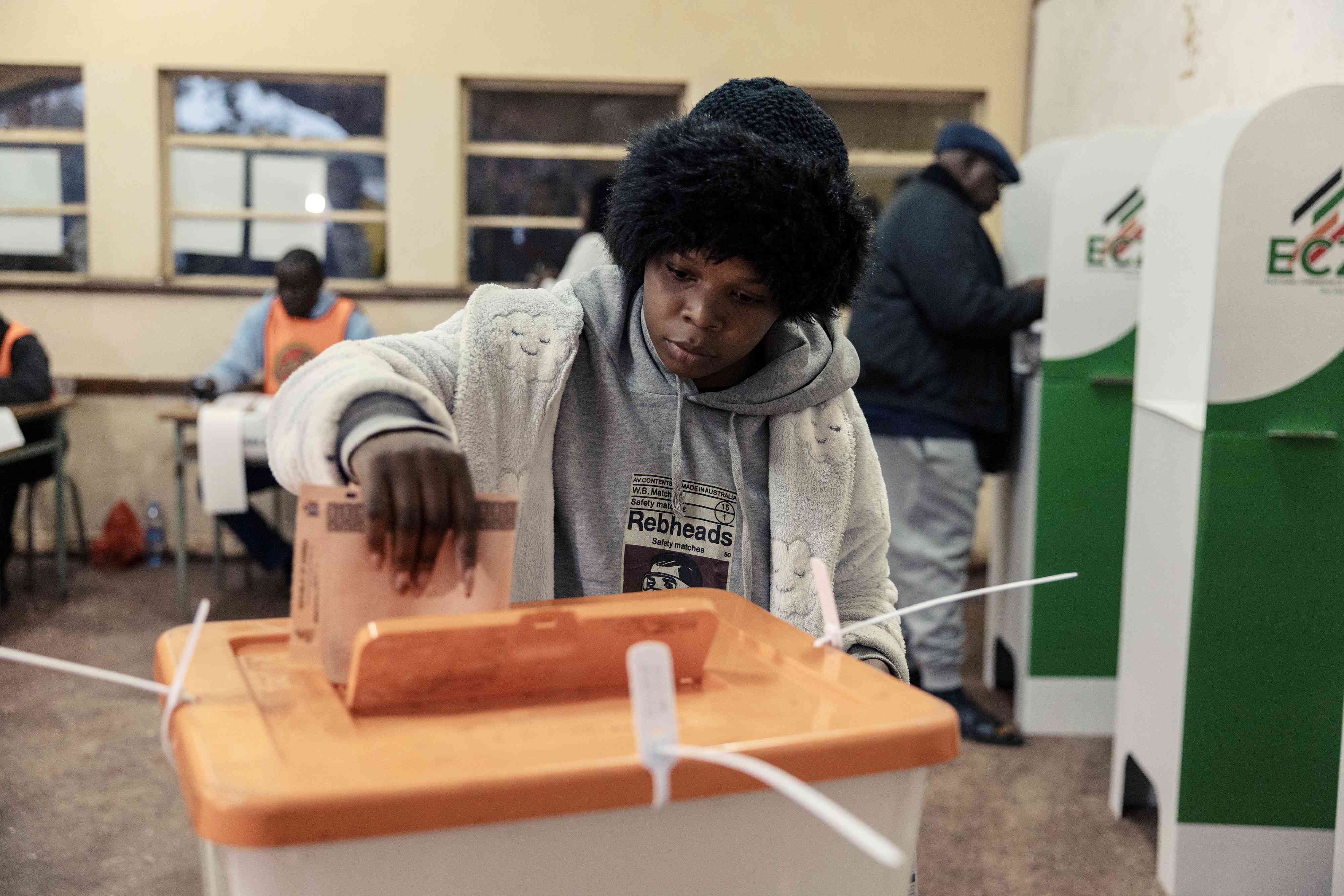
Zambians cast their ballots Thursday in an election focused on economic hardship in the copper-rich nation, where President Hakainde Hichilema is seeking a second term.
Long regarded as one of Africa's more stable democracies, Zambia has come under scrutiny over concerns that Hichilema's government has narrowed the space for dissent, even as it promises stronger economic recovery.
"Zambians are frustrated, and this election is a 50-50; that is why we are all here early to make the change," said voter Mwiche Nalupumbwe, 26, among hundreds who braved the morning chill to queue at polling stations well before they opened at 6:00 am (0400 GMT).
"It hasn't been the easiest five years," the development sector worker told AFP.
Hichilema, 64, won a first five-year term in 2021 and is betting on job creation and an ambitious infrastructure drive to secure re-election.
While inflation fell to 6.8 per cent in April and the kwacha currency has strengthened, many face high food and energy costs. Unemployment stands at around 10 per cent.
The president's main challenger in a field of 13 other hopefuls is Brian Mundubile, a 55-year-old former minister in the Patriotic Front (PF) government that ruled from 2011 to 2021.
Backed by an alliance of opposition parties, Mundubile is running under the newly formed NRPUP party, which draws much of its political base from the PF.
He entered the race in May, injecting uncertainty into a contest that had long appeared to be Hichilema's to lose.
- 'Hand-to-mouth' -
In an interview with AFP on Wednesday, the 55-year-old Mundubile described Zambia as deeply divided and alleged the government had tightened restrictions on his party's campaigning.
"The election will not be free and fair," he said.
Four international observer missions, including from the European Union and regional bloc SADC, are deployed to monitor polling across the 10 provinces.
Security was tight after the government announced Wednesday the arrests of several people, including three former senior government officials, over an alleged plot to interfere with the electoral system.
Among the first to cast his ballot Thursday was 62-year-old businessman Akapelwa Akapelwa, who told AFP: "Right now the economy has been stabilised... The platform has been set, and it's a strong foundation."
Stay informed. Subscribe to our newsletter
Africa's second-largest copper producer, Zambia defaulted on its sovereign debt in 2020.
Since then, the government has secured a debt restructuring, completed an IMF-supported programme and set an ambitious 2031 target to triple production of copper, crucial to the green-energy transition.
But more than 70 per cent of Zambia's 22 million people live on less than three dollars a day, according to World Bank data.
"It's only those who are connected to politicians that are saying the economy is doing well," 32-year-old bus driver Ceshas Tembo told AFP. "For many of us, it is still hand-to-mouth."
- 'Predictable leader' -
Some 8.7 million voters are registered to cast their ballots before polling stations close at 6:00 pm (1600 GMT).
They are also electing 226 seats in parliament, which is being expanded from the previous 156.
Results of the presidential vote are expected by August 17. The winner needs more than 50 per cent to avoid a runoff.
Voters are likely to stick with the stability of Hichilema, said Patience Mususa, senior researcher at the Nordic Africa Institute.
"Despite criticism of his slow progress in addressing government inefficiencies and corruption, and concerns about his prioritisation of corporate interests, he is seen as a more predictable leader," she said.
The daughter of the previous president, Edgar Lungu -- whose death from illness in South Africa in June 2025 sparked a wrangle with the government over his body -- called on voters to turn out in numbers.
"This is a very important election. As much as I am mourning, I still had to come out and vote, so go out and vote," said Tasila Lungu.
Lungu's family had refused to allow his body to be brought back from South Africa for a state burial overseen by Hichilema, his bitter rival.


Subscribe to our newsletter and stay updated on the latest developments and special offers!






 join
join