×

The Standard e-Paper
Home To Bold Columnists
 The Standard Group Plc is a
multi-media organization with investments in media platforms spanning newspaper
print operations, television, radio broadcasting, digital and online services. The
Standard Group is recognized as a leading multi-media house in Kenya with a key
influence in matters of national and international interest.
The Standard Group Plc is a
multi-media organization with investments in media platforms spanning newspaper
print operations, television, radio broadcasting, digital and online services. The
Standard Group is recognized as a leading multi-media house in Kenya with a key
influence in matters of national and international interest.

Audio By Vocalize
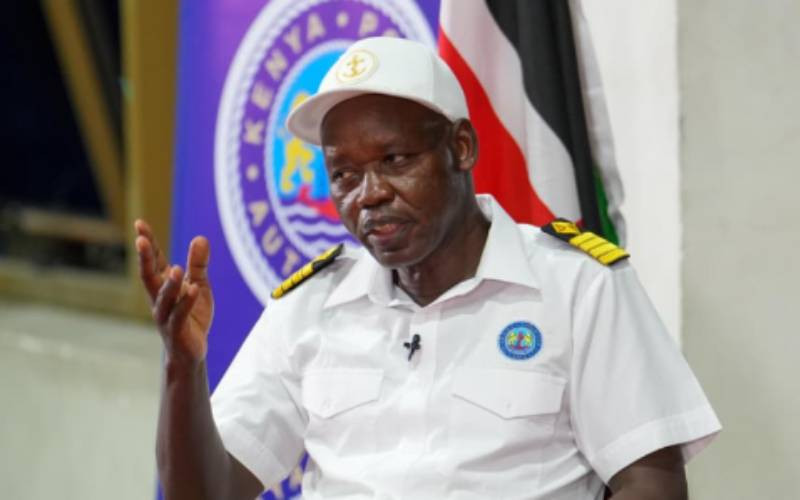
The Kenya Ports Authority (KPA) has dismissed privatisation claims at the ports of Mombasa and Lamu, saying reforms are aimed at drawing private investment without transferring ownership.
KPA Managing Director Capt. William Ruto clarified on Thursday during the 19th episode of Sema Na Spox – Bonga Na Gava, a government outreach forum held at KPA headquarters in Mombasa.
"The government retains ownership of port land and infrastructure while leasing certain operations to private operators under defined agreements," said Ruto.
The clarification comes against the backdrop of a prolonged ownership dispute.
The High Court issued interim orders in November 2023 halting the privatisation of berths at both ports after a petition by the Taireni Association of Mijikenda, which argued the facilities were built with public funds and could not be handed over to private investors.
The parties eventually reached a consent agreement in April 2024, allowing the process to proceed on condition that KPA complied with public participation and local content requirements.
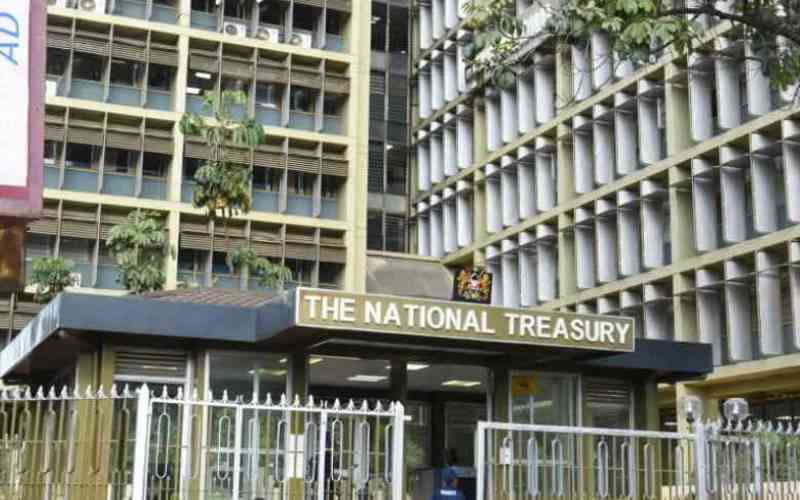
Under the Government-Owned Enterprises Act, signed in November 2023, KPA is set to be dissolved and replaced by a public limited company, with the National Treasury as the main shareholder.
The government expects the transition to increase cash flows from both ports by Sh44 billion annually.
Under the proposed landlord port model, Ruto explained that private operators would lease specific functions while the government retains full ownership of port land and infrastructure.
He noted that feasibility studies had been conducted to assess the value of port assets and identify areas suited to private sector participation.
The urgency behind the reforms is partly competitive. Tanzania awarded DP World a 30-year concession at Dar es Salaam, and the extra capacity pulled cargo away from Mombasa, with Uganda, Rwanda and Burundi diverting more goods along the southern route.
At the Port of Mombasa, Ruto disclosed that container traffic surpassed 2 million twenty-foot equivalent units (TEUs) in 2024 for the first time, up from 1 million TEUs in 2014.
With current capacity standing at 2.2 million TEUs, the port is nearing its ceiling, making the case for investment more pressing.
At the Port of Lamu, the facility completed in 2021 has attracted two shipping lines since 2024 and recently handled its first car carrier, receiving 436 vehicles for transshipment, with another vessel expected to deliver more than 2,500 vehicles within days.
Stay informed. Subscribe to our newsletter
Lamu's growth carries wider regional significance. The port is the anchor of the Lamu Port-South Sudan-Ethiopia Transport Corridor (LAPSSET), a project designed to open up Kenya's northern frontier and reduce overdependence on Mombasa by creating a second transport corridor linking Kenya to South Sudan and Ethiopia.
However, insecurity in the region has slowed the corridor's progress.
"The development positions Lamu as an emerging regional transhipment hub," noted Ruto, adding that the port could challenge the dominance of established facilities such as Durban.
On operations, Ruto observed that Mombasa now runs as a fully paperless port, with all payments processed digitally through platforms such as eCitizen and direct bank transfers, removing the need for cash transactions.
Government Spokesperson Isaac Mwaura, who hosted the forum, cited macroeconomic gains alongside the port developments, noting that the Kenyan shilling has held steady at around Sh129 to the US dollar for nearly two years, with foreign exchange reserves rising to cover 6.2 months of imports from 5.3 months previously.






Subscribe to our newsletter and stay updated on the latest developments and special offers!







 join
join