×

The Standard e-Paper
Join Thousands Daily
 The Standard Group Plc is a
multi-media organization with investments in media platforms spanning newspaper
print operations, television, radio broadcasting, digital and online services. The
Standard Group is recognized as a leading multi-media house in Kenya with a key
influence in matters of national and international interest.
The Standard Group Plc is a
multi-media organization with investments in media platforms spanning newspaper
print operations, television, radio broadcasting, digital and online services. The
Standard Group is recognized as a leading multi-media house in Kenya with a key
influence in matters of national and international interest.

Audio By Vocalize

Bishop Emeritus Morphat Kilioba is right when he tells Kenya’s youth to rise up and make 2026 their year.
The man of cloth drew deep reflections on February 1 when he urged young congregants at Pefa Donholm church to choose the right path, including ‘settling down’ to build the nation. In fact, he left the congregation in stitches when he jokingly threatened to ‘smoke out’ singles hiding behind the flimsiest excuses to avoid marriage. The bishop is emphatic that young Kenyans must own their destiny.
Same Sunday at the Rwandan High Commission in Nairobi, more than 400 Rwandans living in Kenya gathered to mark their National Heroes Day themed ‘heroism and unity’ for development.
At the event, I had a tête-à-tête with High Commissioner Ernest Rwamucyo and listened carefully as he, alongside Rwandan diaspora chairman Innocent Butare, extolled the legacy of patriots who sacrificed big time during grim moments in Rwanda’s history. They explained, in clear terms, that heroism and unity are more relevant today than ever, and the youth must unconditionally exemplify them.
The unquestionably powerful message at the Heroes Day echoed Bishop Kilioba’s view, and that of other opinion shapers, of the youth as custodians of society’s continuity. Truth is that the future is being built upon youth shoulders, and without conscious decision to do what’s right, no country can thrive.
Essentially, Africa’s renaissance is fully in the youth’s hands. In the era of economic globalisation and Artificial Intelligence, the burden is on them to take us to ‘Singapore’ or wherever else we may want to go, real or imagined. Yes, they’ve energy, innovation and adaptability needed to take us places.
But there are hard questions: How will the youth create ‘the Africa we want’ if they’re routinely excluded from decision-making spaces? Young technocrats and high achievers must no longer be shunted. The belief that they lack experience, deserve no rewards or cannot wield political influence is futile. In 2026, I dare say, a mindset shift is inevitable.
While it is myopic for older generations to tout experience and for us as a nation to judge capability purely by age, it’s equally dishonest to praise young people as the answer to our transformation yet we systematically mute their voices where it matters most. The youth deserve space to prove their mettle but they must also have the guts to fight for that same space.
This is why this year, the State must deliberately invite young people for an honest policy dialogue and a review of Kenya’s National Youth Policy. Let’s not forget that Africa’s youth are central to realisation of Sustainable Development Goals and the African Union’s Agenda 2063.
Beyond Nyota programme, our government has some homework to do to open up more platforms for youth engagement. This is the time for President Ruto to revisit his youth charter. Signed in June 2022 as part of his four-point plan for youth empowerment, the charter’s feasible provisions shouldn’t wither in the political din of 2027.
As the election approaches, even harder homegrown questions must be asked: Have we fully stretched the limits in giving our youth a real sense of belonging in the aftermath of the 2025 Gen-Z uprising? How strong are youth leagues in political parties? Have nomination rules been amended to allow more under-35s into elective positions?
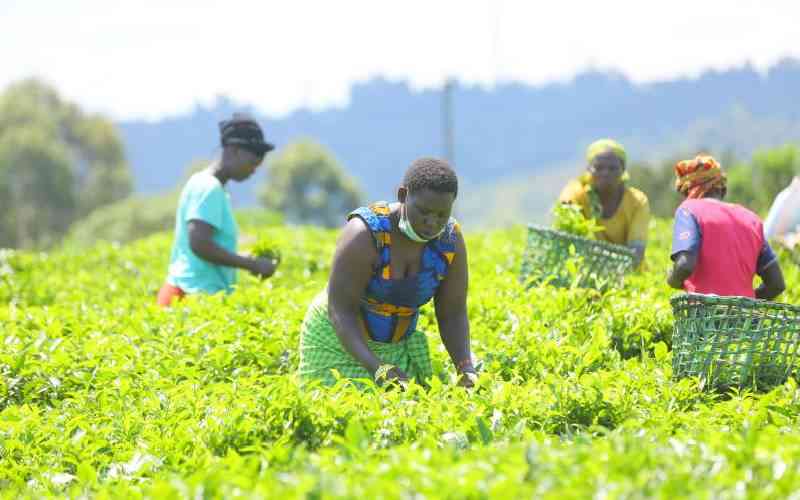
Meanwhile, youth empowerment can’t be viewed only through formal jobs as usually the case. Agricultural enterprises offer sustainable pathways to prosperity. Agriculture accounts for $30 billion per year in economic activity. Thus, we must make more of Kenya’s youths agriculture-centric. Dr Ruto’s youth charter and Agenda 2063 must be improved to reflect such realities.
Archbishop Desmond Tutu once said that because young people are dreamers, they must make things happen. Just as Bishop Kilioba and High Commissioner Rwamucyo have suggested, the youth must now reposition themselves.
It starts with doing what’s right. Young citizens must prioritise family values and national ethos. It’s time to embrace duty and prepare for leadership. The future belongs to the youth but only if they can claim it.
-The writer is a communications practitioner.
Stay informed. Subscribe to our newsletter


Subscribe to our newsletter and stay updated on the latest developments and special offers!






 join
join