×

The Standard e-Paper
Smart Minds Choose Us
 The Standard Group Plc is a
multi-media organization with investments in media platforms spanning newspaper
print operations, television, radio broadcasting, digital and online services. The
Standard Group is recognized as a leading multi-media house in Kenya with a key
influence in matters of national and international interest.
The Standard Group Plc is a
multi-media organization with investments in media platforms spanning newspaper
print operations, television, radio broadcasting, digital and online services. The
Standard Group is recognized as a leading multi-media house in Kenya with a key
influence in matters of national and international interest.
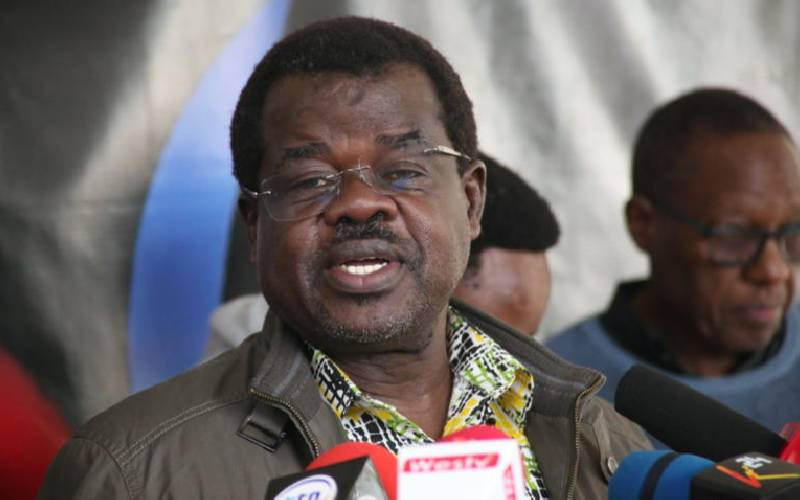
Medical practitioners have supported the government in a push for lifting orders that froze a Sh209 billion healthcare deal between Kenya and the United States of America (USA).
In its application before High Court Judge Chacha Mwita, the Kenya Medical Practitioners and Dentists Union (KMPDU) claimed that the orders issued in December last year have, in turn, crippled the health sector.
“The conservatory order issued on December 19, 2025, has created a functional vacuum in the health sector at the most volatile time of the year. The December-January period is traditionally characterised by high population mobility, including minors and expectant mothers, which historically correlates with a spike in infectious disease transmission,” said KMPDU Secretary General Davji Atellah.
According to him, the deal is based on a rigid implementation plan, meaning that the country will not get anything for the period that the orders will be in place.
Atellah further said there are 1.3 million Kenyans without HIV and Aids medication, and a termination of treatment to an additional 82 per cent of those suffering from Tuberculosis.
He claimed that the data sharing agreement is bound by Kenya’s law, adding that this offers a safety net for data sovereignty.
“Data Sharing Agreement signed on December 4, 2025, does not, as a matter of law, constitute a 'treaty’ as defined under either Kenyan statutory law or International Law for the reasons hereunder,” said KMPDU, adding that the deal was sealed through diplomatic channels, hence not subject to the court’s oversight.
Atellah also claimed that Kenya cannot afford to handle and control infectious diseases such as M-pox. He said that there is also an imminent threat to Marburg virus disease.
“Any interruption of the National Government’s ability to enter into health cooperation frameworks effectively paralyses its constitutional mandate to provide policy direction and secure the national health supply chain, leading to a systemic collapse that transcends county boundaries,” he said.
In his case, Busia Senator Okiya Omtatah argued that the deal had circumvented Parliament’s oversight and created extra-budget expenditure without the approval of the second arm of government.
He said the framework indicated there would be no legal consequences if the US violated the law.
According to him, the non-binding nature meant that it prioritised America’s geopolitical interests over equitable Universal Health Care.
“The rushed signing, bypassing Parliament, usurps legislative authority and undermines the sovereignty of the people who delegated sovereign power to Parliament,” said the Senator, adding that the terms, conditions, obligations, procurement modalities, liabilities, and dispute resolution mechanisms of the deal have not been disclosed to the public.
He also claimed that the framework creates direct and indirect public finance obligations, including potential co-financing, tax waivers, and recurrent expenditures, which have allegedly not been subjected to parliamentary appropriation
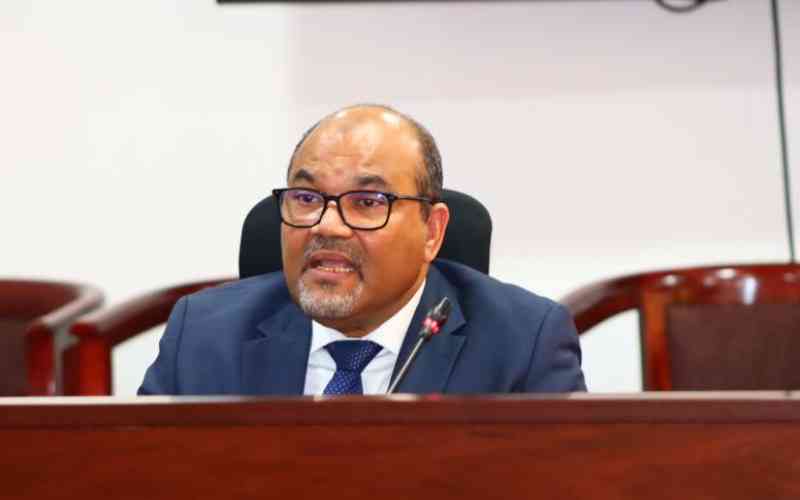
In response, the Attorney General Dorcas Oduor claimed that the agreement between the two countries was that Kenya would share aggregate data and not personal information.
Stay informed. Subscribe to our newsletter
She stated that the exercise includes the removal or hiding of personal data, which will solely be used for evaluation, public reporting, and planning.
“It is therefore imperative to clarify that, as expressly recognised under the Data Sharing Agreement, the Government of Kenya shall not share any sensitive personal data of its citizens but shall instead share only aggregated data for the purposes of implementing the Cooperation Framework,” court papers filed Tuesday by Senior State Counsel Thande Kuria reads in part.
Thande claimed that the framework was allegedly anchored on the Kenyan law. He stated that where there is a conflict, Kenyan regulations and laws ought to take precedence.
According to him, HIV and Aids, Tuberculosis, Malaria and other infectious diseases have become a global security threat that allegedly require cross boarder management.
“Framework was developed as part of the fulfillment of the State’s duty to take all measures required to ensure the progressive realization of the right to the highest attainable standard of health with the ultimate aim being the elimination of HIV, Malaria, TB and other emerging infectious diseases and the strengthening the Kenyan health system so that it can become more self-reliant,” claimed Thande.
On the other hand, the Principal Secretary of the State Department for Medical Services at the Ministry of Health, Dr. Ouma Oluga, alleged that the deal was a government-to-government arrangement and did not require Parliament’s oversight.
He said the government cannot control HIV, tuberculosis, and malaria alone.
“Governments, acting individually, could not shoulder these overwhelming costs. As a result of this widespread national incapacity, a concerted effort was launched worldwide to reduce transmission and ensure prompt treatment. This collective international effort led to the formation of multilateral organisations tasked with resource mobilisation for these critical diseases," he claimed.
According to him, the USA government’s shift in funding necessitated Kenya to sign the new deal. He claimed that Rwanda, Uganda, and Liberia have likewise signed a similar deal.
The former KMPDU Secretary General also alleged that the deal did not commit taxpayers' money to the contested deal; instead, it was an alleged intention to collaborate in the funding.
In a rejoinder, Okiya said the deal was an alleged attempt to evade scrutiny. He said that although Oluga claimed that the framework was not binding, the content had yoked the country for compliance.
He maintained that the deal does not support any of the Kenya Kwanza administration’s programs. Instead, Kenya signed a vague deal, without a prior Data Protection Impact Assessment (DPIA), creating an extra-budgetary stream that undermines the integrated financial management system.





Subscribe to our newsletter and stay updated on the latest developments and special offers!








 join
join