×

The Standard e-Paper
Home To Bold Columnists
 The Standard Group Plc is a
multi-media organization with investments in media platforms spanning newspaper
print operations, television, radio broadcasting, digital and online services. The
Standard Group is recognized as a leading multi-media house in Kenya with a key
influence in matters of national and international interest.

Audio By Vocalize
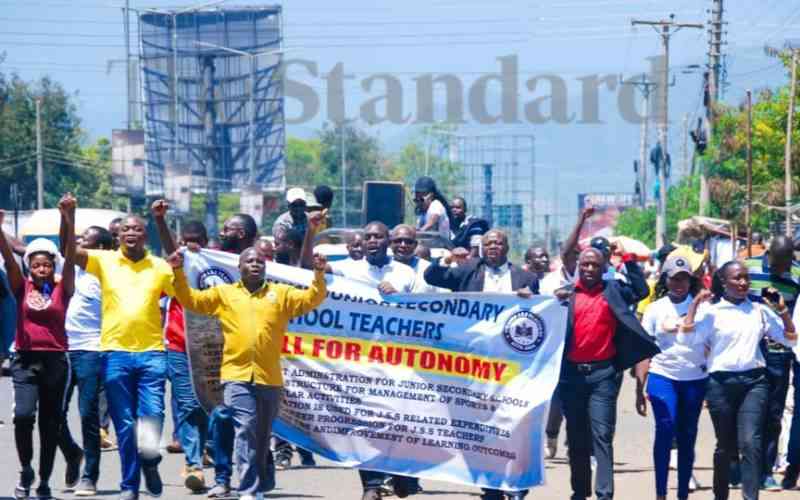
The contentious question of junior school autonomy, inadequate capitation and the role of P1-trained teachers in school leadership expected to dominate discussions as more than 15,000 primary school headteachers converge in Mombasa.
The four-day Kenya Comprehensive Schools Heads Association (KECSHA) Annual General Meeting and Conference begins on Monday at the Sheikh Zayed Children's Welfare Centre in Bombolulu, Nyali, bringing together primary and junior school heads alongside education officials and other stakeholders.
The meeting comes at a critical moment for Kenya's education sector, with growing disagreements over the management of junior schools under the Competency-Based Education (CBE) framework, particularly the authority of primary school headteachers to supervise teachers serving at the junior school level.
At the centre of the debate is the demand by junior school teachers for an independent administrative structure, with separate principals, deputy principals, heads of departments and boards of management.
The issue gained renewed national attention during the October 5, 2026, World Teachers' Day celebrations, when junior school teachers challenged President William Ruto to establish a distinct leadership structure that would give them greater autonomy in managing their institutions.
Responding to their concerns, Ruto acknowledged that the matter required attention, promising to consult and consider their proposals.
"I know there is a small matter of JSS. Most of you, actually all JSS teachers were hired by my administration. If not all, maybe 80 or 90 per cent, so nimewaskiza. You have given me an assignment. Give me time to go and work on it and will revert back to you," the President said.
Junior school teachers have complained about serving under primary school headteachers, many of whom hold P1 certificates or primary education diplomas, despite junior school teachers possessing university degrees with secondary-school teaching specialisations.
The Kenya Union of Post-Primary Education Teachers (Kuppet) has been at the forefront of demands for separation, arguing that junior schools have unique academic, administrative and operational requirements that cannot be adequately addressed under the current comprehensive school arrangement.
The union wants junior schools to have independent budgets, direct government capitation, properly equipped laboratories and management structures tailored to their needs.
However, primary school heads, through their association, have defended the comprehensive school model, arguing that a unified administration promotes efficient use of infrastructure, reduces duplication and ensures continuity between primary and junior school levels.
Kecsha maintains that separating the institutions could create unnecessary administrative complications and strain already limited government resources.
The debate is expected to feature prominently at the Mombasa meeting, particularly as Parliament continues engaging stakeholders on proposed education reform legislation.
Beyond the autonomy question, inadequate capitation is expected to attract considerable attention, with school heads expected to raise concerns over the growing financial pressure facing institutions implementing the competency-based curriculum.
Junior schools require specialised learning facilities, teaching materials, practical learning resources and adequate funding to support the new curriculum. Headteachers have also raised concerns about the ability of schools to meet operational demands with limited government allocations.
Stay informed. Subscribe to our newsletter
Another contentious issue likely to feature is the employment and deployment of P1-trained teachers, particularly their place in the evolving comprehensive school structure and whether their qualifications should determine the levels they are allowed to manage.
The four-day conference will also introduce masterclasses focusing on financial literacy, school health, foundational learning, parental engagement, education innovation and practical learning opportunities for school heads.
Tuesday's programme will bring together Ministry of Education officials for discussions on leadership and school management.
The conference, held under the theme "Reimagining the Comprehensive School of the Future – Strengthening Leadership, Systems, Skills and Values for Sustainable Quality Education," provides an important platform for headteachers to present their concerns as the government considers changes to the education system.
The tensions between primary and junior school teachers have persisted for nearly three years since the introduction of the comprehensive school model, with disagreements over professional hierarchy, supervision, resource allocation and institutional autonomy.


Subscribe to our newsletter and stay updated on the latest developments and special offers!