×

The Standard e-Paper
Kenya’s Boldest Voice
 The Standard Group Plc is a
multi-media organization with investments in media platforms spanning newspaper
print operations, television, radio broadcasting, digital and online services. The
Standard Group is recognized as a leading multi-media house in Kenya with a key
influence in matters of national and international interest.
The Standard Group Plc is a
multi-media organization with investments in media platforms spanning newspaper
print operations, television, radio broadcasting, digital and online services. The
Standard Group is recognized as a leading multi-media house in Kenya with a key
influence in matters of national and international interest.

Audio By Vocalize
Kenyans may soon pay significantly higher prices for consumer goods as the country moves to enforce new Extended Producer Responsibility (EPR) regulations, industry players have warned.
Replacing a cracked phone screen protector or a worn-out phone cover could cost three times more if the regulations are strictly implemented. This follows a recent court order that cleared the way for their enforcement.
At the centre of the controversy is an import fee that will be charged on every product entering the country.
Industry players say the additional cost will be passed on to consumers, undermining the competitiveness of Kenyan products and disrupting supply chains if the regulations are not reviewed.
As the National Environment Management Authority (Nema) begins rolling out the framework, stakeholders seek urgent revisions to some sections of the regulations to prevent unintended economic consequences.
EPR, according to the United Nations Environment Programme (Unep) is “a policy approach that makes producers responsible for their products along the entire lifecycle, including at the post-consumer stage.”
This approach shifts the burden of managing waste and pollution from consumers to producers (manufacturers, importers and brand owners).
According to UNEP, EPR is the polluter-pays principle, which mandates that those responsible for damaging the environment bear the cost of pollution.
EPR is not only concerned about products’ end of life but also seeks to promote a circular economy by encouraging the reuse or repurposing of products and recycling waste materials into new products.
Manufacturers are also encouraged to design their products in a way that minimises environmental damage.
EPR enforcement is still a relatively new concept in Africa, as only 17 countries on the continent have EPR policies in place.
These include Ghana, Mauritius, Nigeria, Rwanda, South Africa, Uganda and Zambia. As the world grapples with environmental and health effects of pollution, countries have been adopting coping measures, and Kenya has not been left behind.

In 2024, Kenya introduced EPR laws, which were gazetted under the Sustainable Waste Management Act, 2022. However, their implementation was halted in mid-2025 after the High Court issued conservatory orders suspending enforcement following petitions that challenged various aspects of the regulations.
Under the EPR framework, producers are required to register with Nema and establish take-back schemes to collect obsolete or used products from consumers, either individually or through Producer Responsibility Organisations (PROs).
“A producer may transfer part of or the entire extended producer responsibility obligations, subject to a membership agreement, to a collective extended producer responsibility compliance scheme through a producer responsibility organisation, in which the producer takes membership,” reads the regulation.
Stay informed. Subscribe to our newsletter
Manufacturers are to ensure the ecological design of products and packaging, and take responsibility for waste management at the end of a product’s life cycle.
“A producer shall take financial, organisational and physical responsibility for the management, treatment and disposal of their post-consumer products and end of life treatment for the waste generated by their products,” the regulations state.
Producers are further required to educate consumers on proper waste handling. “A producer shall put in place circular economy initiatives and any other measures to reduce the impact of their product on health and the environment.”
An importer must declare the nature and quantity of goods they bring into the country and apply for an EPR certificate from Nema. They are also required to pay a Sh150 fee for a “finished product at the point of importation.”
However, petitioners contested this fee, arguing that it would unfairly burden products with multiple material components and also significantly increase the cost of doing business, especially for low-margin goods, due to increased charges per unit.
They also found the “per item” description to be unclear whether it is per product, per package or per consignment.
The petitioners also cited insufficient public participation in the regulations and questioned whether stakeholders were given enough time to adjust their systems for implementation, with some requesting a phased rollout.
Petitioners also expressed concern about how the EPR fees will be utilised and demanded clarity on the direct link between fees collected and actual waste management outcomes.
With the court having now allowed implementation to proceed, industry players are warning that the punitive fee risks shifting the cost of pollution back to consumers indirectly — contrary to the polluter pays principle.

While lauding the EPR framework as a step towards environmental sustainability, Kenya Extended Producer Responsibility Organisation (Kepro) noted that poor implementation could distort markets if the levy is not restructured.
“We have conducted analyses showing that miscalculation could, in some sectors, erode the competitiveness of Kenyan products and inadvertently inflate the shelf price of essential consumer goods by over 300 per cent,” Kepro Chief Executive James Odongo told Enterprise.
Speaking on behalf of 1,400 brand owners represented by Kepro, Odongo said the organisation has held engagements with Nema but raised concern over proposals to restrict retailers from stocking goods supplied by producers deemed non-compliant.
“Enforcing this measure at the retail level, without a clear phased transition, would likely cause significant disruption to the national supply chain,” said Odongo.
“It risks creating shortages, impacting livelihoods, and undermining the very stability needed for a successful EPR ecosystem.”
The concerns have already started being felt within the retail sector. In a letter dated February 2, 2026, Naivas Supermarket informed all its suppliers that it would immediately suspend deliveries from any supplier found to be non-compliant with NEMA’s EPR regulations.
The notice seen by The Standard cited requirements for suppliers to submit an Extended Producer Responsibility (EPR) certificate, Producer Responsibility Organisation (PRO) membership certificate and a plastic packaging material licence.
"Effective immediately, we will cease receiving goods from all suppliers who are non-compliant, specifically those who have not submitted the required licensing documentation as previously requested," said Naivas chief executive officer Andreas Von Paleske.
Some small-scale importers say they are already feeling the pressure. Lonah Wanjiru, who runs an online tech accessories business and employs two people, said she may be forced to lay off her staff or shut down altogether.
“I am urging the government to at least reduce that Sh150 fee because it is not sustainable for small businesses like mine,” said Ms Wanjiru. “It is just too much.”
She also faulted the government for inadequate sensitisation of micro, small and medium enterprises (MSMEs), saying she only learnt about the regulations recently.
“I saw a post on social media and read a little about it. All I know is the import levy I am going to be charged,” she said. “I don’t have a full understanding of the entire law, yet Nema expects me to raise awareness about sustainable waste disposal.”
However, Nema's Director of Enforcement Dr Ayub Macharia told Enterprise in a phone interview that there was no gap in awareness, arguing that the authority has been holding consultations with different producer groups.
“We have engaged the Kenya Association of Manufacturers, Kenya Private Sector Alliance and Kenya National Chamber of Commerce and Industry,” Dr Macharia said.
Nema has also held engagements with PROs such as Kepro and the Electronic Waste Producer Responsibility Organisation of Kenya (Eprok).
While Eprok and Kepro both acknowledge that the authority has held engagements with its members to seek more clarity on the regulations, individuals running small businesses seem to have been ignored despite their contribution to the country’s economy.
Data from the State Department for MSMEs Development shows that almost 80 per cent of Kenyans work in the informal sector, with about 7.4 million operating in the MSMEs sector.
Eprok Coordinator John Ayara said many MSMEs remain excluded from these engagements, noting that association membership is voluntary. “Most MSMEs are not conversant with EPR regulations because membership to associations is voluntary and comes at a cost,” said Ayara.
“The authority also needs to consider the import levy because importers face other costs too. Big organisations may be able to handle this, but it is too much for small businesses.”
Mr Ayara also warned that awareness campaigns must factor in devolution, since waste management is a county function.
“There needs to be targeted awareness creation and consistent messaging across the entire value chain. The government, producers and PROs must collaborate to create a system of assisted compliance,” he said.
Industry players have further urged Nema to clarify how the levy will be calculated, particularly whether the Sh150 fee applies per individual item or shipment.
“Resolving the ambiguity around the ‘per item’ levy is urgent,” said Mr Odongo. “The Authority should develop and publish detailed definitions and a transparent calculation methodology are essential to ensure fairness.”
Despite the controversy, experts agree that abandoning EPR altogether is not an option.
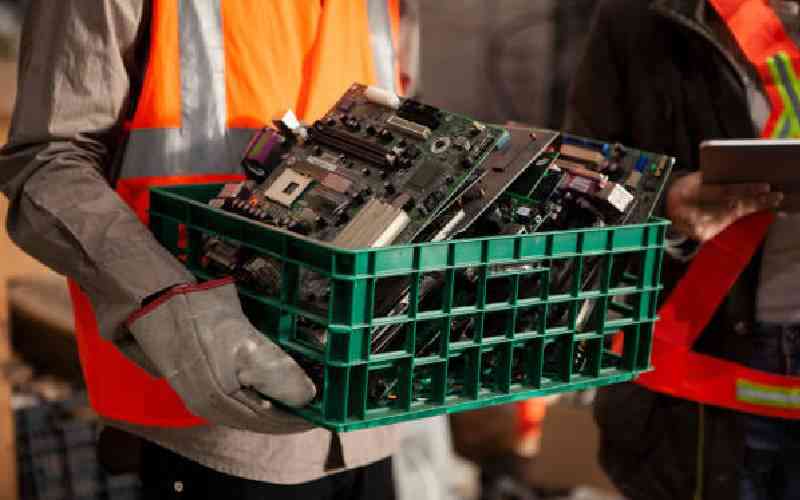
Kenya is grappling with a growing waste crisis, generating an estimated 80,000 tonnes of electronic waste annually, alongside rising plastic pollution that continues to choke landfills, waterways and informal settlements.
Without a functional EPR framework, the burden of managing this waste remains with consumers, counties and informal recyclers — often at significant environmental and public health cost.
The challenge, stakeholders say, lies not in the principle of EPR, but in designing a system that is fair, transparent and inclusive. “We are actively advocating for a solution-focused enforcement strategy that targets producer registration and system participation without destabilising the market,” Odongo says.






Subscribe to our newsletter and stay updated on the latest developments and special offers!








 join
join