×

The Standard e-Paper
Fearless, Trusted News
 The Standard Group Plc is a
multi-media organization with investments in media platforms spanning newspaper
print operations, television, radio broadcasting, digital and online services. The
Standard Group is recognized as a leading multi-media house in Kenya with a key
influence in matters of national and international interest.
The Standard Group Plc is a
multi-media organization with investments in media platforms spanning newspaper
print operations, television, radio broadcasting, digital and online services. The
Standard Group is recognized as a leading multi-media house in Kenya with a key
influence in matters of national and international interest.

Audio By Vocalize
Every day during her pregnancy, Salima Sitet asked medics the same question: “Will my baby be born free of hepatitis B?”
It was in early 2025, just months after her elder brother died from hepatitis B virus complications.
At the time, Sitet was five months pregnant and attending her first antenatal clinic (ANC) visit.
It is during this ANC visit that she was tested for hepatitis B and told she was positive.
“I went into shock after testing positive,” recalls the 28-year-old mother of three from Maji Moto, in Baringo.
“I was mourning my brother, only to test positive for the disease that had killed him. I didn’t know how to fight for my life, and that of my unborn child. I was scared,” she said.
After counselling, hepatitis B treatment was initiated to suppress the virus, reducing the risk of transmitting it to her unborn child.
A week to delivery, she went to Marigat Sub County Hospital, where she was admitted for close monitoring to reduce the chances of the baby acquiring the virus during delivery.
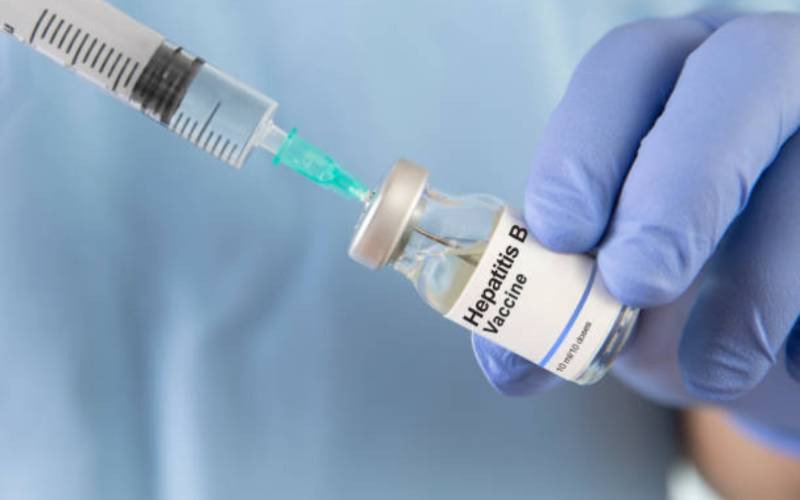
After delivery, the baby received the hepatitis B birth-dose vaccine within 24 hours, followed by the three doses of the pentavalent vaccine at 6, 10 and 14 weeks to complete the immunisation schedule.
Dr Missiani Ochwoto, a virologist and medical research scientist at Kenya Medical Research Institute (KEMRI), explains that babies born to hepatitis B, infected mothers are exposed to the virus, and a hepatitis B birth-dose vaccine is given to the newborn within 24 hours of birth to protect babies, before they receive the regular pentavalent vaccine.
When given on time, it is highly effective at preventing mother-to-child transmission of hepatitis B.
The birth dose is often given together with hepatitis B immunoglobulin (HBIG), to provide additional protection.
At nine months, Sitet’s daughter was tested and found to be hepatitis B-free. Today, at one year and four months, she remains free of the virus.
This was the answer Sitet had prayed for throughout her pregnancy.
“I was so happy,” the mother tells The Standard with a smile.
Stay informed. Subscribe to our newsletter
With suppressed viral load, she can breastfeed the baby exclusively, now one year old.
The Standard found Sitet at her home, cuddling and playing with her daughter. “I never wanted my baby to grow up depending on pills as I do,” she says.
After she tested positive for the virus, her husband and their two other children were also screened. All the tests turned negative. They were then vaccinated against the disease.
As Kenya joins the globe in marking this year’s World Hepatitis Day to be commemorated in Baringo, Sitet is among mothers demonstrating that, with early diagnosis and treatment, women living with hepatitis B can give birth to babies free of the virus.
“After everything I have gone through, knowing my baby is free of hepatitis B has given me hope in the fight against the disease,” she says.
Sitet hopes more pregnant women will be tested early enough and put on medication to prevent transmitting the virus to newborns.
However, according to the locals, stigma is the main hitch in the elimination of hepatitis B in Baringo, a county with a prevalence of 10.8 per cent. The disease in the region is confused with HIV, as positive patients are put on Antiviral (ARVs).
“People think hepatitis B is a death sentence. But if you are tested early, take your medication and follow the doctors’ advice, you can give birth to a healthy baby,” she says.
Sitet’s story is at the heart of Kenya’s growing effort to eliminate mother-to-child transmission of hepatitis B through early screening, treatment and birth-dose vaccination, through a campaign dubbed a clean generation.
Clean Generation is a KEMRI and National AIDS and STI Control Programme (NASCOP)-led initiative aimed at preventing mother-to-child transmission of hepatitis B.
The initiative, implemented in Baringo and Kisumu counties, combines screening pregnant women for hepatitis B, treating infected mothers to suppress the virus, and administering a hepatitis B birth-dose vaccine within 24 hours after delivery.
Researchers say the initiative is showing encouraging results. For instance, of the 73 babies born to hepatitis B-positive mothers enrolled in the initiative in Baringo and Kisumu, all have tested negative for the virus.
“We started this campaign so that we ensure there is a clean generation of babies born to hepatitis B-positive mothers. These are children born free of hepatitis B despite their mothers being hepatitis B positive,” says Dr Ochwoto, KEMRI researcher.
He says they started the initiative in Baringo and Kisumu after observing that some children, especially in Baringo, are infected with hepatitis B despite receiving the vaccine at six weeks of age, suggesting many infections occur before the first routine dose is administered.
The scientist explains that while Kenya’s childhood hepatitis B vaccination programme is highly effective, babies born to infected mothers are vulnerable during the first six weeks of life unless they receive a birth-dose vaccine within 24 hours after birth.
“Together with hospital delivery and a birth-dose vaccine, this ensures babies are born free of hepatitis B,” says Dr Ochwoto.
Research on Hepatitis B followed investigations in Marigat, Baringo County in 2017, after clinicians noticed unusually high numbers of liver cancer patients from the area.
KEMRI subsequently screened more than 4,000 people, including over 3,000 from Marigat, identifying more than 200 hepatitis B infections.
Those diagnosed were linked to care, while about 120 people with high viral loads achieved viral suppression following treatment, reducing their risk of transmitting the virus and developing liver cancer.
The Ministry of Health, through NASCOP, has come up with integrated guidelines for HIV, Hepatitis and STIs of 2026. The guidelines envision screening and scaling up treatment for those who are diagnosed with Hepatitis B.
Head of Viral Hepatitis and STIs at NASCOP, Dr Hadija Hassan, says they are spearheading scale-up and accessibility of treatment, screening, and prevention of Hepatitis.
“We want the generation that is coming to be hepatitis B free,” adds the NASCOP official.
A visit to Marigat Hospital revealed that every pregnant woman attending her first antenatal clinic is offered triple screening for HIV, syphilis and hepatitis B.
At the facility is Gladys Tutoek, Baringo County’s Prevention of Mother-to-Child Transmission (PMTCT) coordinator, who notes that eliminating mother-to-child transmission of HIV, syphilis and hepatitis B begins with early ANC visits.
“Women who test positive for hepatitis B are started on treatment from around 28 weeks of pregnancy to suppress the viral load and reduce the risk of transmitting the virus to their babies,” Tuitoek says in an interview.
At the facility, healthcare workers also closely monitor mothers on treatment, provide counselling and link them to support groups to improve adherence and reduce stigma.







Subscribe to our newsletter and stay updated on the latest developments and special offers!








 join
join