×

The Standard e-Paper
Home To Bold Columnists
 The Standard Group Plc is a
multi-media organization with investments in media platforms spanning newspaper
print operations, television, radio broadcasting, digital and online services. The
Standard Group is recognized as a leading multi-media house in Kenya with a key
influence in matters of national and international interest.
The Standard Group Plc is a
multi-media organization with investments in media platforms spanning newspaper
print operations, television, radio broadcasting, digital and online services. The
Standard Group is recognized as a leading multi-media house in Kenya with a key
influence in matters of national and international interest.

Audio By Vocalize
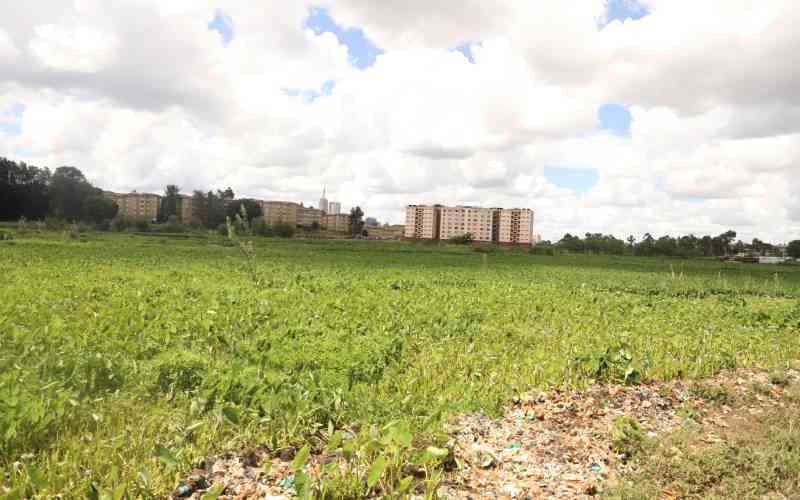
Even as authorities issue urgent warnings over imminent flooding at Nairobi Dam, a starkly different reality is unfolding on the ground, where residents continue to live, build, and now farm, within what was once a key water reservoir.
A precautionary notice from the Water Resources Authority, dated March 20, 2026, warns that ongoing heavy rains have raised water levels in the dam to dangerous levels, threatening to breach its embankment.
The directive calls for the immediate relocation of all residents living downstream.
“Residents living downstream of Nairobi Dam are warned of an imminent flood risk… Everyone… is cautioned to relocate to higher ground immediately,” the notice states.
Yet, on the ground, little reflects that urgency.
Large sections of the dam have dried up, with what was once open water now transformed into patches of exposed, marshy land.

Current state of the Nairobi dam amidst the ongoing rainfall. [Collins Oduor, Standard]
In some areas, residents have gone a step further, converting the former dam bed into small-scale farms, planting crops such as yams to sustain their livelihoods.
The transformation underscores the extent of environmental degradation at the site, but also highlights the economic realities facing nearby communities.
In settlements bordering Kibera, families remain in place, with some continuing daily activities just metres from the remaining water channels.
Makeshift homes line sections of the dam, while new structures continue to emerge in areas clearly marked as flood-prone.
Residents say they have either not received formal communication of the directive or have no viable alternatives.
“We are being told to move, but where do we go? People are still living here because they have no other option,” said Simon Chege, a resident of Kambi Moto.
Stay informed. Subscribe to our newsletter
Even more striking is the continued commercialisation of the land, despite the official warnings.
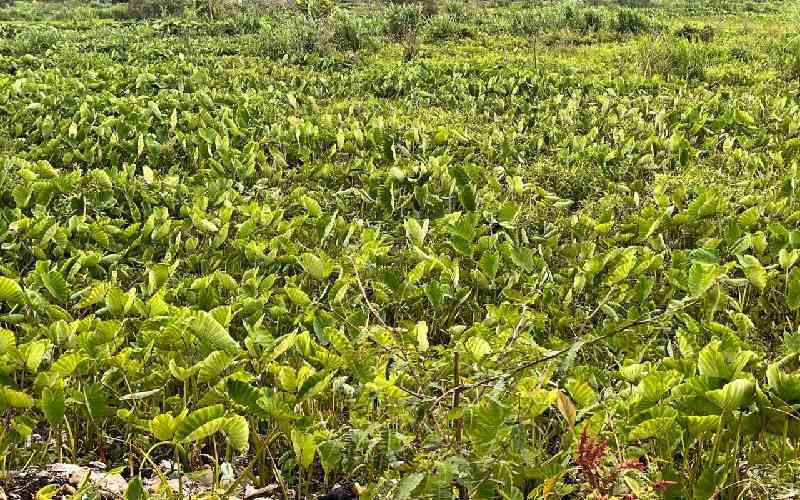
According to residents, sections of the riparian reserve are still being informally sold to developers, who construct rental units for low-income earners.
Plots reportedly go for about Sh200,000, with landlords earning monthly rent from tenants living in high-risk zones.
“This is government land, but it is being sold. People are building, renting, and even farming here,” said John Otieno, another resident.
The contrast between warning and reality is further deepened by the dam’s altered landscape.
Overgrown vegetation, informal pathways, and cultivated plots now occupy areas that once served as water catchment and flood control zones.
A recent visit by officials from the National Disaster Operations Centre confirmed significant changes in the dam’s structure, though initial assessments suggested that fears of an immediate embankment breach may be overstated.
Canon retired Francis Emathe, deputy director at the National Disaster Operations Centre, noted that the better part of the dam has gone dry and shows no signs of overflowing.
“From my own assessment of the dam, it looks normal and shows no signs of overflowing. Most parts have dried up and are being used for farming,” Emathe said.
Still, the risk remains.

Experts warn that even if the dam does not burst, heavy and sustained rainfall could overwhelm the degraded system, quickly refilling the basin and flooding homes and farms that now occupy its former footprint.
Compounding the danger is the lack of basic infrastructure. Many of the informal structures lack proper drainage or sewage systems, with waste flowing directly into the dam, further reducing its capacity and posing serious health risks.
“There is no sewage here. Everything drains into the dam. If floods come, it will be a disaster,” Otieno said.
The situation reveals a troubling disconnect between official policy and lived reality.
On paper, authorities are issuing urgent evacuation orders and highlighting the dangers.
On the ground, however, enforcement appears limited, and survival needs, from housing to food production, are driving residents to remain and even expand their presence within the dam.
For many, the warning is not being ignored; it is simply impossible to act on.
As the rains persist, Nairobi Dam stands as a symbol of competing pressures: environmental decline, unregulated urban expansion, and the daily struggle for survival.
And unless those gaps are addressed, the consequences of that disconnect could prove devastating.



Subscribe to our newsletter and stay updated on the latest developments and special offers!







 join
join