×

The Standard e-Paper
Stay Informed, Even Offline
 The Standard Group Plc is a
multi-media organization with investments in media platforms spanning newspaper
print operations, television, radio broadcasting, digital and online services. The
Standard Group is recognized as a leading multi-media house in Kenya with a key
influence in matters of national and international interest.
The Standard Group Plc is a
multi-media organization with investments in media platforms spanning newspaper
print operations, television, radio broadcasting, digital and online services. The
Standard Group is recognized as a leading multi-media house in Kenya with a key
influence in matters of national and international interest.

Audio By Vocalize

About 20 million Kenyans, nearly 37 per cent of the population, do not eat enough to meet their basic daily energy needs, a level of undernourishment not seen in 25 years, a global aid report has found.
The 2025 Global Hunger Index (GHI) placed Kenya 103rd out of 123 countries, with a score of 25.9 that classifies its overall hunger situation as "serious."
But the more alarming finding lies within that score: Kenya is among six countries recording "extremely alarming" levels of undernourishment specifically, alongside the Democratic Republic of the Congo, Liberia, Madagascar, Somalia and Zambia, making it one of only two lower-middle-income countries on that list, together with Zambia.
Between 2000 and 2016, Kenya steadily reduced hunger through improved nutrition programmes, stronger health services and agricultural expansion, with child stunting dropping from 38.6 per cent to 17.9 per cent and child mortality rates halving in the same period.
The latest data show a troubling reversal, with the GHI attributing the setback to prolonged droughts, high food prices and declining household purchasing power.
Between 2019 and 2023, Kenya suffered six consecutive failed or below-average rainy seasons, devastating crop and livestock production across arid and semi-arid regions.
The crisis is sharpest in the northern frontier, where the Mandera Triangle, a cross-border zone spanning Mandera, parts of Ethiopia and Somalia, concentrates pastoralist communities, refugees and cross-border labourers already facing entrenched food insecurity.
Kenya currently hosts nearly 700,000 refugees and asylum seekers from Somalia, Ethiopia and South Sudan, further straining limited resources in already food-insecure counties.
Children bear the heaviest burden. Seventeen per cent of children under five are stunted, four per cent are wasting and another four per cent face a risk of dying before their fifth birthday.
Arid and semi-arid regions, home to about 30 per cent of Kenya's population, account for nearly 70 per cent of those experiencing food insecurity, with counties such as Turkana, Wajir, Garissa, Kitui and Makueni among the hardest hit.
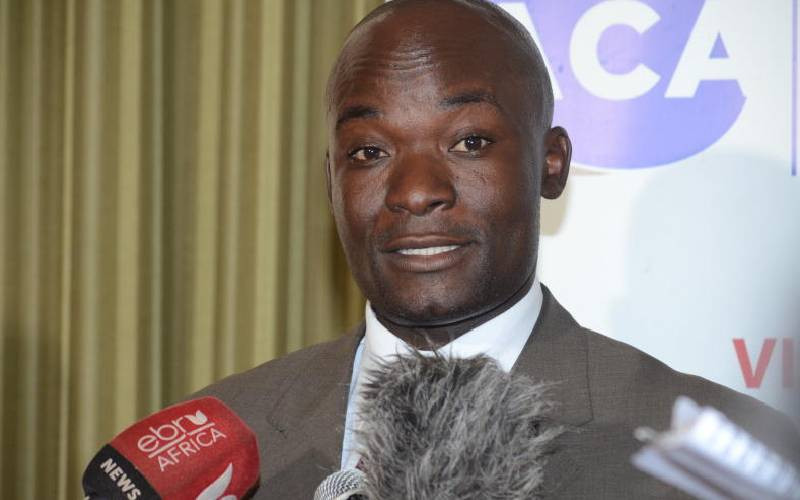
Speaking at the report's launch in Nairobi, Irrigation Principal Secretary Joel Tanui reaffirmed the government's commitment to ending hunger through investments in irrigation projects estimated to cost Sh598 billion.
"The government can't afford to finance the plan alone. We will work with the private sector to unlock these funds," said Tanui.
The index is compiled annually by aid organisations Welthungerhilfe, Concern Worldwide and the Institute for International Law of Peace and Armed Conflict (IFHV).
It measures hunger across four indicators: undernourishment, child wasting, child stunting and under-five mortality.
Globally, several countries including Mozambique, Rwanda, Somalia, Togo and Uganda have made improvements in their GHI scores, though hunger in those countries remains high.
Stay informed. Subscribe to our newsletter
Uganda, Rwanda and Tanzania are among East African Community member states recording the strongest gains.







Subscribe to our newsletter and stay updated on the latest developments and special offers!






 join
join