×

The Standard e-Paper
Home To Bold Columnists
 The Standard Group Plc is a
multi-media organization with investments in media platforms spanning newspaper
print operations, television, radio broadcasting, digital and online services. The
Standard Group is recognized as a leading multi-media house in Kenya with a key
influence in matters of national and international interest.
The Standard Group Plc is a
multi-media organization with investments in media platforms spanning newspaper
print operations, television, radio broadcasting, digital and online services. The
Standard Group is recognized as a leading multi-media house in Kenya with a key
influence in matters of national and international interest.

Audio By Vocalize

A new initiative to ensure increased access to spectacles and solve poor vision has been launched.
The SPECS 2030 initiative is being driven by the Ministry of Health, in collaboration with the World Health Organisation (WHO) and a coalition of eye health partners.
The initiative, which was officially launched on Thursday in Nairobi, marks a major milestone in the country’s efforts to address the growing burden of uncorrected poor vision.
A total of 20 eye health partners participated in this landmark initiative, underscoring the strength of multi-sectoral collaboration in advancing eye care in Kenya.
The SPECS 2030 is a global initiative aimed at ensuring universal access to quality, affordable, and people-centred refractive error services, with a target of increasing effective refractive error coverage by 40 per cent by 2030.
In Kenya, access to spectacles remains critically low, with current estimates indicating that only about 6.7 per cent of individuals who require vision correction can access them, meaning that out of every 100 Kenyans in need, only seven receive appropriate care, while the vast majority remain underserved.
The initiative aligns with commitments made by countries during the 74th World Health Assembly, which was held virtually from May 24 to June 1, 2021, due to Covid-19 pandemic.
During the Assembly, member states agreed to increase effective refractive error coverage by 40 percentage points as part of broader Universal Health Coverage(UHC) goals.
For Kenya, this means increasing coverage from the current 6.7 per cent to at least 46.7 per cent by 2030.
This gap has far-reaching implications for education, productivity, road safety, and overall quality of life.
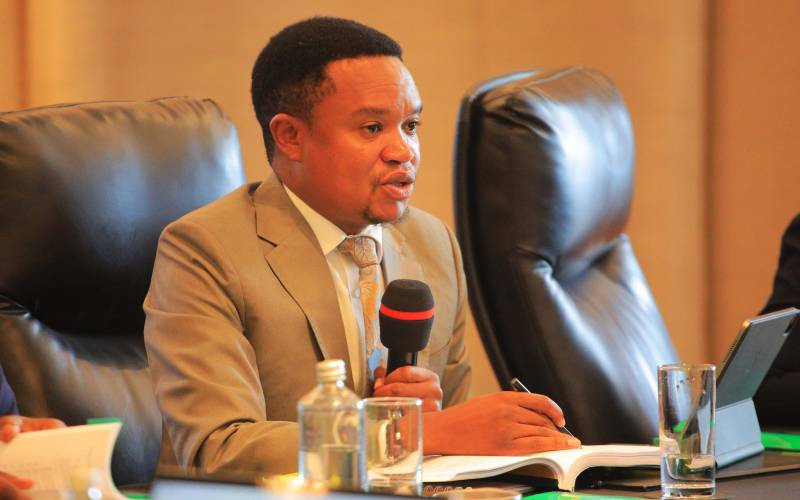
Speaking at the launch, Dr Monicah Bitok, Ophthalmologist and Acting Head of the Eye Health Section at the Ministry of Health, underscored the urgency of action, noting that uncorrected refractive error remains one of the leading causes of visual impairment in Kenya.
“The SPECS 2030 Initiative provides a structured, evidence-based pathway to expand access, strengthen systems, and ensure that no Kenyan is left behind due to poor vision,” said Dr Bitok.
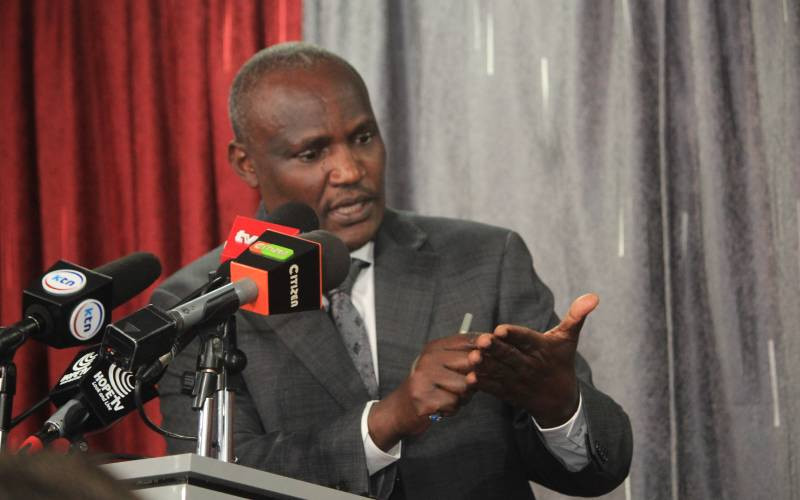
Dr Andrew Toro, speaking on behalf of the Director General for Health, Dr Patrick Amoth, reaffirmed the government’s commitment to leveraging the initiative to strengthen primary health care systems and build sustainable partnerships to reach underserved populations.
He called on partners to align their support with national priorities under the SPECS framework and emphasised the role of health workers in championing quality, accessible eye care services across the country.
The SPECS 2030 initiative will focus on expanding access to refractive services, strengthening the capacity of eye health personnel, enhancing public awareness and community education, reducing the cost of spectacles and related services, and strengthening research, data, and monitoring systems.
Stay informed. Subscribe to our newsletter
The launch signals a renewed national commitment to tackling what experts describe as a silent public health crisis affecting millions of Kenyans, including school-going children and the working population.
Through coordinated efforts between government, development partners, private sector actors, and participating eye health partners, Kenya aims to significantly increase access to spectacles and ensure that clear vision is accessible to all.
Some of the measures to achieve these are to ensure eye care is available in all primary healthcare facilities in the counties, collaboration with spectacles sellers to ensure affordable prices, increasing coverage cost under the Social Health Authority, partnering with Community Health Promoters(CHPs) to create awareness about refractive error, and increasing the number of optometrists.
According to sources, the scarcity of optometrists in Kenya is a significant public health issue, with estimates indicating that roughly 600 or fewer trained optometrists are serving a population of nearly 59 million.
This translates to approximately one optometrist for every 100,000 people, which is nearly 10 times below the internationally recommended ratio of one optometrist per 10,000 people.






Subscribe to our newsletter and stay updated on the latest developments and special offers!







 join
join