×

The Standard e-Paper
Stay Informed, Even Offline
 The Standard Group Plc is a
multi-media organization with investments in media platforms spanning newspaper
print operations, television, radio broadcasting, digital and online services. The
Standard Group is recognized as a leading multi-media house in Kenya with a key
influence in matters of national and international interest.
The Standard Group Plc is a
multi-media organization with investments in media platforms spanning newspaper
print operations, television, radio broadcasting, digital and online services. The
Standard Group is recognized as a leading multi-media house in Kenya with a key
influence in matters of national and international interest.

Audio By Vocalize
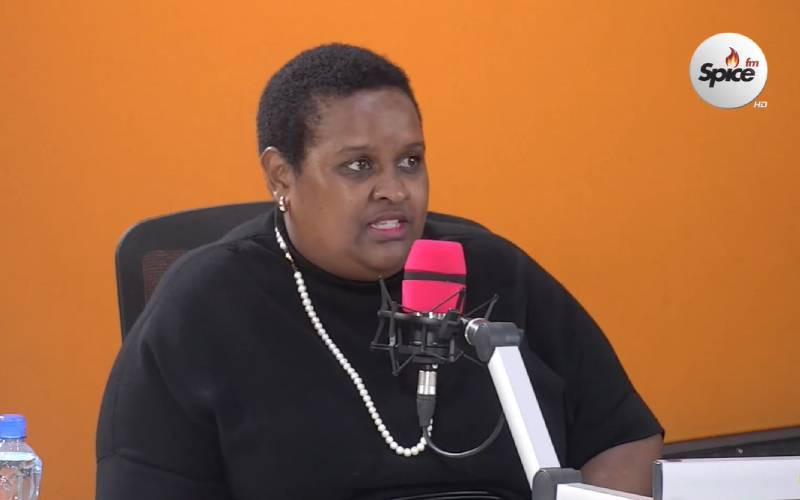
Kenya's readiness to respond to an Ebola outbreak has climbed to nearly 90 per cent, a health official has said, despite the country never recording a case of the disease.
Dr. Victoria Kanana, Public Health Emergency Preparedness and Response Lead at the Kenya National Public Health Institute (NPHI), said months of training, simulation exercises and surveillance upgrades have pushed the score up from 66 per cent in April.
She spoke on Wednesday, August 12, during an interview on Spice FM.
"That assessment gave us direction. We are very good at contact tracing, but in areas of infection prevention and control, specifically on how health workers can protect themselves, we were not doing well. Those are some of the areas we have been working on," she explained.
Kanana noted that the absence of an Ebola case in Kenya has, unusually, worked in the country's favour.
"We have not dealt with Ebola before, so our health workers are not sensitised to this," she said. "The lack of Ebola cases in Kenya is an advantage, as that has given us time to prepare," she added.
The government has focused special attention on 12 counties it considers high risk because of border proximity, population movement and location along major transport routes. They are Bungoma, Siaya, Kisumu, Homa Bay, Migori, Trans Nzoia, West Pokot, Turkana, Uasin Gishu, Nairobi and Mombasa.
Health officials are screening travellers at Gate 16 at the airport, checking whether they have visited the Democratic Republic of Congo (DRC) within the past 21 days, Kanana said.
Travel records are being kept to help trace and follow up anyone who later develops symptoms.
Kanana cautioned that Kenya's real test would come only if it records an actual case.
Her remarks come as DRC battles what health authorities describe as the fastest growing Ebola outbreak on record.
The World Health Organization (WHO) reported 4,381 confirmed cases and 2,011 confirmed deaths as of Sunday, August 9, up from 3,262 cases and 1,437 deaths a fortnight earlier.
The outbreak has spread across 53 health zones in five provinces including Ituri, North Kivu and South Kivu, and has been described as the world's second largest on record.
Kanana observed that the current strain is the fastest growing in the history of Ebola outbreaks, though the 2014-2016 West Africa outbreak remains the largest by overall impact, with more than 28,000 cases and more than 11,000 deaths.
Stay informed. Subscribe to our newsletter
"As much as this is not the biggest, it means we can surpass in numbers the other outbreaks that happened in previous years," she said.
Uganda, which also recorded cases linked to the regional outbreak, declared its own outbreak over on Tuesday, July 28, after completing a mandatory 42-day monitoring period without a new case.
Uganda reported 20 confirmed cases including two deaths, with the last confirmed case reported on 21 June.
Kanana explained that Ebola spreads mainly through direct contact with bodily fluids, including blood, vomit, saliva, urine and faecal matter. Early symptoms include fever, extreme fatigue, muscle aches and severe headache, before more serious signs such as vomiting, diarrhoea, bruising, bleeding and organ failure develop.
"It is advisable to go to hospital when you develop the early symptoms because once you start bleeding, it may be a little too late," she noted.
Vaccine and treatment research for the current strain is ongoing, Kanana said, adding that Kenya is engaging other countries as part of regional preparedness.
"An outbreak of Ebola anywhere in the world is an outbreak everywhere. We are talking to everyone so that we can be adequately prepared," she observed.
Kenya holds a standing meeting with Uganda every Friday to review guidance from a country that has handled Ebola cases before, Kanana said.
She urged Kenyans to remain calm and rely on verified information.
"I'd ask Kenyans not to panic and not to consume information that has not been verified because that can cause many problems down the line," she cautioned.






Subscribe to our newsletter and stay updated on the latest developments and special offers!








 join
join