×

The Standard e-Paper
Smart Minds Choose Us
 The Standard Group Plc is a
multi-media organization with investments in media platforms spanning newspaper
print operations, television, radio broadcasting, digital and online services. The
Standard Group is recognized as a leading multi-media house in Kenya with a key
influence in matters of national and international interest.

Audio By Vocalize

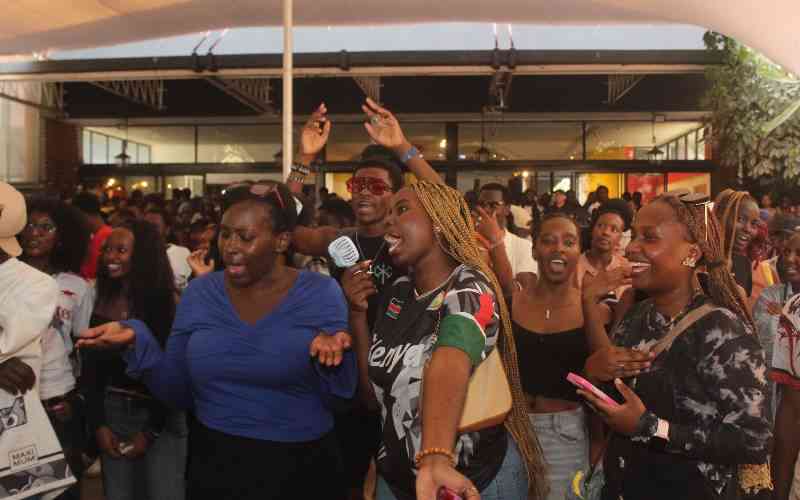
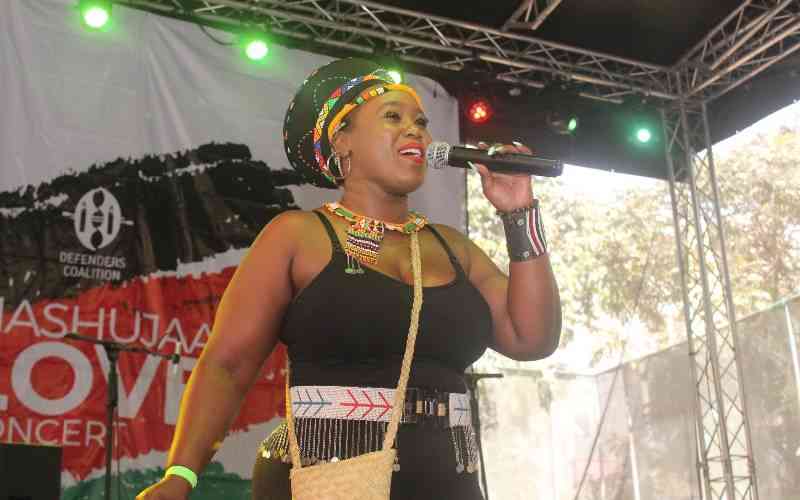
Mashujaa Day Love Festival 2026, where hundreds of youths participated in honour of human rights defenders through music, art, and poetry. [Benard Orwongo, Standard]
As Kenyans celebrated Mashujaa Day across the country, hundreds of young people gathered in Nairobi to honour fallen Gen Z heroes who lost their lives fighting for their rights, while renewing their commitment to the struggle for justice, accountability and a better country.
Unlike traditional celebrations, the gathering at Alliance Française in Nairobi used music, poetry and art to celebrate ordinary Kenyans whose courage and activism have helped shape the country’s human rights movement.
The annual concert, organised by the National Coalition of Human Rights Defenders, popularly known as Defenders Coalition, brought together young people, human rights defenders and citizens to remember those whose contributions to the protection of fundamental rights often go unrecognised.
Gloria Madegwa, Programs Manager at Defenders Coalition, said the event gave a platform to celebrate individuals who have contributed to creating an environment where Kenyans can live with dignity and enjoy their constitutional freedoms, even if they never receive official recognition from the State.
“We are on a different trajectory. The youth are coming out to have their voices heard. They are the ones who are now speaking truth to power, and they have said they are not going to take a backseat. When violations are happening, they will be at the forefront defending and championing for rights,” Madegwa said.

According to Madegwa, the gesture of the young people coming out in large numbers demonstrated the importance of creating spaces where young people can tell their own stories, celebrate those who inspire them and speak about the issues affecting their lives.
“They are saying, as much as it is time for us to celebrate, we also need to make a statement. And the statement that they are making is that the change is here, and the change is happening,” she said.
“The young people want to be recognised not only as the country’s future, but also as citizens whose concerns must be addressed in the present,” she added.
Since 2024, young Kenyans have taken to the streets to protest against the Finance Bill, the high cost of living, femicide and other concerns with Madegwa stating that their activism has increasingly connected political accountability with the economic and social realities they face daily.
“The youth are the ones who are actually benefiting from these services. When it comes to tertiary education, if you were to go around right here right now and ask maybe 10 youths if they are in college right now, and if their college fees have been paid, you will get varied answers because of the truth of what is happening,” she said.
“There are no college fees, tertiary fees. The government is not doing its part. And therefore, the youth are feeling very frustrated with that.”
For Wilson Chivanga, an African artist from Zimbabwe representing AfroTellers, the festival demonstrated the power of art as a tool for expression, solidarity and the defence of human rights.
Stay informed. Subscribe to our newsletter
Chivanga said the delegation had attended to stand with Kenyan youth and celebrate their resilience, while highlighting how creative platforms could help young people communicate their demands.
“It’s an opportunity for us as young people to realise how powerful art is as a form of expression, as a form of standing up for our rights,” he said.
He said the large turnout was evidence that young people were increasingly recognising the importance of participating in public affairs rather than leaving decisions about their future to others.
“This is not just a celebration of art and music, but it’s a show of young people saying we are here to take up our space, we will participate actively, and we will make our voices heard,” Chivanga said.
He dismissed the suggestion that young people gathering to advocate for their rights should be viewed as a threat, saying peaceful assembly and collective action were legitimate ways to make their concerns known.
“I think it is well within our rights as young people to come together and stand up for our rights. So, us coming together should never be construed to be an act of violence,” he said.
For Sheila Kirui, a Gen Z participant, the festival offered a platform where young people could express themselves, connect with others and use their voices to push for change.
Kirui said she attended because the event brought together artists and young people in a space where their views could be heard and their creativity celebrated.
She said the momentum of youth participation in civic affairs since 2024 had demonstrated that young people could use their voices to influence change, even through small actions within their communities.
Kirui called on leaders to listen to young people’s grievances and act on their concerns, adding that participation in governance should not be limited to demonstrations or activities in Nairobi.
“I am excited to see my fellow youth. I’m excited to see my fellow Gen Zs. Our voice matters, and we need you in such spaces,” she said, urging young people across the country’s 47 counties to participate in governance and make their voices count.
For the activists, the gathering was an opportunity to remember young people killed while demanding accountability, stand in solidarity with families affected by abductions and femicide, and remind leaders that citizens have a constitutional right to question those in power.
“There is a government Mashujaa, this is the people’s Mashujaa,” said Rachael Mwikali, a national convener of the End Femicide Movement Kenya and Africa.
Mwikali said the country had endured difficult moments in its struggle for justice, adding that the gathering recognised the efforts of young people, women, men and gender-nonconforming people who have continued to fight for their rights.
She called on the government to implement recommendations made by the End Femicide Task Force, saying women were tired of being killed while commitments to address the problem remained unfulfilled.
“I am here as part of the End Femicide Movement in Kenya to say that the recommendations that were given by the task force must be implemented. Kenya and women, we are tired of being killed,” she said.
The activist also raised concerns over abductions, saying they reflected an unsafe civic environment in which people could be targeted for speaking out.
“We must safeguard our country and the work of all the heroes who are doing the work, even in public service, who are really good and defending the rights of the people,” Mwikali said.
Mwikali described the growing presence of young people in civic spaces as an encouraging development, saying each generation had its own responsibility in shaping the country’s future.
“This is a very good culture of seeing young people. Most of the time we have not been seeing young people in this space. But seeing that they have been the ones taking over, this is a success,” Mwikali said.
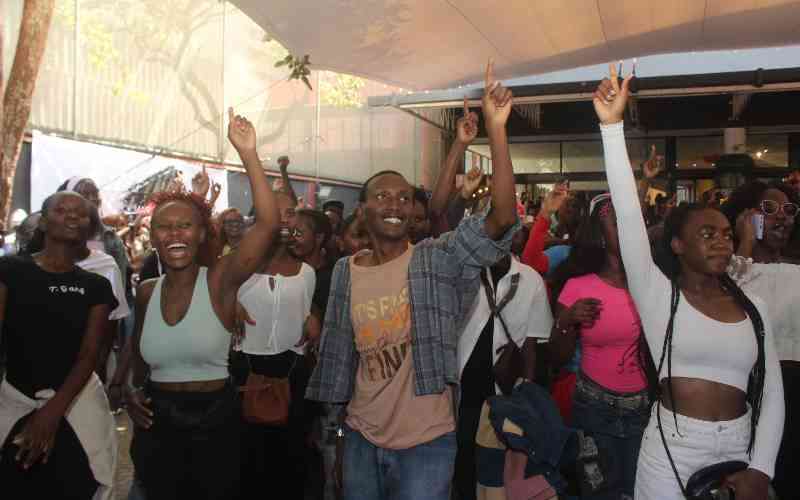
The festival came against the backdrop of youth-led demonstrations in recent years, including protests against the Finance Bill, femicide and the rising cost of living. Participants said young people were increasingly using public gatherings, creative expression and civic engagement to demand change.
She also expressed solidarity with journalists, citing attacks on media workers and personalities, and called on Kenyans to participate peacefully in the coming elections and choose leaders who support the people’s agenda.
Madegwa said the challenge facing the country’s leadership is whether it is listening to the demands of the young people and responding to the concerns that are driving young people into the streets.
“The youth are saying very simple things. Mr President, we have the Constitution. Can we follow the Constitution? We have Article 47. Can we follow Article 37? Can we just stay within the Constitution and everything will be well?” she said.
Article 37 of the Constitution guarantees every person the right, peaceably and unarmed, to assemble, to demonstrate, to picket, and to present petitions to public authorities.
She also welcomed President William Ruto’s recognition of young people speaking out about issues affecting them in his speech during Mashujaa Day celebrations, saying the country was at a point where their voices could no longer be ignored.
In his Mashujaa Day speech in Eldoret, President Ruto conceded that concerns over the high cost of living, taxation, unemployment and slow progress have pushed young Kenyans to protest, insisting that his administration must remain answerable to citizens throughout its term.

President Ruto said Kenyans, especially the youth, were entitled to question government policies and demand better services, underscoring the need for continued accountability beyond election periods.
“Kenyans, particularly young people, have taken to the streets to express frustration, sometimes over the cost of living, taxation, unemployment, and the pace of change,” he said.
Ruto said the demonstrations should remind elected leaders that securing votes does not end citizens’ right to scrutinise their decisions or influence the country’s direction.
“Their protests remind us that an electoral mandate does not silence the people between elections. Citizens retain the right to question their government, challenge its decisions, and demand better,” Ruto said.
“We must listen, respond, and remain answerable for the commitments we make,” he added.







Subscribe to our newsletter and stay updated on the latest developments and special offers!








 join