×

The Standard e-Paper
Smart Minds Choose Us
 The Standard Group Plc is a
multi-media organization with investments in media platforms spanning newspaper
print operations, television, radio broadcasting, digital and online services. The
Standard Group is recognized as a leading multi-media house in Kenya with a key
influence in matters of national and international interest.

Audio By Vocalize
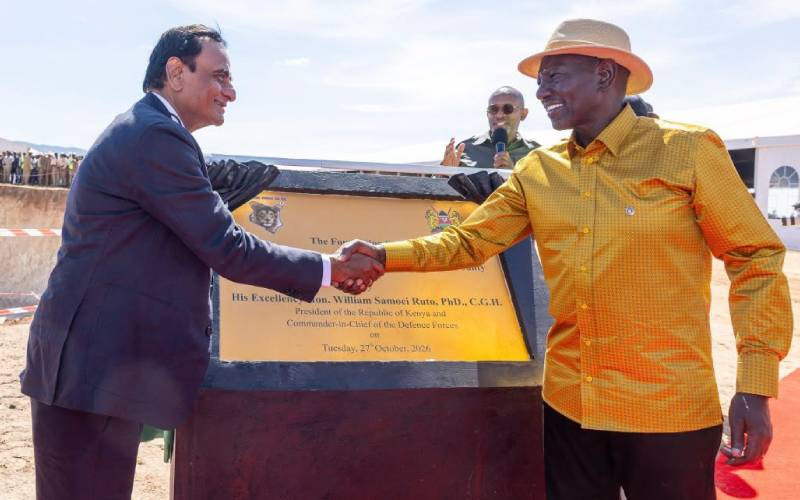
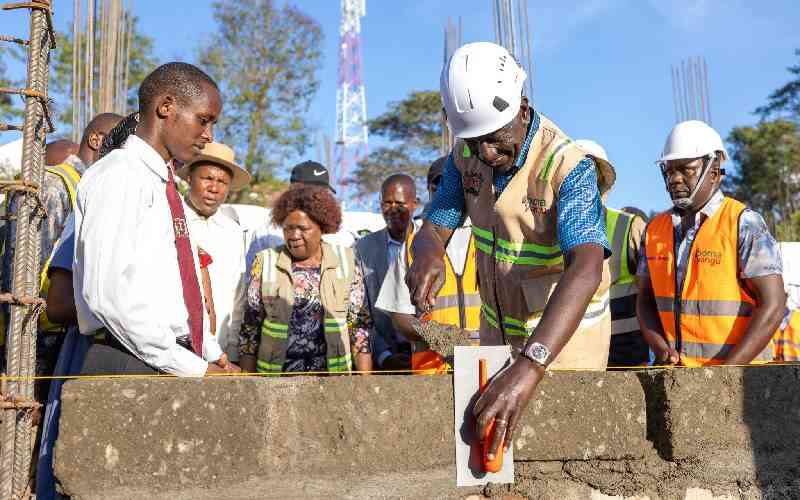
President William Ruto has broken ground for a Sh70 billion clinker and cement manufacturing plant in Ngaaie, Mwingi North, Kitui County, in a major investment expected to transform the region’s limestone deposits into industrial wealth, create thousands of jobs and boost local economic activity.
The project, spearheaded by Devki Group, will be Kitui County’s first cement manufacturing facility. It is expected to create 4,000 jobs during construction and directly employ more than 3,000 Kenyans upon completion, scheduled for August 2027.
President Ruto said the investment would strengthen local manufacturing, reduce dependence on imported clinker and position Kenya as a regional exporter of cement and related products.
“By producing clinker locally, we retain more value within our economy, create skilled jobs, build technical expertise, strengthen our industrial capacity, and create wealth in Kenya,” he said.
The President said the project would unlock the economic potential of Ngaaie’s abundant limestone deposits while creating opportunities for local businesses, transporters, suppliers and other enterprises expected to support the plant’s operations.
He added that the government would continue creating an enabling environment for investors, citing policies designed to encourage domestic production and reduce reliance on imported industrial materials.
Ruto said the Export and Investment Promotion Levy introduced on imported clinker in 2023 was intended to support local manufacturers and stimulate investment in domestic production.
The project also places renewed focus on skills development and the participation of local enterprises.
Ruto urged Devki Group to collaborate with technical and vocational education institutions to provide apprenticeships and practical training for young people in Kitui.
He further called on the company to ensure local businesses benefit from supplying goods and services during construction and subsequent operations.
Ruto cited Devki’s clinker plant in Sebit, West Pokot, which he commissioned in April 2024 and which has a production capacity of 6,000 tonnes daily.
He also announced plans to break ground for Bamburi Cement’s expansion in Matuga, Kwale County, in approximately three weeks. The proposed facility will include a clinker plant with a capacity of 5,000 tonnes daily.
Ruto said Kenya’s cement production increased from 8.85 million tonnes in 2024 to 10.44 million tonnes in 2025, with output reaching 7.62 million tonnes in the first eight months of 2026.
He cited ongoing housing and infrastructure projects, including 303,910 homes at various stages of development, as potential sources of demand for locally manufactured cement.
Stay informed. Subscribe to our newsletter
The President also pointed to the proposed Dangote refinery in Lamu, whose construction is expected to require more than two million tonnes of cement.
Devki Group Executive Chairman Narendra Raval said the company had spent about a decade planning to establish the facility, with the area’s limestone deposits playing a central role in the decision.
“We started dreaming of putting up this plant about 10 years ago. This was tried before by cabro and cement companies to establish a cement plant in Ngaaie because of the deposits we have of limestone in Ngaaie,” Raval said.
Recalling his earlier visits to the area, Raval described a place that had few roads and limited economic opportunities, particularly for young people.
“I used to come here when it was totally msituni. Nilikuwa natembea na mguu, hata hakuna barabara,” he said.
He argued that unemployment and idleness had contributed to social challenges among the youth, insisting that investment and job creation could help improve livelihoods.
“So it is not their wish to be drunk or have a drug and stay idle, but there are no opportunities,” Raval said.



Subscribe to our newsletter and stay updated on the latest developments and special offers!