×

The Standard e-Paper
Stay Informed, Even Offline
 The Standard Group Plc is a
multi-media organization with investments in media platforms spanning newspaper
print operations, television, radio broadcasting, digital and online services. The
Standard Group is recognized as a leading multi-media house in Kenya with a key
influence in matters of national and international interest.

Audio By Vocalize

Businesses and households have been urged to strengthen their emergency response plans ahead of the October-December rainy season, with forecasts warning of enhanced rainfall in several parts of the country.
Victor Odera, head of AURA, an emergency response platform operating in Kenya, said individuals and businesses must prepare for emergencies before heavy rains disrupt transport networks and access to essential services.
“As Kenya enters the October-December rainy season, individuals and businesses should be considering how prepared they are should an emergency occur,” Odera said.
The IGAD Climate Prediction and Applications Centre (ICPAC) forecasts a 90 per cent probability of enhanced rainfall in north-eastern Kenya, while parts of central Kenya could receive more than 400mm during the season.
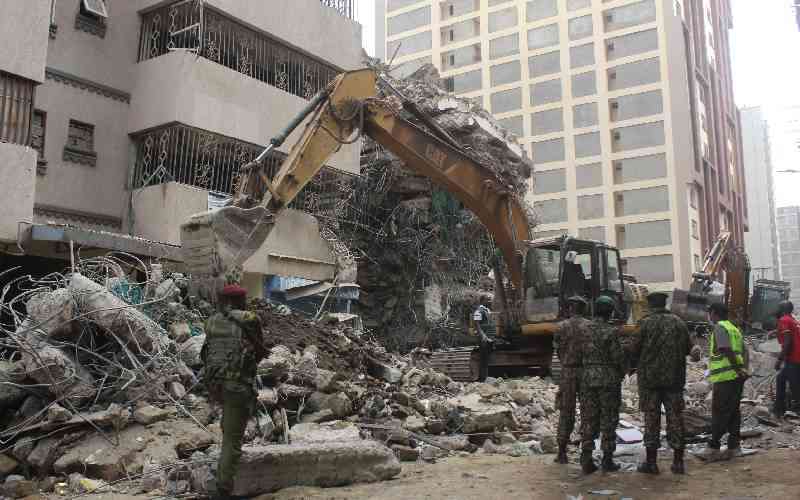
The warning comes as the country continues to grapple with the effects of the March-May 2026 floods, which claimed 122 lives and affected more than 42,000 people across 27 counties, according to the World Health Organisation.
The floods damaged roads, bridges, water systems and electricity infrastructure, while several health facilities were forced to reduce or temporarily suspend services.
Odera said severe weather creates a difficult situation for emergency responders, with rising demand for assistance coinciding with disruptions to transport networks.
“This illustrates one of the biggest challenges during severe weather: the number of emergencies taking place often increases at exactly the same time that reaching people becomes more difficult,” he said.
During the March floods, major transport routes, including Mombasa Road and Uhuru Highway in Nairobi, became impassable. Floodwaters also submerged Sultan Hamud Bridge along the Nairobi-Mombasa highway, temporarily cutting off the route, while sections of Ahero Bridge on the Kericho-Awasi-Kisumu road were affected.
Odera said flooded roads and congestion could delay security personnel, medical teams and roadside assistance providers when their services were most needed.
He urged organisations to review their emergency contacts, ensure employees understand how to request assistance and maintain accurate information about their premises and access routes.
Individuals were also advised to monitor weather forecasts and flood warnings, avoid flood-prone areas and follow official evacuation instructions.
At AURA, technology is being used to improve emergency coordination by connecting people seeking assistance with the nearest available vetted responders.
“When an emergency is triggered through one of our partner platforms, the technology identifies the user's location and alerts nearby responders across AURA's network, which includes private security, medical and roadside-response providers,” Odera said.
Stay informed. Subscribe to our newsletter
He said the platform had integrated Google Maps Platform into its dispatch system to access real-time traffic information and road-closure data when determining routes and estimated arrival times.
“During periods of severe weather, having that level of real-time information can help us make better dispatch decisions and get responders to people in distress as efficiently as conditions allow,” he said.
Odera said early preparation, reliable communication, and effective coordination were essential in reducing the impact of extreme weather emergencies.





Subscribe to our newsletter and stay updated on the latest developments and special offers!