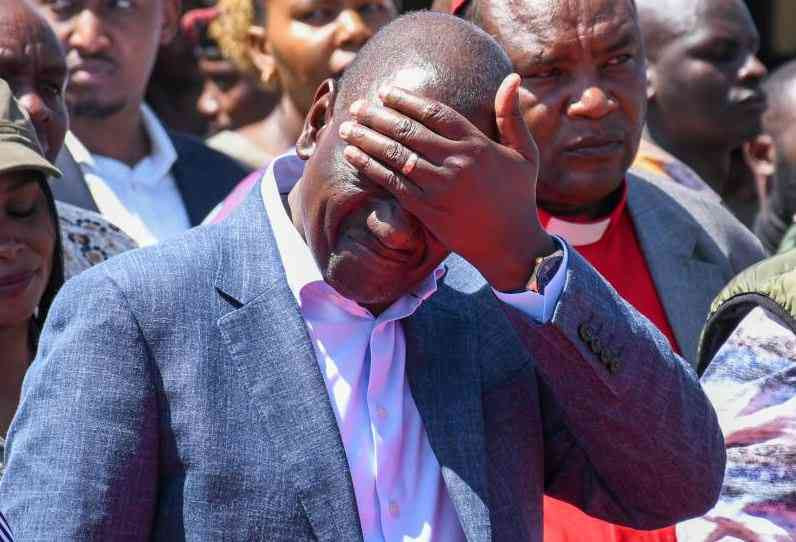
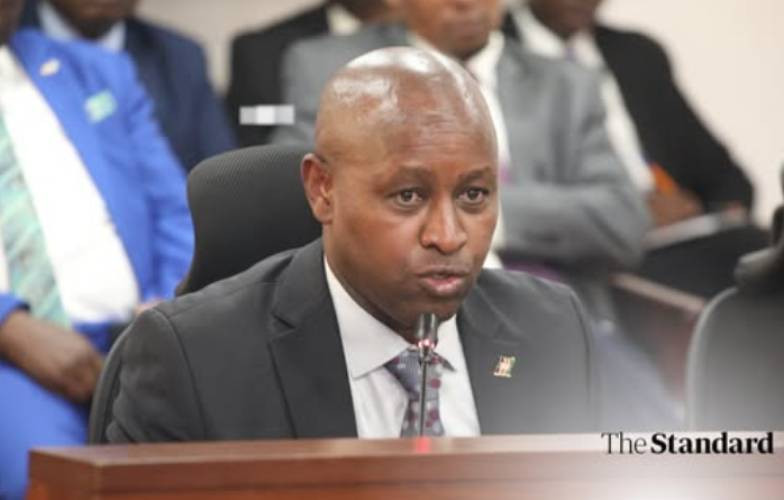
President William Ruto’s aide Farouk Kibet and other leaders during campaigns for UDA Malava candidate David Ndakwa in Bukhakunga village, West Kabras, on November 24, 2025. Ndakwa won the election. [Benjamin Sakwa, Standard]
This past week, Kenyans had a chance to elect new representatives in the seats that had fallen vacant since the 2022 election. Many commentators have sought to liken the by elections to the mini general elections of 1966. While the latter was occasioned by ideological fallout between Jomo Kenyatta and Oginga Odinga, the former was the result of political brinkmanship. After the 2022 elections the politicians were locked in an ego fest over the electoral body. Kenya Kwanza and Azimio engaged in maneuvers whose net effect was to ensure each side had the final say on the management of IEBC.

A joke is told that when the bungling of 2007 election happened, a senior citizen remarked that to steal maize successfully, you carry the heist in the farm, not when the produce is in the farmer’s granary. Nothing most eloquently captures the brazenness of the rigging of that election. The sad part is that we are yet to get our act together. While we are already pointing fingers everywhere, we are yet to point fingers at ourselves.
The bribery, the violence and everything undesirable that took place was in the first place possible because there were willing participants. The transportation of goons across counties is because the demand met a sufficient supply. We saw one MP in Homa Bay drenched in his own blood. Images of him being accosted by people believed to be violence infrastructure of the opponent were sad to look at. Seeing him pinned to the ground was a testament that violence knows no title. Anyone can be a victim. But the most disturbing part was seeing bloggers who come off as university educated celebrate that violence. Elsewhere, a man resembling the DP party leader was seen threatening a resident of Mbeere North with violence.
All these point to one conclusion. That for all the talk about free and fair elections, the threat of violence and actual violence is an impediment. How many women and girls did not turn up to vote on account of that violence?
When the Mbeere North seat fell vacant, word on the street had it that Kenya Kwanza was planning to spend around Sh500 million in that by-election. Over tea, a friend joked that the bottomlines of that constituency would be materially affected in a manner they have never witnessed. As the campaigns hit the homestretch, the opposition claimed that the government side had spent northwards of Sh600 million. If these claims are true, then campaign financing Law is long overdue. Not because it would deter but to lay the basis for the day we will, as a people, choose to put an end to impunity. But a side note to the opposition. It’s still possible to win a seat even in the face of intimidation and bribery. If in doubt, ask Memusi Kanchory. By the way, the vacancy had arisen under circumstances similar to the one for Mbeere North. I hope as they retreat to do soul searching, they will accept that their message does not have many enough converts.
That brings me to the substratum of this column. The narrative that young people don’t register and do not vote is a lie. To say their enemy was not on the ballot would be an epitome of lack of knowledge. One, the election was being conducted on the basis of 2022 register. That, therefore, does not suggest that efforts to restore the faith of young people in the ballot have failed. Young people could tell the battle for these by-elections was still being run on the old software. They were, therefore, unwilling to plunge into a process whose result would be a zero sum game. The election was a popularity contest for popularity’s sake, not a battle of ideas. The fact that government candidates prevailed is an indictment on the messaging by the opposition.
Kidi Mwaga is the convener -- Inter Parties Youth Forum. [email protected]