×

The Standard e-Paper
Home To Bold Columnists
 The Standard Group Plc is a
multi-media organization with investments in media platforms spanning newspaper
print operations, television, radio broadcasting, digital and online services. The
Standard Group is recognized as a leading multi-media house in Kenya with a key
influence in matters of national and international interest.
The Standard Group Plc is a
multi-media organization with investments in media platforms spanning newspaper
print operations, television, radio broadcasting, digital and online services. The
Standard Group is recognized as a leading multi-media house in Kenya with a key
influence in matters of national and international interest.
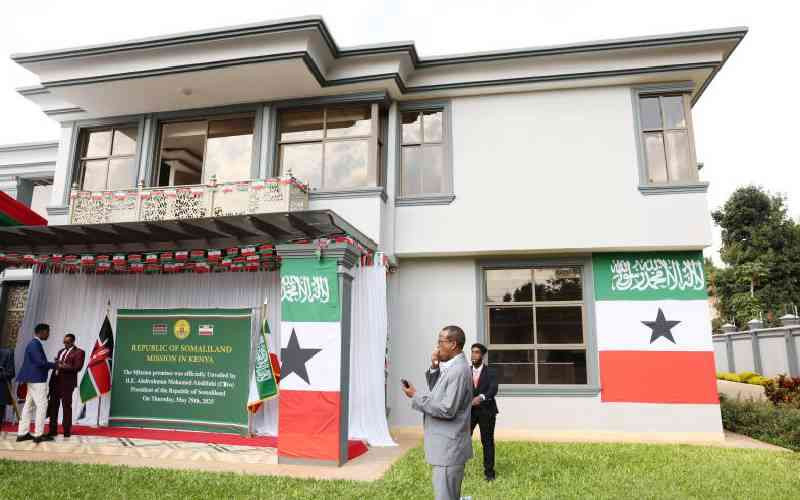
What makes a State valid in its existence? Legally speaking, there are a few elements laid out in international law that define what makes a territory a state. These are a permanent population, a defined territory that is being claimed, and a functioning government that has the capacity to enter into relations with other states. Additionally, international law recognises the right of all peoples to self-determination, meaning that a people must be allowed to decide for themselves whether to be a part of an existing nation or form a new one.
Politically speaking, however, a state does not exist in a vacuum, but in a community of other states. This phenomenon makes recognition of a new territory by existing states important if a territory is to legitimise its position as a state. Whether a territory’s statehood is recognised or not is often an extremely political affair. There are ongoing debates on whether or not Somaliland should be recognised. The people of Somaliland voted overwhelmingly in 2001 for liberation from Somalia. Since 1991, Somaliland has had its own functioning government, and over three decades has been the most stable region in the recognised country (Somalia). But not a single country recognised Somaliland as an independent state.
Subscribe to our newsletter and stay updated on the latest developments and special offers!







 join
join