×
App Icon
The Standard e-Paper
Join Thousands Daily

★★★★ - on Play Store
Read on the App

Synergy between aviation and tourism can spur growth

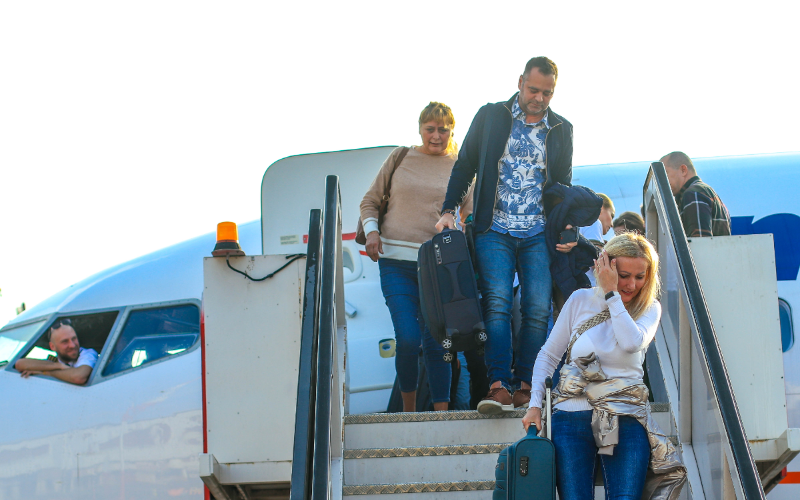
Passengers disembark from a Hungarian charter flight at Moi International Airport in Mombasa on December 30, 2025. [Robert Menza, Standard]

Kenya’s long-term economic growth depends on how effectively it connects with the world. Two sectors sit at the heart of that ambition – aviation and tourism. Both sectors, as I know them, are deeply interconnected, as they act as engines for global and national economic growth.

For Kenya, leveraging the synergy between these sectors presents ideal opportunities for development and competitiveness with its peers as they create a multiplier effect that promotes employment, trade and regional development.


Aviation provides the arteries of connectivity that bring people, goods, and capital into the country while tourism provides the demand that fills those routes and sustains investment.


Already, the aviation industry in Kenya supports thousands through job creation and contributes immensely to the country’s Gross Domestic Product (GDP) by up to 3.1 per cent which translates to Sh425bn annually. This is revenue that is generated from direct contributions from the sector, as well as indirect and induced impacts from the wider supply chain, employee spending, and tourism.

Aviation serves a large percentage of movement catering to over 1 billion travellers traversing the globe, contributing directly to international visitor numbers. Research indicates that over 58 per cent of international tourists travel by air, locally, regionally and internationally.

Tourism, on the other hand, contributes 10 per cent to the GDP and directly or indirectly supports more than a million livelihoods. As the global tourism market continue to shift toward diversity, authenticity, and year-round experiences, Kenya stands at a central point to position itself as a premier destination with additional offerings on our tourism portfolio and attract new segment of travelers.

Joint destination marketing is a clear starting point. Kenya already invests in marketing itself as a tourism destination, while airlines promote routes independently. A combined strategy, where airlines, airports, and tourism agencies share data on traveller trends, load factors, and visitor demographics, both industries can work together to identify underserved markets and start by promoting existing and new routes, leverage industry data from both sectors to identify opportunities and develop new marketable routes, which are essential to attracting and sustaining tourism, trade, and investment in the country.

Infrastructure remains a shared priority. Kenya’s airports must evolve beyond transit points to become efficient, passenger-friendly gateways that facilitate both tourism and trade. Joint investment in modern airports that feature state-of-the-art terminals, visitor centres, and smart technology for security and check-in will improve the overall travel experience.

In parallel, investments in cargo facilities can strengthen Kenya’s position as a logistics hub for perishable exports such as flowers, seafood, and horticultural products. Constructing and refurbishing regional hubs is also essential in dispersing tourism beyond Nairobi and the Coast, because it will create stronger regional tourism circuits and reduce pressure on major gateways.

The recent ICAO–UN Tourism meeting provided a timely reminder that Africa’s aviation and tourism sectors face shared challenges and opportunities. The meeting emphasised the need for coordinated regional action in areas such as infrastructure development, policy harmonisation, and financial innovation.

For Kenya, these alignments present an opportunity to champion an integrated approach to air connectivity and tourism development, positioning the country as both a regional hub and a model for sustainable growth.

Ms Wausi is Deputy Director - Public Relations and Corporate Communications, Kenya Tourism Board