×

The Standard e-Paper
Smart Minds Choose Us
 The Standard Group Plc is a
multi-media organization with investments in media platforms spanning newspaper
print operations, television, radio broadcasting, digital and online services. The
Standard Group is recognized as a leading multi-media house in Kenya with a key
influence in matters of national and international interest.
The Standard Group Plc is a
multi-media organization with investments in media platforms spanning newspaper
print operations, television, radio broadcasting, digital and online services. The
Standard Group is recognized as a leading multi-media house in Kenya with a key
influence in matters of national and international interest.

Audio By Vocalize

Kenya’s experiment with devolution was founded on a powerful and human-centered promises that governance would move closer to the people, that resources would be managed more equitably, and that ordinary citizens would finally see development shaped by their own local realities.
For many, especially in historically marginalised regions, this system symbolized hope better roads, improved healthcare, and accountable leadership. Yet, over time, that hope is increasingly being tested by a growing culture of entitlement among some county leaders, where public office is treated less as a trust and more as a protective shield against scrutiny.
The result is a widening emotional and moral distance between citizens who fund government through taxes and leaders who appear insulated from the consequences of their actions.
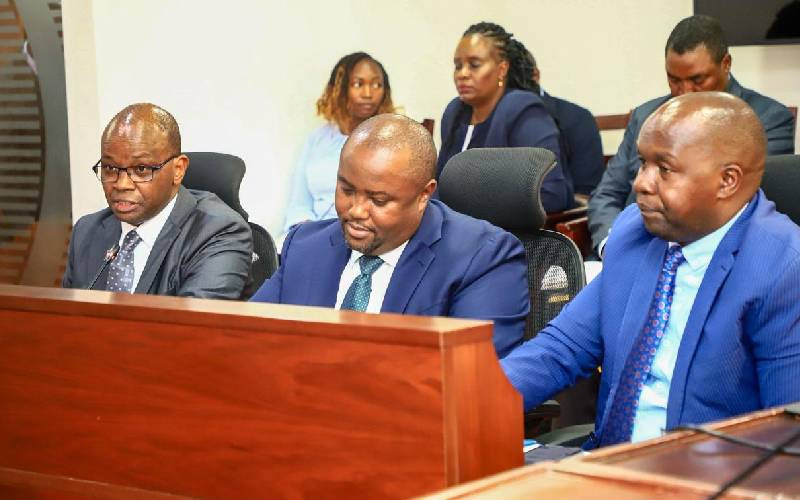
This tension becomes most visible in the repeated defiance of Senate oversight. The Senate, constitutionally mandated to safeguard public resources at the county level, represents not just an institution, but the collective voice of the Kenyan taxpayer.
When governors ignore summons to appear before oversight committees, they are not merely declining an invitation; they are effectively dismissing the public’s right to accountability. The justification of such actions through political solidarity only deepens the crisis, transforming what should be a cooperative governance structure into a battleground of institutional resistance. In this environment, oversight loses its authority, and accountability becomes negotiable rather than obligatory.
At a deeper level, this pattern reflects a breakdown in group dynamics within governance structures. Ideally, institutions like the Senate, county governments, and oversight agencies should function as interdependent guided by shared norms of responsibility and transparency. However, when influential actors within one group begin to resist or undermine these norms, it creates a ripple effect that weakens the entire system.
The emergence of what some leaders have described as “executive fugitives” illustrates how deviance from group expectations, when unchecked, can become normalized behavior. Over time, such normalization erodes institutional cohesion, making it increasingly difficult to enforce rules or sustain collective accountability.
Meanwhile, ongoing corruption investigations ranging from allegations of embezzlement to questionable procurement practices highlight the urgency of decisive action. Yet, for many citizens, the persistence of “ongoing investigations” without visible outcomes has led to frustration and disillusionment. The fight against corruption cannot rely solely on procedural processes; it must also demonstrate tangible results that restore public confidence. This is where enforcement agencies carry not just a legal mandate, but a symbolic responsibility to reaffirm the principle that no individual is above the law.
The future of devolution depends on restoring trust between leaders and citizens. Accountability must be a lived reality. Without firm and timely action against those who defy oversight, the risk is not only financial loss but a deeper erosion of democratic values, where power overshadows responsibility and the promise of devolution fades into disillusionment.






Subscribe to our newsletter and stay updated on the latest developments and special offers!






 join
join