×

The Standard e-Paper
Home To Bold Columnists
 The Standard Group Plc is a
multi-media organization with investments in media platforms spanning newspaper
print operations, television, radio broadcasting, digital and online services. The
Standard Group is recognized as a leading multi-media house in Kenya with a key
influence in matters of national and international interest.
The Standard Group Plc is a
multi-media organization with investments in media platforms spanning newspaper
print operations, television, radio broadcasting, digital and online services. The
Standard Group is recognized as a leading multi-media house in Kenya with a key
influence in matters of national and international interest.

Audio By Vocalize

Jesus once warned his disciples that he was sending them into a world that would treat them as pieces in games far bigger than themselves (Mathew 10:16). Therefore, “be wise as serpents and harmless as doves.”
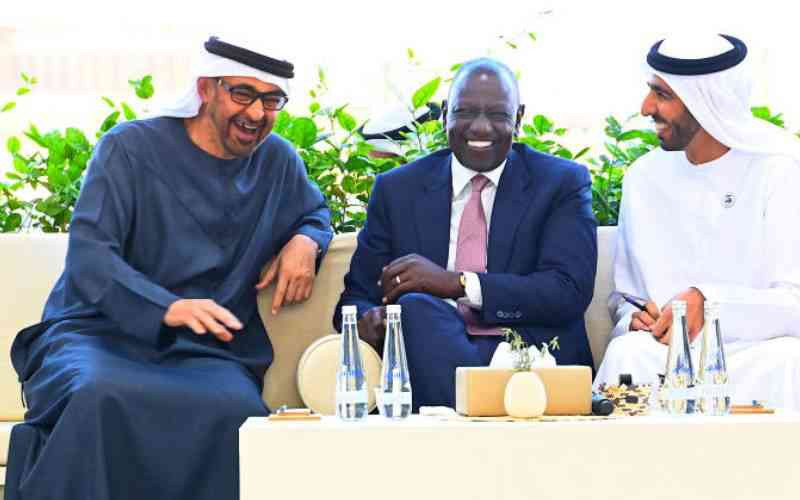
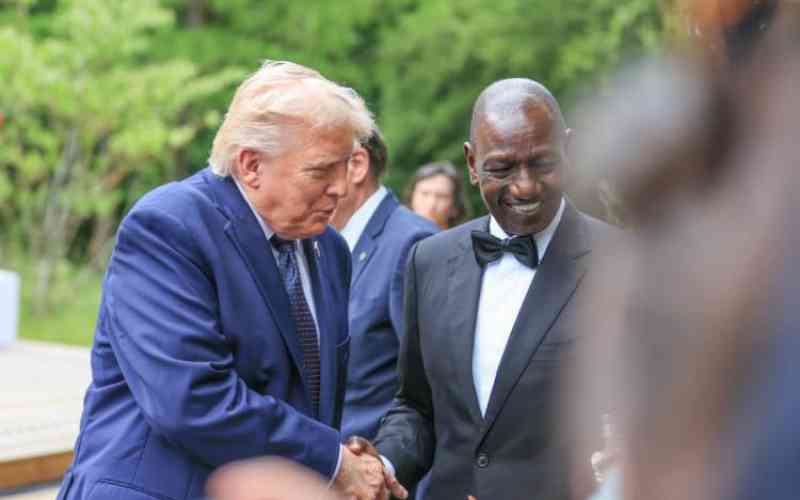
That is the board President William Ruto stepped onto in Évian, France, a contest of empires where every handshake doubles as a hedge. In chess, the pawn never chooses the game or the stakes.
But the pawn that understands the board and keeps moving with purpose is the only piece that crosses the entire field and becomes a queen.
Kenya has just been placed on the board. What it becomes depends entirely on whether it plays, or is simply being played. Power is a woman, guide it gently.
This week’s signal
Washington, Brussels, Beijing, and Moscow are all watching the Same Square: Nairobi.
Strip away the language of partnership and look at the geometry. Kenya sits astride the Indian Ocean’s busiest trade corridor and anchors East Africa’s largest economy.
It carries on its books the railway and port infrastructure. The Chinese-financed debt now quietly shapes every conversation Nairobi has with the West.
Russia, isolated since the Ukraine war, has been courting African votes with a patience the G7 cannot ignore. Washington is racing to offer alternatives before more ports are signed away.
Into that contest walks an invitation to Évian, and Robert Greene’s old law on power explains why. Power, like a woman kept waiting too long, despises the suitor who shows up only once a rival has sent flowers.
For two decades, the G7 sent Kenya a Christmas card and called it diplomacy. Then China arrived with a railway and a port, and Russia started calling with “no strings attached.”
Suddenly, Brussels remembered Nairobi’s number. Nobody pulls out a chair for a woman they are not a little worried about losing. They pull it out for the one somebody else is already walking toward.
What it means for business
Read this correctly, and it is good news, not flattery. When two blocs compete for the same square, the piece sitting on it inherits options it did not have a week ago: competing for financing, infrastructure bids, competing terms it can play against one another rather than accept from just one.
Cabinet, boards, CEOs and investors should watch which side moves first with capital, not which side issued the warmest statement.
Stay informed. Subscribe to our newsletter
That is the art of foresight leadership: recognising the moment you have become a contested asset, and negotiating from that strength, instead of being grateful for the seat.
What it means for policy
For the cabinet and the foreign policy establishment, the danger is mistaking an invitation for an alliance. The chessboard rewards strategic ambiguity, not declared loyalty.
A pawn that announces which queen it serves loses its only real leverage, the uncertainty of its next move. Kenya’s policymakers now hold a narrow window to extract concrete terms from multiple suitors at once, on debt, ports, energy, and technology.
That window closes the moment Nairobi picks a side publicly rather than in a signed agreement’s fine print.
What it means for people
For citizens, great power competition is never an abstraction. It shows up as roads that get built or stall, ports that create jobs or merely service someone else’s debt, power plants that come online or stay stuck in feasibility studies.
The public’s task is not to cheer the invitation photograph. It is to watch which side actually breaks ground, and to ask hard questions when promises from any capital outpace what is delivered at home.
Afterthought
The most dangerous position on any board belongs to the piece that forgets it is a piece. The second most dangerous belongs to the suitor who reveals too soon how badly they want to be chosen.
Queen Elizabeth understood this better than most diplomats; for 45 years, she let half of Europe’s princes court her, and never said yes to a single one.
Every suitor stayed hopeful, every rival stayed careful, and England never had to answer to anyone else’s throne.
President Ruto would do well to play the Virgin Queen; take every dance, accept every dinner, and never let Washington, Brussels, Beijing or Moscow leave the room fully satisfied.
Give them all hope. Give none of them certainty. The moment Kenya says yes to one suitor, every other suitor stops sending flowers, and the leverage disappears with the bouquet.
Stay wise. Stay watchful. The other side is already three moves ahead.
“Decisions are made on the radar screen, but the future is yours.”
-The writer is a human-centred strategist and leadership columnist




Subscribe to our newsletter and stay updated on the latest developments and special offers!





 join
join