×

The Standard e-Paper
Fearless, Trusted News
 The Standard Group Plc is a
multi-media organization with investments in media platforms spanning newspaper
print operations, television, radio broadcasting, digital and online services. The
Standard Group is recognized as a leading multi-media house in Kenya with a key
influence in matters of national and international interest.
The Standard Group Plc is a
multi-media organization with investments in media platforms spanning newspaper
print operations, television, radio broadcasting, digital and online services. The
Standard Group is recognized as a leading multi-media house in Kenya with a key
influence in matters of national and international interest.

Audio By Vocalize
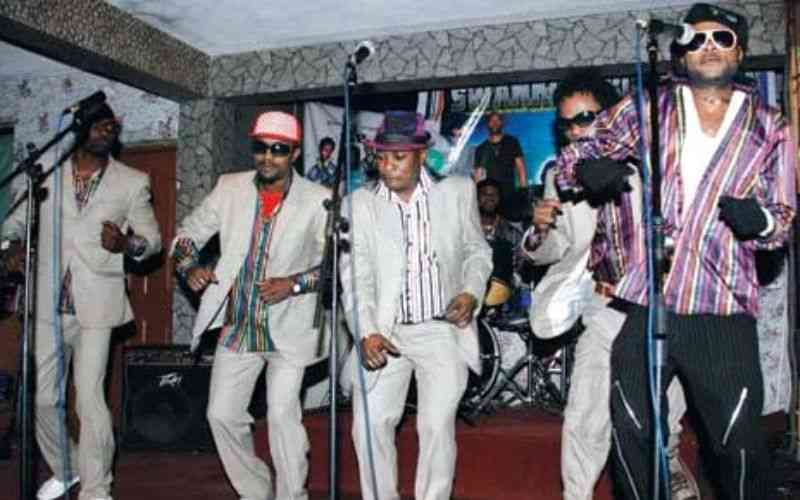
I have never attempted to hide the fact that I love Lingala music. I deliberately put aside the demands of academic life to enjoy its irresistible rhythms.
More precisely, I look forward to what happens when the seben arrives. For the uninitiated, the seben is the electrifying instrumental climax of a Congolese rumba song. It is the moment when the lead guitar takes centre stage. The drummer, in turn, drives the rhythm with infectious energy and the entire ensemble invites listeners to become participants.
For me, when that moment comes, I consciously set aside the demands that ordinarily occupy my mind and simply become a grateful admirer of one of Africa's greatest musical traditions.
If there is one musician who is responsible for this regular assault on my dignity, it is J. B. Mpiana. Every time I convince myself that age has finally caught up with me, he releases another irresistible seben. Before long, I find myself tapping my feet, nodding my head and eventually joining in the celebration that only Lingala music seems able to inspire in me.
Friends occasionally tease me that I become a different person whenever the seben begins. They wonder how someone who spends most of his days reading, writing and teaching can so easily surrender to the irresistible pull of a Congolese guitar. I have no answer. Some experiences are better understood than explained.
Lingala music has a remarkable way of reminding me that joy is also one of God's gifts.
On this matter, I have found an ally in my friend Fred Obachi Machoka, Kenya's celebrated "evangelist" of Congolese music. Machoka has spent decades persuading Kenyans that Lingala music is not simply listened to. It is experienced and lived. Once the rhythm finds you, resistance becomes an act of unnecessary heroism.
Yet beyond the dancing lies a question that has occupied me for years as a scholar of popular culture. Why has Congolese music exercised such extraordinary influence over Africa for more than half a century? Why has it survived changing political regimes, changing musical fashions and generations without surrendering its place on our dance floors?
I have come to believe that the answer lies in understanding that Lingala music is not merely music. It is a sophisticated cultural text. Every great literary work possesses layers of meaning. So does a Congolese rumba performance.
The lyrics tell one story and the guitar tells another. The dancers introduce yet another narrative while the atalaku punctuates the performance with rhythmic shouts that appear spontaneous but are carefully woven into the performance. What sounds like joyful noise is, in reality, organised cultural communication.
The scholar in me keeps analysing the lyrics, the symbolism, the choreography and, of course, the guitar. Perhaps nowhere is this genius more evident than in the seben.
Earlier Congolese songs resembled many popular songs elsewhere in the world. Verses alternated with choruses before coming to a neat conclusion. Then Congolese musicians did something revolutionary. They refused to end the conversation.
Instead, they extended the instrumental section. The lead guitarist announces the arrival of the seben, but it is the drummer who gives it its irresistible heartbeat. As the tempo gathers momentum, the atalaku releases his rhythmic exclamations, the singers surrender to choreography and the audience ceases to be mere spectators.
The performance becomes a shared celebration in which every instrument, voice and dancing body contributes to the creation of meaning. In this sense, the song ceased to belong to the musicians alone.
The seben represents one of Africa's greatest artistic innovations. It demonstrates that there comes a point where words surrender their authority and movement assumes the task of meaning-making. The body completes what language can no longer express.
Stay informed. Subscribe to our newsletter
The atalaku, the exuberant vocalist who punctuates the performance with rhythmic chants, praise names and animated exclamations, deserves equal admiration. At first hearing, these rapid-fire utterances may sound random, almost meaningless. No. They are nothing of the sort. They acknowledge personalities, energise dancers, cue the choreography and sustain the emotional intensity of the performance.
Like the traditional trickster in African oral literature, the atalaku thrives on ambiguity, humour and improvisation. He keeps the performance alive precisely because he refuses to be predictable.
This is why attempts to dismiss Ndombolo, the high-energy dance style that emerged from the seben tradition of Congolese rumba, as merely provocative dancing have always misunderstood the text.
Beneath the spectacle lies remarkable artistic discipline. Every gesture, every shout and every guitar riff contributes to a carefully constructed performance that speaks about urban life, romance, aspiration, resilience and the enduring human desire to celebrate life despite hardship.
The irony is impossible to ignore. For decades, the Democratic Republic of Congo has occupied international headlines because of war, political instability and immense human suffering. Yet from that same country has emerged one of Africa's greatest cultural gifts.
The Congo exports cobalt, gold and diamonds. These enrich economies. Lingala music enriches imaginations. If one were to identify the Congo's most successful continental cash crop, my vote would go not to a mineral but to its music.
Long before African governments spoke of regional integration, Congolese musicians had already united dance floors from Kinshasa to Nairobi, Kampala, Kigali, Bujumbura and Dar es Salaam. They succeeded where politics often struggled.
Artists such as Franco Luambo, Tabu Ley Rochereau, Papa Wemba, Koffi Olomidé, Werrason, Fally Ipupa and, for me, J. B. Mpiana have served as cultural ambassadors whose influence stretches far beyond concert halls. Their guitars have crossed borders more easily than diplomats, carrying with them not merely entertainment but an unmistakably African confidence.
Every seben tells a larger African story. It is the story of a people who transformed rhythm into language, performance into identity and music into one of the continent's most enduring cultural exports. That is why the next time you hear Lingala music drifting from a radio, a wedding, a restaurant or a passing car, resist the temptation to hear only an infectious rhythm. Listen carefully.
Beneath the soaring guitar, the pulsating drums, the exuberant atalaku and the irresistible seben lies one of Africa's greatest cultural achievements. You will be listening to a living cultural archive that has united a continent more effectively than many political projects ever could.





Subscribe to our newsletter and stay updated on the latest developments and special offers!







 join
join