×

The Standard e-Paper
Fearless, Trusted News
 The Standard Group Plc is a
multi-media organization with investments in media platforms spanning newspaper
print operations, television, radio broadcasting, digital and online services. The
Standard Group is recognized as a leading multi-media house in Kenya with a key
influence in matters of national and international interest.

Audio By Vocalize
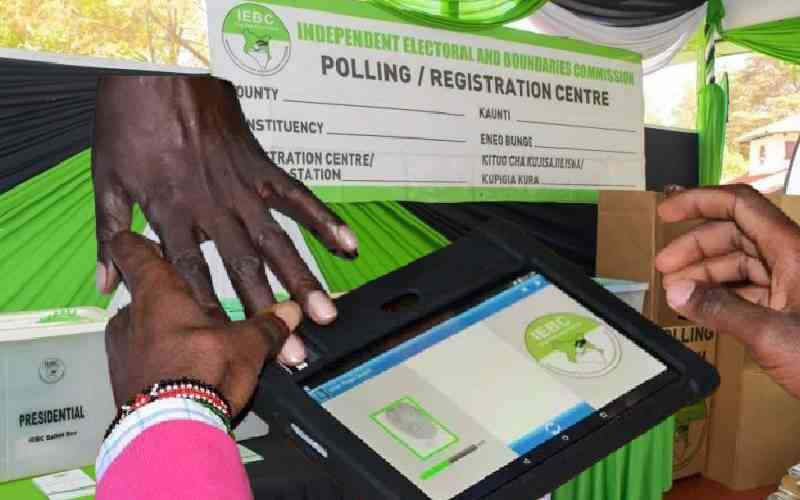
Kenya approaches the 2027 General Election with an opportunity and a responsibility: to ensure the governing electoral rules are constitutional, coherent and capable of implementation well before polling day.
The Elections (Amendment) (No. 2) Bill, 2024 illustrates the challenge.
The Senate passed the Bill in December 2024. On October 22, 2026, the National Assembly passed it with amendments and deleted Clause 22, which had proposed a substantial replacement of section 39 of the Elections Act, governing determination and declaration of election results. As at October 28, 2026, the National Assembly amendments must still complete the bicameral process before the final legal position can be stated.
A more fundamental issue lies beneath that process: the text reproduced in the statute book and the law resulting from binding judicial decisions are not fully aligned.
Section 39 is central to the movement of presidential results from polling stations to the declaration of the President-elect. Yet some provisions reproduced in the consolidated Elections Act were introduced through amendments subsequently declared unconstitutional. In the National Assembly v Katiba Institute, the Court of Appeal upheld the invalidity of amendments introducing sections 39(1C)(a), 39(1E), 39(1F) and 39(1G), while upholding section 39(1D). The invalidated provisions nevertheless remain reproduced in the consolidated legislation.
The 2026 High Court decision in Okoiti adds another layer. It developed important principles on national tallying, verification and transparency while referring to and applying aspects of provisions affected by the earlier appellate decision without squarely reconciling its analysis with that decision. Continued reproduction of a statutory provision does not, by itself, restore constitutional validity; nor can a High Court decision displace a binding Court of Appeal determination.
Parliament should therefore not treat the legislative choice as one between restoring the Senate's former Clause 22 and retaining section 39 exactly as printed. The safer course is to reconstruct section 39 around the constitutional principles established by the courts.
Those principles are now reasonably clear. A presidential result declared and certified at constituency level cannot subsequently be treated as provisional and administratively rewritten at the National Tallying Centre. National tallying and verification nevertheless remain necessary and constitutional.
Verification may compare, aggregate, expose discrepancies and determine whether the constitutional winning thresholds have been met, but it cannot be a power to recount, revise or alter final constituency results. IEBC should undertake national tallying and verification collectively, while its Chairperson performs the distinct constitutional function of declaring the presidential result. Election technology should strengthen transparency and verifiability without silently replacing the legally authoritative electoral records.
Finality and verifiability are therefore not constitutional opposites. A result may be final at one stage while remaining subject to comparison, aggregation and evidentiary verification at the next. What is impermissible is verification used as a disguised administrative power to change a result that the law has already made final.
Timing is equally important. Changes affecting results transmission, election technology, nominations, dispute resolution or tallying require regulations, procurement, system testing, training, voter education and sufficient opportunity for constitutional challenges to be resolved before polling day.
With the General Election scheduled for August 10, 2027, the remaining period should be treated as constitutional implementation time.
The governing standard should be straightforward. The vote must be protected where it is cast; the result transparently recorded and certified; every subsequent aggregation traceable to its source; technology auditable; discrepancies openly documented; and no official or electronic system permitted silently to change a certified result.
A substantive challenge to a legally final result belongs before the competent election court, not in an administrative rewriting process.
Stay informed. Subscribe to our newsletter
Kenya does not need an electoral system whose credibility rests on acceptance of an unexplained final number. It needs one in which the journey from the ballot box to the presidential declaration can itself be demonstrated. That is the task now before Parliament and the IEBC.
-The writer is a lawyer








Subscribe to our newsletter and stay updated on the latest developments and special offers!