×

The Standard e-Paper
Smart Minds Choose Us
 The Standard Group Plc is a
multi-media organization with investments in media platforms spanning newspaper
print operations, television, radio broadcasting, digital and online services. The
Standard Group is recognized as a leading multi-media house in Kenya with a key
influence in matters of national and international interest.
The Standard Group Plc is a
multi-media organization with investments in media platforms spanning newspaper
print operations, television, radio broadcasting, digital and online services. The
Standard Group is recognized as a leading multi-media house in Kenya with a key
influence in matters of national and international interest.

Audio By Vocalize
Two Kenyan companies are among nine African organisations selected for a global technology accelerator supporting social enterprises that use cloud computing and artificial intelligence to tackle education and employment challenges.
The organisations, drawn from Kenya, Nigeria, Ghana, Tanzania, Cameroon and South Africa, represent the continent's largest presence in the programme to date.
They are among 42 social enterprises from 16 countries chosen for the fourth cohort of an initiative that supports innovators working in education, healthcare, climate resilience, and economic opportunity.
The programme provides technical training, business support and access to cloud and artificial intelligence tools designed to help organisations scale impact and improve the delivery of services.
The organisations will join the Amazon Web Services (AWS) Social Entrepreneur Accelerator, run in partnership with Deloitte.
“Africa's representation in this cohort reflects what we're seeing across the continent: a generation of founders who don't wait for conditions to be perfect. They build anyway,” said Jyoti Ball, General Manager for Sub-Saharan Africa at AWS.
“Our role is to ensure they have access to the same world-class cloud and AI technology as any startup in Silicon Valley, and the support to scale impact across borders,” Ball noted.
The programme has supported more than 100 social entrepreneurs across 34 countries since its launch in 2023.
Kenya has two organisations in the cohort.
KuzeKuze, based in Nairobi, is building digital education passports that create lifelong learner records and track personalised education progress.
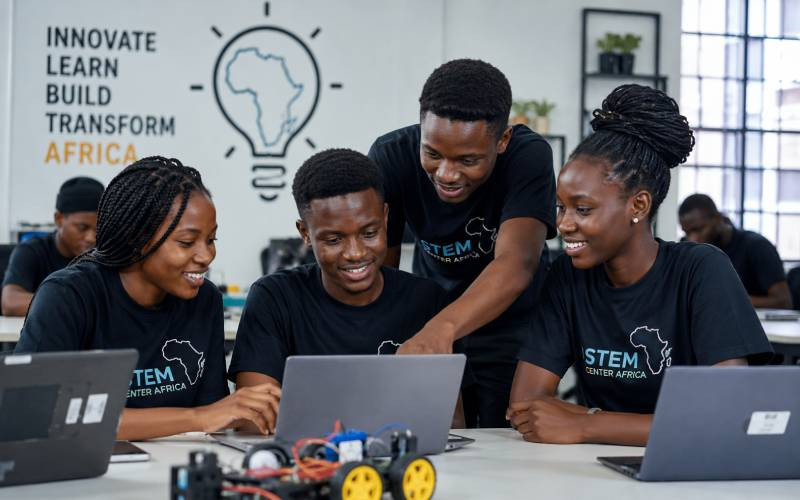
STEM Centre Africa, based in Oyugis, Homa Bay County, was founded in 2017 by brothers Chief Technology Officer (CTO) Dancun Akoum and Chief Executive Officer (CEO) Denish Akoum. The organisation provides hands-on science, technology, engineering and mathematics (STEM) training through coding, robotics and 3D design.
It has reached more than 18,000 learners, with 90 per cent achieving proficiency in Python, Scratch and electronics. The group operates two centres in Homa Bay County and aims to reach 100,000 learners by 2030.
Nigeria has three organisations in the cohort.
Sabi Scholar, led by CEO Divine Iloh, is developing a platform that allows universities to launch online degree programmes within 30 days.
Kayode Alabi Leadership, founded by Hammed Kayode Alabi, focuses on reducing inequality through education, mentorship and technology-based programmes for underserved youth.
Stay informed. Subscribe to our newsletter
Wetech Inc., founded by Gabriella Uwadiegwu, trains and mentors women pursuing careers in technology and connects them to employment opportunities.
Ghana is represented by BASICS International, led by Patricia Wilkins, which provides education and certified digital skills training for underserved children and young people.
Cameroon-based EduCloud, founded by Rosius Ndimofor Ateh, delivers cloud computing and artificial intelligence workshops designed to align academic learning with industry needs.
Tanzania's Fiqra Academy, led by CEO Gerald Revocatus, offers digital skills training and certification programmes linking young people to employment opportunities through an online learning platform.
South Africa's FunHouse Digital, founded by Ayabulela Yokwana, converts gaming lounges in rural communities into learning hubs, using gaming revenue to fund coding and digital literacy programmes.
The organisations will work with AWS and Deloitte experts during the accelerator to strengthen business models, expand use of cloud and AI tools and develop strategies for growth.
At the end of the programme, participants will join a global network of social entrepreneurs using technology to address social and economic challenges in their communities.






Subscribe to our newsletter and stay updated on the latest developments and special offers!







 join
join