
 The Standard Group Plc is a multi-media organization with investments in media
platforms spanning newspaper print
operations, television, radio broadcasting, digital and online services. The
Standard Group is recognized as a
leading multi-media house in Kenya with a key influence in matters of national
and international interest.
The Standard Group Plc is a multi-media organization with investments in media
platforms spanning newspaper print
operations, television, radio broadcasting, digital and online services. The
Standard Group is recognized as a
leading multi-media house in Kenya with a key influence in matters of national
and international interest.

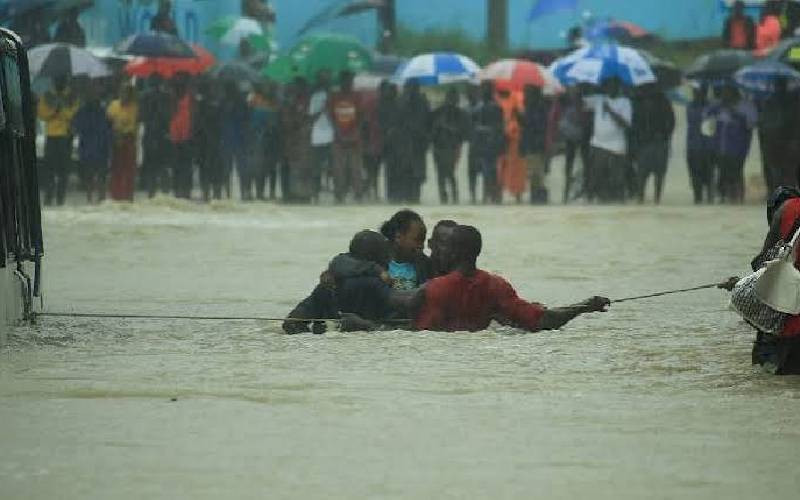
In October 1997, the short rains came early and did not stop. In Somalia, the Juba and Shabelle rivers burst their banks. Across the Greater Horn of Africa, cholera, malaria and Rift Valley fever followed the floodwaters into communities that had lost their clean water and their clinics. More than 2,800 people died.
That season still shapes how our region thinks about El Nino. Today, a ‘super’ El Nino, already one of the strongest on record, is building in the Pacific, and it is natural to look to the past for a sense of what lies ahead. But the past is no longer a reliable guide.
El Niño has always been unreliable here. The last super El Niño, in 2015, had only a moderate impact on East Africa’s short rains. Now a warming climate is making weather patterns less predictable still. This year, much of the northern Horn has just come through a failed rainy season. The coming season points the other way: a 90 per cent chance of above-normal rain over southern Ethiopia, central and southern Somalia and north-eastern Kenya, with unusually high temperatures across the region.
When the past can no longer tell us what is coming, accurate and timely forecasts become essential to protect people’s health. A reliable forecast lets health officials time mosquito control before the rains and stock clinics before a heatwave. But a forecast protects people only if someone acts on it, and that takes financing and political commitment as much as science.
The region has already seen early warning work. The 2023 El Niño floods affected far more people than those of 1997, yet killed a fraction as many. Warnings reached decision-makers in time, and many acted on plans agreed in advance.
Increasingly, those warnings come from within the region. Ahead of each rainy season, the IGAD Climate Prediction and Applications Centre (ICPAC) brings together the national weather services of 11 countries, along with health, agriculture and disaster agencies, to turn global climate science into guidance governments can use. This year’s health advisories urge ministries to activate emergency coordination, step up disease surveillance, protect flood-exposed clinics and stock medicines and water treatment supplies before roads wash out.
ICPAC is also adapting early warning to local conditions. The thresholds the region uses to define dangerous heat were designed for workers in Europe and North America, not for a trader in a Nairobi market or a child in a Juba classroom. The gap has real consequences: in February 2025, schoolchildren in Juba collapsed from heat exhaustion, forcing South Sudan to close its schools for two weeks. A new ICPAC initiative, supported by The Rockefeller Foundation, is developing the region’s first locally tested heat warnings in Nairobi and Juba, tied to agreed steps such as water breaks, cooling spaces and clear rules for closing schools.
Governments are stepping up too. Last month in Addis Ababa, IGAD member states adopted a joint Call to Action on El Niño preparedness. The test now is financing and follow-through. With humanitarian aid shrinking, the region cannot rely on appeals after disaster strikes. Research from the World Resources Institute, covering 40 low- and middle-income countries, most of them in sub-Saharan Africa, found that every dollar invested in services such as early warning systems and disease surveillance can return up to US$68 in economic benefits.
- Ministry preparing to tackle water- and food-borne diseases ahead of El Nino
- Threat of El Nino puts Kenya's healthcare system on alert
- Kisumu health facilities put on alert amid fears of flash floods
Keep Reading
Resilience to climate shocks means seeing a threat coming and acting in time to blunt it. That depends on four things: sound science, local institutions with the capacity and authority to act, financing in place before a crisis and governments that own the plan. East Africa has made real progress on the science. Investing in the other three is how that progress turns into lives saved.
Without that investment, the costs will fall hardest on those least able to bear them. In the coming weeks, gaps in preparedness could turn predictable climate risks into preventable illness, displacement, loss of livelihoods and avoidable deaths. Rural households, displaced people, children and older people will feel these impacts first, and beyond this season, each shock that goes unanticipated will push them further from recovery.
We will not know until December exactly what this El Niño brings. The rains will come regardless. Whether they find East Africa ready is still up to us.








 join
join