
 The Standard Group Plc is a multi-media organization with investments in media
platforms spanning newspaper print
operations, television, radio broadcasting, digital and online services. The
Standard Group is recognized as a
leading multi-media house in Kenya with a key influence in matters of national
and international interest.
The Standard Group Plc is a multi-media organization with investments in media
platforms spanning newspaper print
operations, television, radio broadcasting, digital and online services. The
Standard Group is recognized as a
leading multi-media house in Kenya with a key influence in matters of national
and international interest.


Nairobi is preparing to host the World Health Summit Regional Meeting 2026 from April 27 to 29, at the United Nations Office at Nairobi.
The three-day summit will bring together African health leaders, policymakers, academics, industry experts, and civil society to discuss pressing regional priorities including workforce development, digital health, pandemic preparedness and climate-related health risks.
The meeting is expected to strengthen Africa's contribution to global health discussions and shape solutions tailored to the continent's unique challenges.
Preparations for the summit have included a high-level donor roundtable at Aga Khan University in Nairobi, which brought together policymakers, academics, development partners and donors to deliberate on financing for integrated, African-led health systems.
The roundtable was held under the theme "Reimagining Africa's Health Systems" and focused on moving away from fragmented health interventions towards a coordinated continent-wide approach.
This will be the second time the World Health Summit Regional Meeting is hosted in East Africa and only the second time in Africa. Founded in 2009, the World Health Summit has grown into one of the world's leading platforms for global health discussions, bringing together healthcare professionals, political leaders and civil society actors.
In addition to the annual global meetings in Berlin, the summit convenes regional meetings to discuss local priorities and strengthen health diplomacy.
- Experts Push for More Investment in Early Childhood Development Research
- Harsh reality of Kenya's healthcare, as patients struggle to access basic services
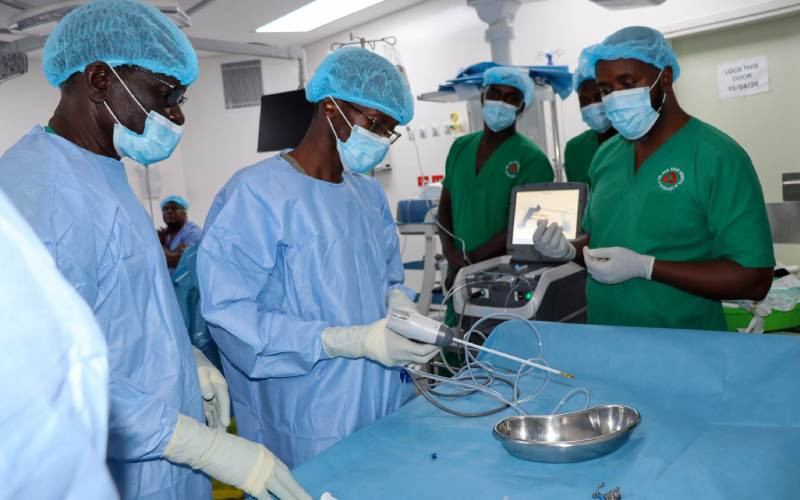
- Aga Khan Hospital marks regional first with robotic gallbladder surgery
Keep Reading
Speaking at the roundtable, Prof Lukoye Atwoli, Deputy Director of the Brain and Mind Institute at Aga Khan University and the incoming international president for the 2026 World Health Summit, underscored the significance of the regional meeting.
"This is a pivotal time in the global health landscape where things are changing rapidly, and even out here we have been having a conversation around those changes," Prof Atwoli said. "I believe it will be a platform for us to speak for Africa about our contribution to the global health environment."
Unlike traditional scientific conferences that operate in isolation, the World Health Summit Regional Meeting is intentionally designed as a multi-stakeholder platform. "There are tangible outcomes that are coming out of these meetings every time we hold them," Prof Atwoli explained.
By bringing together scientists, industry representatives, governments and civil society actors, the meeting aims to ensure that proposed solutions are both scientifically rigorous and practically integrated into Africa's health systems.
"Scientists will be speaking to the issues, industries will be speaking to the innovations and what they are doing, governments will be speaking about policy environment and implementation and civil society will be holding everyone accountable," Prof Atwoli said.
The summit will feature eight parallel sub-themes covering the full spectrum of Africa's health priorities. These include workforce development, primary health care, quality and patient safety, women's and children's health, mental health, pandemic preparedness, digital health, and climate-related health risks.
During the roundtable, participants emphasised the importance of centring quality of care alongside expanded health coverage while noting that access without quality does not translate to improved health outcomes.
Previous regional meetings held in Kampala, Rome, Washington DC, Melbourne and most recently New Delhi have generated new partnerships and influenced policy discussions at global forums.
The upcoming meeting in Nairobi is expected to elevate Africa's role in shaping global health conversations further and create a pathway for regional contributions to be heard on international stages.
Beyond the April meeting, participants hope that discussions in Nairobi will foster long-term cooperation across the continent.
Lessons learned and partnerships formed are expected to inform future gatherings such as the World Health Assembly and the annual World Health Summit in Berlin, strengthening Africa's position in global health decision-making and advancing sustainable solutions tailored to the region's unique challenges.








 join
join