
 The Standard Group Plc is a multi-media organization with investments in media
platforms spanning newspaper print
operations, television, radio broadcasting, digital and online services. The
Standard Group is recognized as a
leading multi-media house in Kenya with a key influence in matters of national
and international interest.
The Standard Group Plc is a multi-media organization with investments in media
platforms spanning newspaper print
operations, television, radio broadcasting, digital and online services. The
Standard Group is recognized as a
leading multi-media house in Kenya with a key influence in matters of national
and international interest.


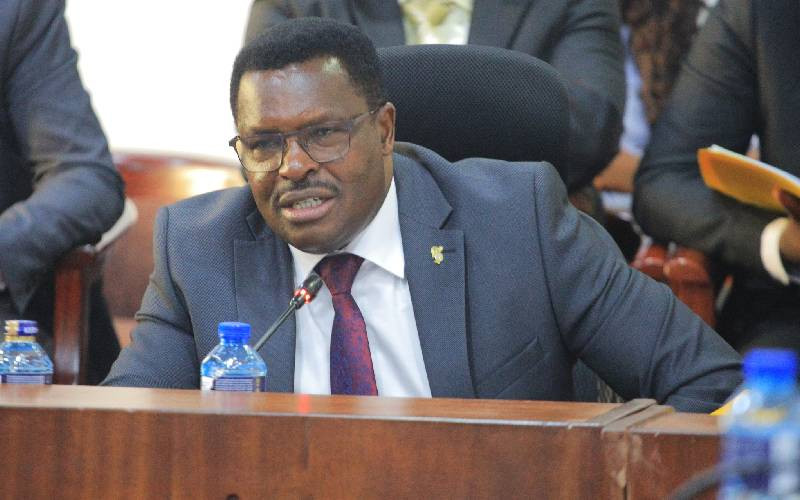
Dr Sultani Matendechero, Senior Deputy Director - Ministry of Health, signs the End FGM Commitment Board during the launch of the Future4Binti programme hosted by Amref Health Africa & the Embassy of the Netherlands in Kenya. [Courtesy]
New data from UNICEF reveals that Female Genital Mutilation (FGM) continues to be a widespread human rights issue in Africa, with the continent accounting for the majority of the world's 230 million girls and women who have undergone the procedure.
Despite progress in reducing prevalence, rapid population growth means approximately three million girls are at risk of undergoing FGM in Africa annually.
To tackle this, Amref Health Africa is spearheading USD 59 million (Sh7.6B) programme to protect girls in East Africa from harmful practices, including female genital mutilation (FGM) and child, early, and forced marriages.
With support from the Dutch government, Amref, together with Plan International, local civil society organisations, and the governments of Kenya, Ethiopia, and Somalia launched Future4Binti, a five-year initiative (2026–2030) aimed at empowering girls and strengthening community protection systems across the three countries.
“Amref Health Africa has decades of trusted experience in communities across Africa, and this programme builds on that expertise to protect girls and transform social norms,” said Amref Health Africa Group CEO Githinji Gitahi. He added that “Harmful practices such as FGM, early marriage, and teenage pregnancy rob girls of their potential. Future4Binti goes beyond service delivery—it strengthens communities, expands access to quality services, and ensures that every girl grows up with safety, dignity, and opportunity.”
Research shows that East African countries have made progress over the past decade. In Kenya, national FGM prevalence has declined to 15 per cent, though nearly one in four girls still marry before 18. In Ethiopia, 65 per cent of women have undergone FGM, and 40 per cent are married as minors. Somalia continues to face a severe challenge, with 99 per cent of girls experiencing FGM and over a third married early.
- Kenya's Sh515 million open defecation crisis
- From war to fear: Children seeking asylum still at risks at Kakuma refugees camp
- Kenya records 80 per cent increase in HPV vaccination among girls
- Kenya records 80 per cent jump in HPV vaccination among adolescent girls
Keep Reading
Future4Binti seeks to tackle these issues at every level—girls, families, communities, healthcare systems, and governments. The programme will challenge harmful social norms that restrict girls’ rights and opportunities, empower girls and youth to exercise leadership and advocate for change and expand access to quality healthcare, legal protection, and psychosocial support. The project also aims to strengthen laws, enforcement, and cross-border cooperation.
According to Dr Githinji, most funding is directed to grassroots civil society organisations working closely with communities. They will facilitate dialogues with elders and religious leaders, train frontline health workers, provide safe spaces for girls, and engage boys and young men as allies in promoting gender equality.
“For too long, harmful practices have limited the potential of our girls,” said Nice Leng’ete, Founder of Nice Place Foundation. “Future4Binti, led by Amref Health Africa, is a critical investment in sustaining progress and empowering girls to make informed choices about their own lives.”
The programme builds on previous Dutch-supported initiatives, including Yes, I Do, Break Free!, and Power to You(th), which focused on girls’ rights, gender equality, and youth participation. Peter Derrek Hof, Dutch Ambassador for Women’s Rights and Gender Equality, said: “Girls’ rights are not charity; they are fundamental to progress.”








 join
join