
 The Standard Group Plc is a multi-media organization with investments in media
platforms spanning newspaper print
operations, television, radio broadcasting, digital and online services. The
Standard Group is recognized as a
leading multi-media house in Kenya with a key influence in matters of national
and international interest.
The Standard Group Plc is a multi-media organization with investments in media
platforms spanning newspaper print
operations, television, radio broadcasting, digital and online services. The
Standard Group is recognized as a
leading multi-media house in Kenya with a key influence in matters of national
and international interest.


Every day, women across Africa die from preventable pregnancy and childbirth complications, despite decades of medical progress.
Yet experts now argue that the continent’s maternal mortality crisis is less about a lack of medical knowledge and more about gaps in leadership, coordination, and accountability.
According to UNICEF, an estimated 260,000 women globally died from pregnancy and childbirth complications in 2023, with sub-Saharan Africa accounting for the majority of these deaths.
In Kenya, maternal mortality estimates range between 355 and 530 deaths per 100,000 live births, far above the global target of fewer than 70 per 100,000.
The continent’s stillbirth burden is equally alarming. The State of Africa’s Stillbirths Report by the International Stillbirth Alliance shows Africa accounts for roughly half of the world’s nearly one million annual stillbirths.
Its intrapartum stillbirth rate is more than 40 times higher than Europe’s. Every 30 seconds, a baby is stillborn on the continent. Without accelerated action, an estimated five million stillbirths could occur between 2026 and 2030, most of them preventable.
For Dr Doris Macharia, President of the Elizabeth Glaser Pediatric AIDS Foundation, these are not statistics born of ignorance. African countries, including Kenya, already possess the tools, innovations, and systems needed to save mothers and babies. What is missing, she argues, is accountability. “When we think about maternal, neonatal, and child health, the first thing that comes to my mind is accountability,” Dr Macharia told The Standard. “Accountability from the aspect of how data is used to make decisions.”
Kenya has made progress in establishing maternal and neonatal death surveillance systems in hospitals to track why mothers and newborns die, particularly within the first 24 hours after delivery.
Most hospitals now have such systems, and similar frameworks exist across several African countries. However, Dr Macharia questions whether the data is being fully translated into action.
“How are we using that data to make decisions about where we need to intervene better for mothers so that we have fewer deaths?” she asks.
The causes of maternal death are well known. Postpartum haemorrhage, obstructed labour, and hypertensive disorders leading to eclampsia remain the leading killers.
“The numbers have declined, but they are still too high. We know what women are dying from. The issue is whether we are intervening effectively on the critical causes,” she says.
Financing remains another major challenge. Health economist Dr Macharia notes that health allocations remain below 15 per cent of national budgets in many African countries, including Kenya, despite repeated commitments to increase investment.
Beyond larger budgets, she calls for innovative financing mechanisms such as public-private partnerships, impact bonds and targeted levies to strengthen maternal and child health services.
“As a health economist, we are always told resources are scarce. You can never have enough money for everything. Governments must prioritise women and children,” she says.
Kenya has made some progress through the Social Health Insurance Fund under the Social Health Authority, which covers maternal services.
However, Dr Macharia argues that integration should go further to include HIV testing, early infant diagnosis, and antiretroviral therapy refills within one system.
“That way, women are not forced into out-of-pocket spending while trying to keep themselves and their babies healthy,” she says.
Across the continent, health systems remain fragmented, with HIV, tuberculosis, family planning, and maternal health programmes often operating in silos. Yet antenatal care offers opportunities to prevent HIV, syphilis, and hepatitis simultaneously. “You have HIV, TB, family planning, and maternal health programmes all operating independently. As long as systems remain siloed, they will not effectively serve mothers and children,” she explains.
Integration must also ensure vulnerable groups are not left behind. The HIV burden in maternal health remains significant.
Globally, about 1.3 million women living with HIV become pregnant each year. Without intervention, mother-to-child transmission can range from 15 to 45 per cent.
Prevention programmes can reduce this to below five per cent, yet global transmission stood at about 10 per cent in 2024.
Kenya currently records transmission rates between 5 and 10 per cent, still above elimination targets, while countries such as Eswatini and Lesotho are closer to achieving the benchmark.
“We need to reach zero new HIV infections among children by 2030. We can get there. The tools already exist,” she says, citing the Foundation’s Generation Zero campaign.
Innovation is also reshaping care delivery. AI-enabled SMS alerts, point-of-care ultrasound tools, early infant HIV testing technologies, and heat-stable drugs for postpartum haemorrhage are improving outcomes even in low-resource settings.
“The good thing about these technologies is that they allow quicker diagnosis and decision-making even in facilities without full specialist capacity,” she says.
However, she warns that scaling remains slow due to reliance on paper-based systems. “If we remain too analogue, it becomes difficult to scale. We need digital health systems.”
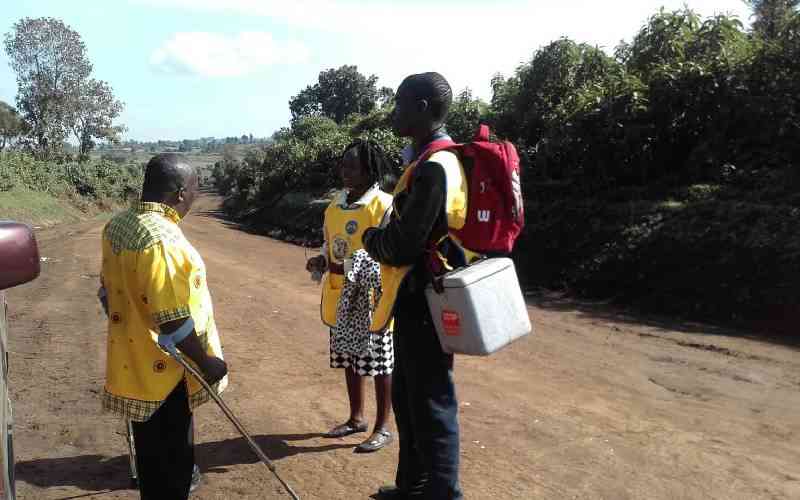
Community health workers, mentor mothers, and midwife-led care models also remain central, particularly in underserved areas.






 join
join