
 The Standard Group Plc is a multi-media organization with investments in media
platforms spanning newspaper print
operations, television, radio broadcasting, digital and online services. The
Standard Group is recognized as a
leading multi-media house in Kenya with a key influence in matters of national
and international interest.
The Standard Group Plc is a multi-media organization with investments in media
platforms spanning newspaper print
operations, television, radio broadcasting, digital and online services. The
Standard Group is recognized as a
leading multi-media house in Kenya with a key influence in matters of national
and international interest.

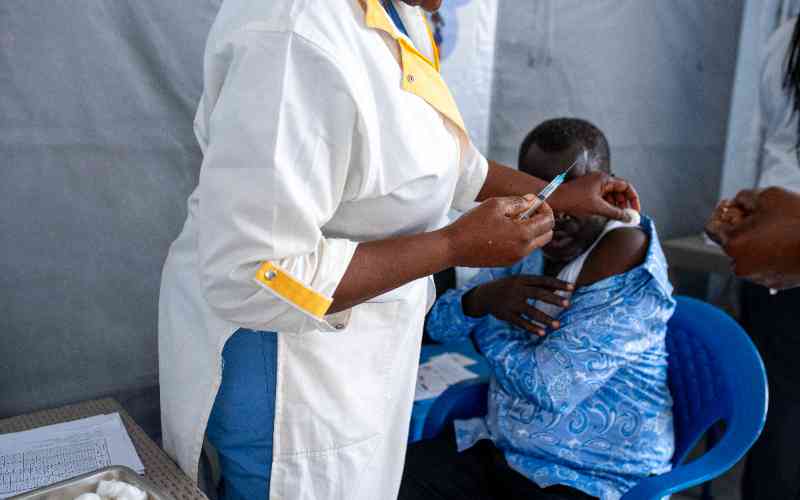
A health worker administers Ebola virus vaccine at the Provincial Laboratory of Ituri in the DRC on September 19, 2026. [AFP]
Governments are rallying behind UNAIDS as the global HIV response faces a funding squeeze, even as the United States commits millions of dollars to contain the expanding Ebola outbreak in the Democratic Republic of Congo.
The contrasting funding emerged at the 81st United Nations General Assembly in New York, where UNAIDS Executive Director Winnie Byanyima said governments continue to depend on the organisation to coordinate and support national HIV responses.
“Governments have made it clear: they rely on UNAIDS,” Byanyima said after meeting Botswana President Duma Boko during UNGA81.
She said President Boko had offered support for UNAIDS' presence in Botswana and across the region.
“Algeria, Benin, Côte d'Ivoire, the Philippines and South Africa have also stepped forward, while Brazil, Cambodia, China, Laos, Kazakhstan and Thailand continue their long-standing support,” Byanyima said.
The renewed government backing comes against a difficult financing backdrop.
UNAIDS said international resources for HIV fell by 18 per cent in 2025, the largest decline in almost two decades. At the end of the year, US$17.6 billion was available for the AIDS response in low- and middle-income countries, about 20 per cent below the US$21.9 billion needed annually by 2030 to remain on track to end AIDS as a public-health threat.
The organisation admitted that the US funding changes have had a significant effect on HIV programmes.
In February 2025, the US government terminated its agreement with UNAIDS, according to UNAIDS. The organisation has also documented disruptions following the US pause in foreign assistance, including interruptions to HIV medicines and prevention services.
However, the US funding picture is not a complete withdrawal from global HIV financing.
A US spending package signed into law in February 2026 allocated US$4.6 billion for bilateral HIV support, US$1.25 billion to the Global Fund and US$45 million to UNAIDS.
At the same time, Washington is directing a much larger emergency package towards Ebola.
On September 23, the US State Department announced an additional US$267 million in direct health and humanitarian assistance to fight the Ebola outbreak in the DRC.
The new commitment brings total US government assistance for the outbreak to US$887 million, including more than US$780 million provided directly through the State Department.
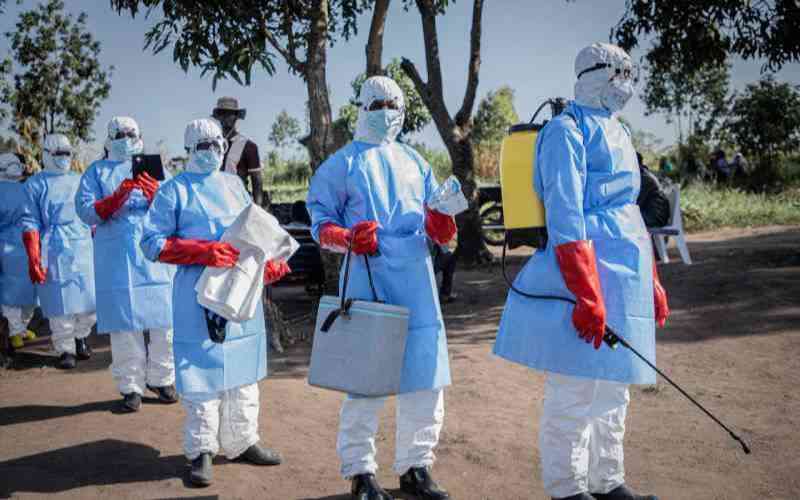
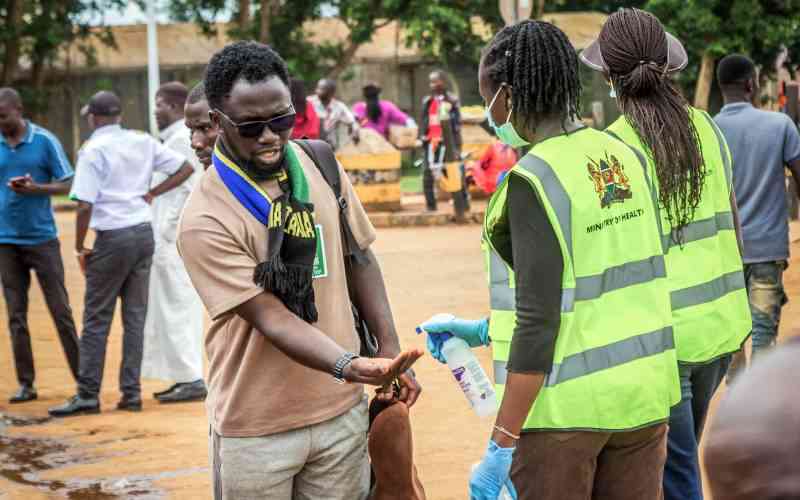
The new Ebola money will support treatment units, safe and dignified burial teams, personal protective equipment, surveillance, medical supplies and contact tracing.
The State Department said the United States has supported 23 specialised Ebola treatment centres, 235 health facilities and more than 8.6 million health screenings across affected and at-risk countries.
The scale of the Ebola response comes as the DRC outbreak approaches 8,000 confirmed cases.
The latest WHO figures put the DRC total at 7,890 confirmed cases and 3,799 deaths as of September 23, with transmission reported across 63 health zones in seven provinces.
DRC Prime Minister Judith Suminwa Tuluka described the outbreak as a “major test” for the country when she addressed the UN General Assembly.
“For the DRC, fighting this epidemic is an absolute priority,” she said, adding that national mobilisation and international support had allowed the response to begin producing “tangible results.”
The US announcement is part of a wider international push to raise funding for the Ebola response, with health authorities seeking a broader international commitment of about US$2 billion, mainly for operations in the DRC.
The contrasting financing pressures affecting HIV and Ebola highlight a wider challenge in global health: emergency outbreaks can trigger rapid mobilisation of resources, while longer-running diseases depend heavily on predictable financing to keep treatment and prevention programmes operating.
UNAIDS noted that 41 million people were living with HIV globally in 2025, while 1.2 million people acquired HIV and 570,000 died from AIDS-related illnesses. About 32.1 million people were accessing antiretroviral therapy.
Byanyima has warned that the progress made against HIV remains fragile.
“There’s no question that this is the most serious disruption in the HIV response since the world came together to fight this disease,” she said in June, warning that funding cuts were threatening prevention and treatment programmes.
Kenya has also used UNGA81 to argue that the global HIV architecture must retain its core functions.
Douglas Bosire of Kenya's Ministry of Health said the Joint Programme's functions should be maintained at both global and country levels.
“Let us preserve the core functions of the Joint Programme in the hub and at the country level,” Bosire said.
The debate comes as governments confront multiple health emergencies simultaneously, from HIV and tuberculosis to Ebola, Mpox and Cholera.
Will the renewed political support for UNAIDS will translate into predictable financing for HIV programmes, particularly in countries where health systems depend heavily on external resource?





 join
join