
 The Standard Group Plc is a multi-media organization with investments in media
platforms spanning newspaper print
operations, television, radio broadcasting, digital and online services. The
Standard Group is recognized as a
leading multi-media house in Kenya with a key influence in matters of national
and international interest.
The Standard Group Plc is a multi-media organization with investments in media
platforms spanning newspaper print
operations, television, radio broadcasting, digital and online services. The
Standard Group is recognized as a
leading multi-media house in Kenya with a key influence in matters of national
and international interest.

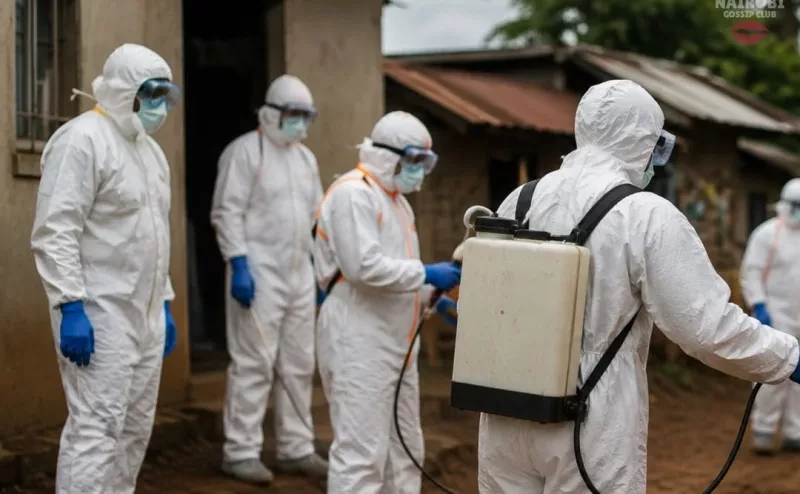
For someone exposed to Ebola, the World Health Organization recommends that they be monitored for 21 days after their last known exposure.
The wait can be more difficult than the diagnosis itself because they may feel perfectly healthy but still have to be monitored for at least three weeks.
This is because Ebola's incubation period, which is the time between infection and the appearance of symptoms, ranges from two to 21 days.
That means the 21-day monitoring period allows health authorities to watch people who may have been infected and quickly identify anyone who develops symptoms.
Kenya is now using that 21-day window to monitor people who may have been exposed to the country's first imported Ebola case.
Health authorities have identified 28 contacts and are also following up on 23 passengers and four crew members who travelled on the same flight. Quarantine arrangements have been prepared as part of the response.
So what happens during those 21 days?
Day 1: You become a contact
- WHO declares international emergency as Ebola kills over 80 in DR Congo
- Duale: No Ebola in Kenya as DRC outbreak kills 88, reaches Uganda
- Duale: Three suspected Ebola cases tested negative, surveillance upped
- WHO warns of rising Ebola threat as Kenya tightens response efforts
Keep Reading
The clock starts when health officials identify you as someone who may have been exposed to a confirmed or probable Ebola case.
That could be a family member, caregiver, healthcare worker or someone else with direct exposure.
Being listed as a contact does not mean you have Ebola. It means you have had a potentially significant exposure and need to be monitored.
Health teams record your details, establish when and how the exposure occurred and begin follow-up.
WHO recommends monitoring contacts for 21 days after their last known exposure.
In Kenya's current response, contact tracing is taking place alongside wider surveillance measures.
At least 652,000 people have been screened, while 267 samples have been tested across five laboratories, according to health officials.
Days 2 to 7: You wait
For some contacts, nothing happens. They remain healthy, while health workers watch for any symptoms that may develop.
Health workers will continue monitoring them during this period, asking about symptoms and, where appropriate, taking their temperature.
Some, on the other hand, may start to develop symptoms, including fever, fatigue, weakness, muscle pain, headache and sore throat.
The symptoms can be followed by vomiting, diarrhoea, abdominal pain as well as bleeding, which can often occur later.
A person who develops the symptoms while being monitored must be assessed, isolated and tested.
In the Kenyan case, for instance, the patient, who had been living in the Democratic Republic of Congo for about seven years, travelled by road from the DRC to Kampala before boarding a Jambojet flight to Kenya.
He arrived in Nairobi on Saturday at about 10 pm and later presented with fever, chills, intense fatigue and bleeding under the skin at an injection site.
Doctors considered viral haemorrhagic fever based on the symptoms, after which samples were tested at the National Reference Laboratory and confirmed Ebola.
Days 8 to 13
Being healthy on day eight does not mean the monitoring period is over.
The person remains under observation because Ebola's incubation period can extend to 21 days.
Day 14
By the second week, a contact who remains completely well is moving closer to the end of the monitoring period.
But health teams do not simply stop watching. The full 21 days must pass from the last known exposure.
This distinction matters because the countdown is not necessarily tied to the day a person first met an infected patient.
If there was another exposure later, the clock may be reset from that most recent exposure.
Day 21
If the contact has remained symptom-free throughout the monitoring period, they can be cleared from follow-up for that exposure as they have not developed Ebola during that monitoring period.
What if symptoms develop?
A contact who develops symptoms while being monitored will be isolated and assessed. A specimen is collected for laboratory testing, while supportive care begins if needed.
If the test is positive, contact tracing expands again.
Every person who may have been exposed to that new case must be identified.
The clock starts again for those contacts.








 join
join