
 The Standard Group Plc is a multi-media organization with investments in media
platforms spanning newspaper print
operations, television, radio broadcasting, digital and online services. The
Standard Group is recognized as a
leading multi-media house in Kenya with a key influence in matters of national
and international interest.
The Standard Group Plc is a multi-media organization with investments in media
platforms spanning newspaper print
operations, television, radio broadcasting, digital and online services. The
Standard Group is recognized as a
leading multi-media house in Kenya with a key influence in matters of national
and international interest.

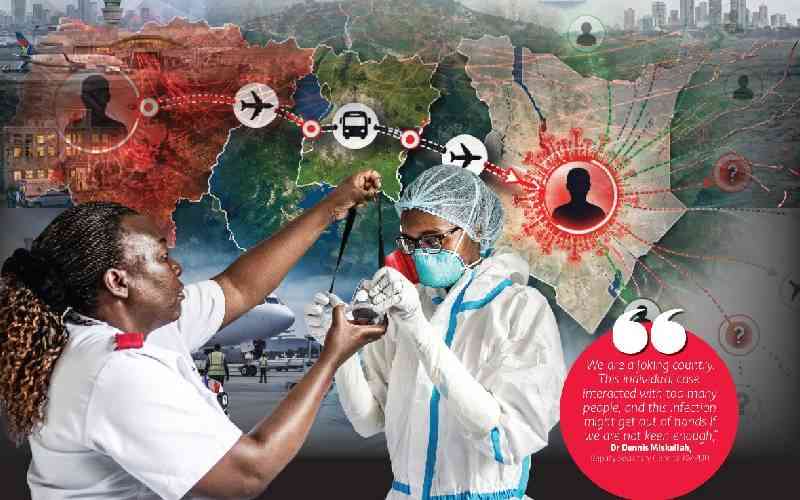
The World Health Organisation now says Kenya’s first imported Ebola patient may have contracted the virus while seeking treatment for another illness in DRC.
This raises questions about infection prevention in health facilities operating amid an expanding outbreak.
In its latest disease outbreak news report, WHO said the patient may have contracted the Bundibugyo virus while seeking treatment rather than having the infection when he first fell ill.
“Given the timelines of the illness, and the one-month time from initial symptoms to death, it is presumed he was not initially sick with the disease which does not usually have such a long progression from infection to symptoms and death, but became infected in a health facility or community while seeking care for another ailment,” said WHO.
The organisation said the assessment makes the patient’s medical history in the DRC a central part of the investigation.
He had reportedly been treated at several hospitals after falling ill about a month before his death, but WHO has not identified a specific facility as the source of infection.
- WHO declares international emergency as Ebola kills over 80 in DR Congo
- Duale: No Ebola in Kenya as DRC outbreak kills 88, reaches Uganda
- Duale: Three suspected Ebola cases tested negative, surveillance upped
- WHO warns of rising Ebola threat as Kenya tightens response efforts
Keep Reading
The health agency had launched an inquest on Wednesday to establish his journey, including how he got infected, where he was being treated, his contacts and how he crossed from DRC to Kampala and finally Nairobi.
WHO said the investigators would be key in establishing what condition he initially sought treatment for, where he received care and when he may have contracted the virus.
They also needed to determine whether other patients, healthcare workers or people who accompanied him could have been exposed.
Today’s finding does not establish that infection prevention procedures failed at any particular hospital.
However, it highlights the risk of transmission in healthcare settings when an infectious patient is not identified promptly or appropriate precautions are not in place.
Health Cabinet Secretary Aden Duale said the patient was a Kenyan citizen who had lived in the DRC for seven years before travelling to Kenya through Uganda.
“This patient is a Kenyan citizen who has been living in DRC for the past seven years. He fell ill about a month ago and was treated in several hospitals while still in DRC. He travelled from DRC to Kampala by road, then boarded Jambojet flight number 8523 and arrived in Nairobi on Saturday, 3rd October 2026 at 1.10pm,” Duale said.
According to WHO, the patient arrived in Nairobi on October 3 and was transported by a relative directly to Nairobi Hospital, where he was isolated.
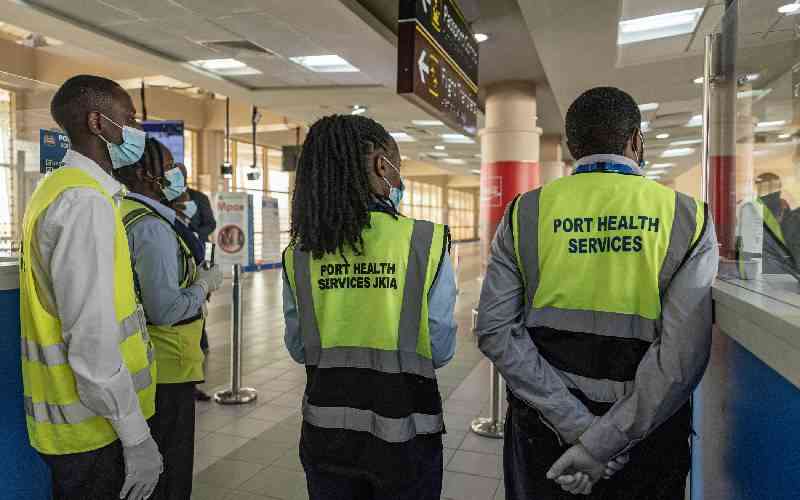
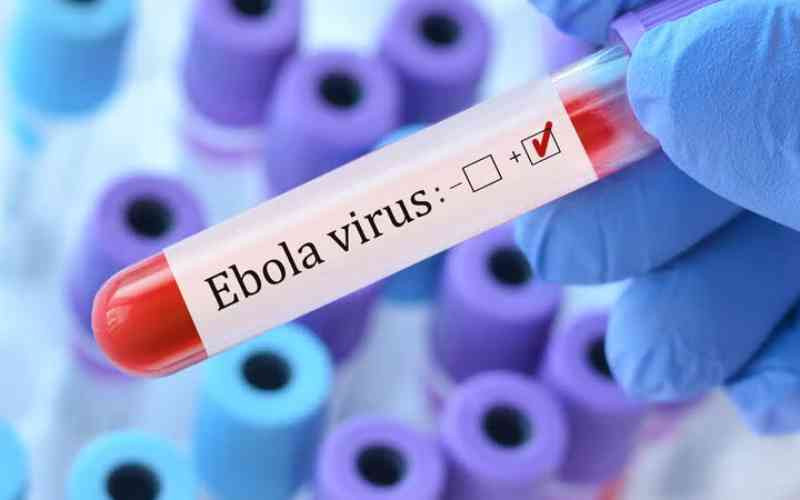
A sample collected on October 5 tested positive for Bundibugyo virus at both the National Virology Reference Laboratory and the Kenya Medical Research Institute laboratory.
He received supportive treatment but died on October 5.
WHO said a safe and dignified burial had been conducted and public-health response measures initiated, including contact tracing linked to the international flight.
It remains unclear whether, and at what point, the patient was symptomatic during his journey from the DRC through Uganda to Kenya.
That uncertainty is important because Ebola disease is not transmitted by people before symptoms begin, although transmission can occur after illness develops through contact with infected bodily fluids.
The investigation must therefore reconstruct the patient’s movements alongside the progression of his illness.
Establishing where he acquired the virus is a separate question from determining whether he exposed anyone during his journey or after arriving in Nairobi.







 join
join