×

The Standard e-Paper
Home To Bold Columnists
 The Standard Group Plc is a multi-media organization with investments in media
platforms spanning newspaper print operations, television, radio broadcasting,
digital and online services. The Standard Group is recognized as a leading
multi-media house in Kenya with a key influence in matters of national and
international interest.
The Standard Group Plc is a multi-media organization with investments in media
platforms spanning newspaper print operations, television, radio broadcasting,
digital and online services. The Standard Group is recognized as a leading
multi-media house in Kenya with a key influence in matters of national and
international interest.

Audio By Vocalize

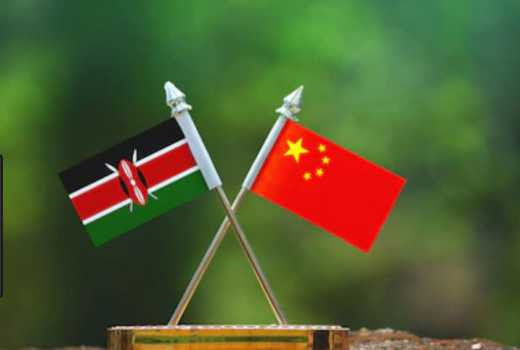
China has unveiled a detailed plan to integrate Kenyan producers into its high-tech industrial chains, in a move aimed at easing concerns that Africa’s budding manufacturing sector could be overwhelmed by Beijing’s dominance in artificial intelligence and advanced engineering.
The initiative, outlined by Chinese Ambassador to Kenya Guo Haiyan during a briefing in Nairobi, signals a shift from traditional trade to deeper industrial collaboration. Kenyan officials are banking on the deal to help narrow a long-standing trade imbalance with the world’s second-largest economy.
At the centre of the strategy is what the envoy termed the “800-million opportunity” — a projected doubling of China’s middle-income population over the next decade, expected to drive strong demand for Kenyan goods.
“Over the next decade, China’s middle-income population is expected to grow from over 400 million to more than 800 million,” Guo told journalists, citing projections from China’s 2026 “Two Sessions” legislative meetings.
“With the further expansion of the supersized Chinese market and opening up at a higher level, more opportunities will be created for African countries including Kenya,” she added.
The ambassador said the full rollout of China’s zero-tariff treatment for African exports, set to take effect on May 1, would help improve Kenya’s position in global trade and industrial value chains, while reducing reliance on raw material exports.
The renewed push for closer ties comes as China consolidates its lead in what it terms “New Quality Productive Forces,” spanning artificial intelligence, green energy and high-end manufacturing. While Beijing leads globally in AI patents and industrial robotics, concerns remain among Kenyan businesses about their ability to compete.
Guo dismissed those fears, framing China’s technological edge as an opportunity rather than a threat.
“China adheres to the principles of independence and mutual benefit,” she said, adding that Beijing would continue refining its market opening to align with its modernisation goals.
Under the proposed framework, Chinese firms are expected to partner directly with Kenyan producers, bringing automated processing capabilities to support local manufacturing. Plans include establishing processing hubs in Kenya to boost value addition, alongside expanding access to China’s service sector by 2026, potentially allowing Kenyan tech firms to tap into Chinese digital ecosystems.
The recent visit by Chinese Vice President Han Zheng to Nairobi — where he flagged off the first consignment of zero-tariff exports, including avocados, avocado oil and leather products — was meant to demonstrate the model in action.
Both countries have also signed an early-harvest arrangement under a planned Economic Partnership Agreement, aimed at providing predictable rules on tariffs, origin and trade flows.
Guo said China’s approach is particularly significant amid rising global protectionism.
“In the face of rising unilateralism and protectionism, China will remain a reliable partner of the Global South and provide predictable development opportunities,” she said.
For Kenyan firms, the challenge now will be to shift from raw material exports to higher-value manufacturing, leveraging Chinese expertise and market access. Officials say the success of this strategy could determine whether Kenya finally levels the playing field in its trade relationship with Beijing.
Stay informed. Subscribe to our newsletter

Subscribe to our newsletter and stay updated on the latest developments and special offers!









 join
join