×

The Standard e-Paper
Truth Without Fear
 The Standard Group Plc is a multi-media organization with investments in media
platforms spanning newspaper print operations, television, radio broadcasting,
digital and online services. The Standard Group is recognized as a leading
multi-media house in Kenya with a key influence in matters of national and
international interest.
The Standard Group Plc is a multi-media organization with investments in media
platforms spanning newspaper print operations, television, radio broadcasting,
digital and online services. The Standard Group is recognized as a leading
multi-media house in Kenya with a key influence in matters of national and
international interest.

Audio By Vocalize
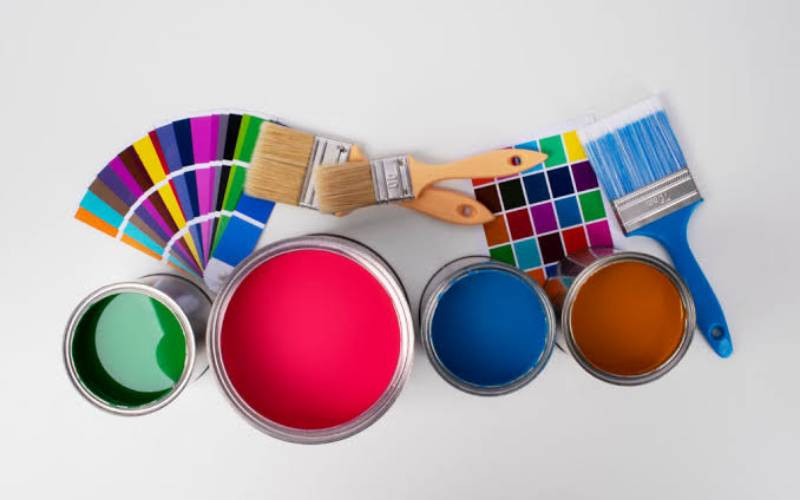
Kenya’s paint market is growing as construction picks up, property owners renovate buildings and consumers seek more specialised paints, according to Basco Paints Managing Director Kamlesh Shah. He said the growth is creating opportunities for manufacturers but also increasing competition from regional and imported products.
Shah said the consumption is growing at a double-digit rate, faster than the overall economy, with demand coming from both new construction and the maintenance of existing properties.
“Consumption is more than the GDP growth of the country. It’s more like double-digit consumption, and we are fortunate to be in line with that,” Shah said during Basco Paints’ 50th anniversary dealer launch dinner.
According to the Kenya National Bureau of Statistics, the construction sector grew by 6.6 per cent in the first quarter of 2026, while the wider economy expanded by 5.3 per cent. The construction sector had grown by 6.8 per cent in 2025 after contracting by 0.7 per cent in 2024.
Shah said the recovery in construction is only part of the demand story because paint is also required for the refurbishment and maintenance of homes, offices and commercial properties.
“Paint goes into new construction as well as refinishing of existing property, existing commercial and residential household properties,” he said.
According to IndexBox, Kenya consumed about 156,000 tonnes of paints and varnishes in 2024, making it Africa’s second-largest consumer after Algeria, which recorded consumption of about 168,000 tonnes. Uganda followed with approximately 86,000 tonnes.
Kenya was also Africa’s largest producer, with estimated output of 162,000 tonnes in 2024, ahead of Algeria at 152,000 tonnes and Uganda at 89,000 tonnes.
In value terms, Kenya’s paint and varnish market was estimated at KSh43.9 billion in 2024. Algeria’s market was valued at approximately KSh42.3 billion, while South Africa’s stood at about KSh16.1 billion.
Across Africa, paint and varnish consumption reached about 755,000 tonnes in 2024, according to IndexBox, with Algeria, Kenya and Uganda accounting for more than half of total consumption. Uganda has emerged as one of the faster-growing markets, recording average annual growth of about eight per cent.
Kenya’s position as a major producer also allowed local manufacturers to expand across the region with water-based paints and varnishes worth Sh1.1 billion exported in 2024, according to World Bank trade data.
Shah said Basco has continued to invest in production capacity and greater control over its supply chain. The company manufactures some of its own packaging and raw materials, including plastic containers and PVA resins used in emulsion paints.
“When we control our production, we can control quality, supply chain and availability of all the materials,” Shah said.
Local production, however, does not eliminate the industry’s exposure to imported inputs. Paint manufacturers continue to depend on a range of raw materials sourced internationally, leaving the sector exposed to global commodity prices, exchange-rate movements and supply chain disruptions.
Shah said the capital-intensive nature of manufacturing means companies need to take a long-term approach when expanding capacity.
Stay informed. Subscribe to our newsletter
“The amortisation of the capital expenditure is not very quick. You can’t say in three, four years I’ll have freed my plant. It takes you much longer,” he said.
He estimates that demand could double every six to seven years, requiring manufacturers to continually invest in new production capabilities.
“Paint being a very bulky range of products, we do need to keep on adding new production capacities and capabilities every six or seven years or so, because it tends to double up in six to seven years,” he said.
Beyond production capacity, manufacturers are also investing in research and development as consumers become more discerning and environmental considerations gain importance.
But the growth in demand has also brought challenges, particularly counterfeit and substandard products.
Shah said counterfeit paints bearing established brand names are increasingly appearing in the informal market, raising concerns about consumer confidence and the reputation of legitimate manufacturers.
“There is a lot of counterfeiting. It is a kind of cancer, and it’s actually detrimental for the country, to the population at large and to the consumer,” Shah added.
Despite the challenges, Shah expects demand to remain strong, supported by construction, affordable housing and continued refurbishment of existing properties.
“The consumption patterns will continue at about double-digit growth. So, that part, we are quite confident so far,” he said.

Subscribe to our newsletter and stay updated on the latest developments and special offers!












 join
join