×

The Standard e-Paper
Join Thousands of Readers
 The Standard Group Plc is a multi-media organization with investments in media
platforms spanning newspaper print operations, television, radio broadcasting,
digital and online services. The Standard Group is recognized as a leading
multi-media house in Kenya with a key influence in matters of national and
international interest.
The Standard Group Plc is a multi-media organization with investments in media
platforms spanning newspaper print operations, television, radio broadcasting,
digital and online services. The Standard Group is recognized as a leading
multi-media house in Kenya with a key influence in matters of national and
international interest.

Audio By Vocalize
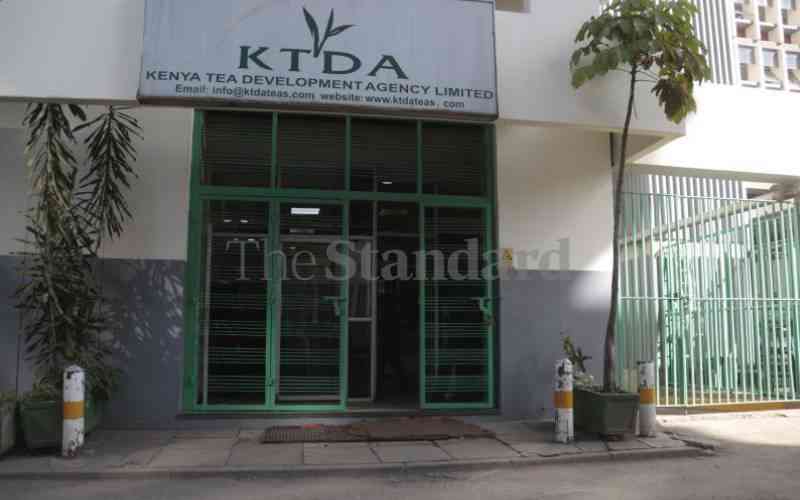
Directors of the Kenya Tea Development Agency (KTDA)-managed factories are expected to announce the annual bonus payments for the 2025-2026 financial year early next month.
The directors, along with the KTDA Management Service, are expected to provide financial documentation to support the declaration of the highly anticipated second payment.
In the past 11 months, farmers supplied over 1,094,710,523.06 kg of green leaf for processing, compared to 1,144,364,053.46 kg in the previous year (2024-2025).
Last year, the best bonus payments were awarded to Rukuriri at Sh57.50, Mununga at Sh57, Gathuthi at Sh56, Imenti at Sh56, and Ngere at Sh53.10.
Financial experts with knowledge of the tea industry indicate that the directors will focus on the revenue generated from tea sold through direct sales and the Mombasa Tea Auction, as well as the annual expenditures and other relevant concerns, before declaring the bonus payment.
Factory chairpersons, when reached for comments, confirmed that meetings are scheduled to analyse the payments at the end of the month, in accordance with the procedures required to facilitate the release of the second payment.
“At the end of the month, the factory boards are expected to hold meetings in their respective areas and declare bonus payments,” stated one chairman from east of the Rift.
Tea value chain expert Peter Karomo highlighted that from July 1 of last year to June 30 of this year, the tea sector faced significant challenges due to the closure of the Strait of Hormuz, which was caused by the conflict involving the United States, Iran, and Israel. This situation, combined with rising petroleum prices and other adverse effects, disrupted shipments, causing delays in getting tea to market and increasing expenses.
Karomo also noted that the introduction of a 0.8 per cent tea levy on May 1 slowed the absorption of premium teas into the market. As a result, buyers began shifting their focus to lower-grade teas.
To address the situation, Karomo stated that the directors were compelled to urge buyers to purchase the produce at a reduced price, fearing that unsold tea would accumulate in warehouses.
Jane Naitore, a farmer in Meru County, expressed that due to the rising cost of living, they expect to receive less than Sh 35 per kilogram of the green tea leaves they supplied to their respective factories.
“We understand the challenges the business has faced this year; we ask that those attempting to incite farmers to hold off allow the directors to announce the bonus payment,” said Naitore.
KTDA Holding National Chairman Enos Njeru stated that growers are aware of the challenges the tea industry has faced this year, but they have remained supportive by producing quality green leaf for processing in their respective factories.
“The tea bonus is paid differently depending on the revenue and production costs of each factory,” he explained.
Regarding the tea levy, Njeru noted that the additional export charge has contributed to the rising cost of Kenyan tea, resulting in some international buyers reducing or halting their purchases.
Stay informed. Subscribe to our newsletter
“We urge the government to reconsider and remove the 0.8 per cent export levy, as it negatively impacts tea farmers by diminishing their expected earnings and bonuses,” Njeru emphasised.
Last year, Rukuriri Tea Factory, located in Embu County, led 11 factories in paying a bonus above Sh 50 per kilogram of green leaf. The bonuses were as follows: Rukuriri - Sh 57.50, Mununga - Sh 57, Gathuthi - Sh 56, Imenti - Sh 56, Ngere - Sh 53.10, Gacharage - Sh 51.10, Mungania - Sh 51, Kathangariri - Sh 50.50, Kiegoi - Sh 50.20, Githongo - Sh 50.10, and Njunu - Sh 50.00.

Subscribe to our newsletter and stay updated on the latest developments and special offers!









 join
join