×

The Standard e-Paper
Read Offline Anywhere
 The Standard Group Plc is a multi-media organization with investments in media
platforms spanning newspaper print operations, television, radio broadcasting,
digital and online services. The Standard Group is recognized as a leading
multi-media house in Kenya with a key influence in matters of national and
international interest.
The Standard Group Plc is a multi-media organization with investments in media
platforms spanning newspaper print operations, television, radio broadcasting,
digital and online services. The Standard Group is recognized as a leading
multi-media house in Kenya with a key influence in matters of national and
international interest.

Audio By Vocalize

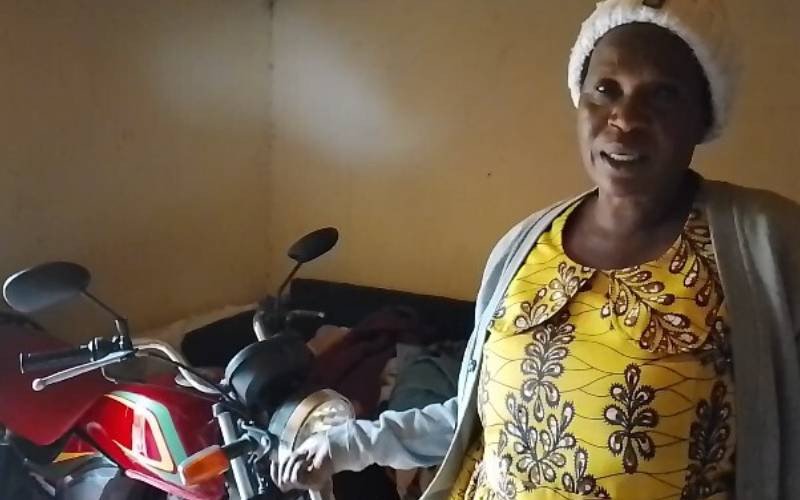
When Jane Kemunto Makori lost her husband in 2020, she was left with six children, no steady source of income and a future clouded by uncertainty and many unanswered questions.
The death of the family’s sole breadwinner plunged the widow from Igare in Kisii County into a struggle that is all too familiar for many women in rural Kenya.
She had to contend with the burden of balancing grief with the immediate need to put food on the table and keep children in school. But six years later, Kemunto’s journey has become a story of resilience, entrepreneurship and financial reinvention. At the time of her husband’s death, the prospects appeared bleak.
With no formal employment and limited resources, she suddenly found herself responsible for providing for an entire household.
Her challenge was not only to survive, but to create a source of income capable of supporting her children through school and shielding them from poverty. “Many were the days that I would get stuck on what to do after my husband died. I was a stressed woman until ideas started streaming on what I could do to move out of the quagmire of poverty,” the widow recalls.
Like many rural households facing economic hardship, Kemunto initially turned to casual labour.
This was after a neighbour offered her an opportunity to pick tea on a nearby farm, hoping it would provide a source of income. The job, however, proved difficult.
“The first job I did was plucking tea in my neighbour’s farm, but it didn’t work because I wasn’t well oriented with the plucking,” she says. “The owner sympathised with me and offered me a second idea of starting a business.”
That advice would mark a turning point. That’s how she started selling tomatoes, potatoes and buns at the roadside near her home, which is situated along the Igare – Emenwa Road.
It was during this period that she heard about a firm that sold motorbikes on hire purchase. By this time, she had saved around Sh30,000, which enabled her to access credit and purchase two motorbikes. She hired riders who struck an agreement with her on the amount of cash they would be remitting to her at the end of every working day.
The business became both a source of income and a learning platform.
Through daily interactions with customers and suppliers, she gradually developed the skills required to manage inventory, understand demand patterns and reinvest earnings.
Every shilling mattered, and every sale brought her closer to financial stability.
Credit terms
After one and a half years, Kemunto had completed paying the loans and armed with two motobikes as security, she was able to get better credit terms, including an extension from the company.
Stay informed. Subscribe to our newsletter
With the goodwill she managed to add three motorbikes to her stock, which would give returns of around Sh400 each. That is an average of Sh2,000 every day.
“I used part of the money to repay the motorbike loans and save the rest until I could afford to secure another set of four motorbikes, which added the total to nine,” Kemunto recalls.
Yet, looking back to what life was five years ago, Kemunto says it has not been an easy walk. At one point, she lost one of the motorbikes, which was reportedly stolen from a house where it was stored for the night.
“I just had to forget about it, and now I only have eight, which are giving me a steady income despite the ups and downs associated with the ongoing fuel crisis,” she says.
According to Lameck Makori, one of her sons, her mother has succeeded because of her discipline and dedication to ensure her business is run in the best way.
“She is very strict with the riders working for her. One of the things she doesn’t tolerate is drunkenness and carrying illegal goods. She is also very strict with them on their conduct while on the road, and they know it,” Makori says.
Judith Chumo, the Sales Manager of Watu Credit, who was very instrumental in Kemunto’s business journey, says the credit model has helped many desperate families eke out a living. She notes that Kemunto is among the few women who are leading a better livelihood from the male-dominated motorbike business.
“Women are coming out in large numbers to seek credit for motorbikes, and we are seeing the lives of many families getting better through the deals. And it is even amazing that the majority of those seeking hire purchase facilities are riders themselves, and they are the best in repayment. They rarely default,” she says. For Kemunto, now the focus has shifted and she wants to upgrade her business by purchasing a public service vehicle as an upgrade from the motorbike business.
She even says she has saved enough to achieve her ambition.
“I approached Watu Credit and requested credit on a motor vehicle, and they told me to continue saving as I get close to the minimum deposit required for it. I am almost there,” Kemunto says.
Her third-born daughter recently graduated from university, courtesy of the motorcycle business. The other three are in secondary school, with the last born being in form three.
“When I look back from where I have come with my children as a widow, I just thank God. It has not been easy,” Kemunto observes.
At the moment, she says she also acts as a shylock to small business people around Igare.

Subscribe to our newsletter and stay updated on the latest developments and special offers!













 join
join