×

The Standard e-Paper
Kenya's Bold Newspaper
 The Standard Group Plc is a multi-media organization with investments in media
platforms spanning newspaper print operations, television, radio broadcasting,
digital and online services. The Standard Group is recognized as a leading
multi-media house in Kenya with a key influence in matters of national and
international interest.
The Standard Group Plc is a multi-media organization with investments in media
platforms spanning newspaper print operations, television, radio broadcasting,
digital and online services. The Standard Group is recognized as a leading
multi-media house in Kenya with a key influence in matters of national and
international interest.

Trucks at Malaba border on January 20, 2024. Truck drivers decried delays in border clearance by Uganda and Kenya. [File, Standard]
Northern and central corridor agencies have inked a landmark deal to improve transport efficiency and trade facilitation in the East and Central Africa region.
The Mombasa-based Northern Corridor Transit and Transport Coordination Authority (NCTTCA) and the Central Corridor Transit and Transport Facilitation Agency (CCTTFA) domiciled in Dar es Salaam have signed a Memorandum of Cooperation (MoC) in Mombasa aimed at strengthening collaboration to improve transport efficiency, facilitate trade, and ensure sustainability across Eastern and Central Africa.
NCTTCA which originates from the port of Mombasa serves Kenya, Uganda, Rwanda, Burundi, Democratic Republic of Congo and South Sudan while CCTTFA which is linked to the ports of Dar es Salaam, Tanga and Mtwara in Tanzania serves Tanzania, Uganda, Rwanda, Burundi, DRC, Malawi and Zambia.
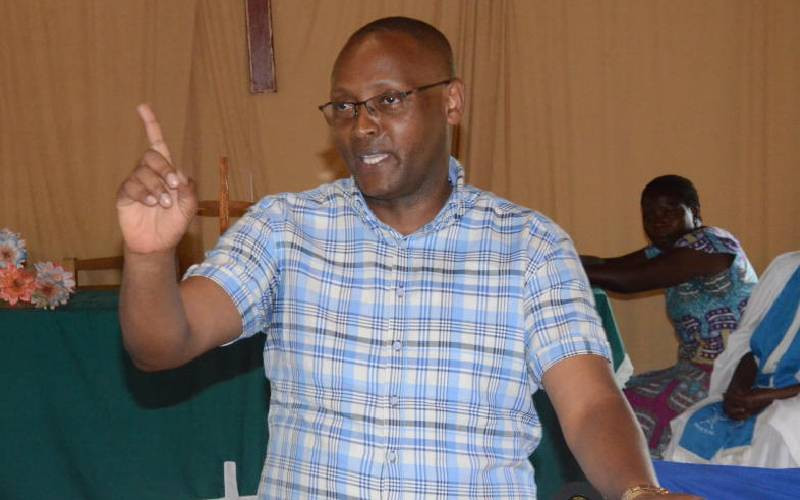
Speaking during the signing of the MoC this week, NCTTCA executive secretary John Deng and his CCTTFA counterpart Okandju Okonge Flory said the agreement will see the two agencies complement each other and avoid duplication in their operations.
Dr Deng said the agreement will see the two agencies collaborate in all areas of operation including roads, railway, pipeline, waterways and climate change and ensure smooth movement of people and goods in the region.
He explained that Kenya, Tanzania and Uganda share Lake Victoria and hence harmonised policies and integration would improve the safety of navigation on the water body.
“It will be easier to implement common donor projects like the one funded by the European Union. We will also harmonise the collection and sharing of data on e-mobility,” he said.
He noted that the northern corridor and central corridor railway lines connect at Masaka in Uganda and hence the MoC will assist in addressing activities along the common line towards Rwanda and DRC, and the two agencies would work together on trans-border communities and management of roadside stations.
Meanwhile, Deng revealed that the recent Ugandan elections did not disrupt the movement of cargo from Mombasa despite some skirmishes.
“Before the elections, he made communication to the Ugandan private sector alliance. Although there was a bit of skirmishes, drivers were advised to use safer routes which had less impact from the elections,” he explained.
Mr Flory said the two agencies are located in the same region and serve the same people like those in Uganda, Rwanda, Burundi and DRC and hence will save resources by working together and sharing experiences.
“We have realised there is a need to sit together and strategise on projects that increase growth of economies by eliminating non-tariff barriers. We have realised the importance of working together because this will help us save resources,” he said, adding that the integration plan is in line with the African spirit and will improve visibility of the two corridors.
The MoC establishes a structured framework for joint action between the two intergovernmental corridor institutions, which together serve as critical gateways linking land-linked countries in the Great Lakes region to the ports of Mombasa, Dar es Salaam, Tanga, and Mtwara.
Stay informed. Subscribe to our newsletter
The agreement reflects a shared commitment to advancing regional integration, economic competitiveness, and climate-resilient transport systems.
Under the cooperation framework, NCTTCA and CCTTFA will jointly implement initiatives across priority areas including inland waterways transport, green corridor development, multimodal infrastructure integration, digitalisation and data sharing, environmental sustainability and climate resilience, road safety, non-tariff barrier (NTB) monitoring, and harmonization of transport and trade policies and procedures.
The MoC also emphasizes capacity building, private sector engagement, and coordinated resource mobilization to support implementation.
To operationalise the agreement, the parties will develop a three-year joint action plan, overseen by a high-level steering committee composed of the executive secretaries of both institutions and supported by a joint technical committee of experts.
This governance structure will ensure coordinated planning, effective implementation, and regular monitoring and reporting of agreed activities.
The cooperation aligns with continental and global development priorities, including the African Continental Free Trade Area (AfCFTA), African Union Agenda 2063, and the Sustainable Development Goals, particularly those related to infrastructure development, climate action, and sustainable economic growth.
It also recognises the strategic role of multimodal transport and inland waterways in reducing logistics costs, lowering emissions, and enhancing regional value chains.
The two institutions reaffirmed their commitment to working together to transform the northern and central corridors into efficient, safe, and green economic development corridors, supporting long-term trade growth and resilience in the region.
The MoC will remain in force for an initial period of five years, with provisions for renewal and expansion based on mutual agreement.

Subscribe to our newsletter and stay updated on the latest developments and special offers!










 join
join