×

The Standard e-Paper
Home To Bold Columnists
 The Standard Group Plc is a multi-media organization with investments in media
platforms spanning newspaper print operations, television, radio broadcasting,
digital and online services. The Standard Group is recognized as a leading
multi-media house in Kenya with a key influence in matters of national and
international interest.
The Standard Group Plc is a multi-media organization with investments in media
platforms spanning newspaper print operations, television, radio broadcasting,
digital and online services. The Standard Group is recognized as a leading
multi-media house in Kenya with a key influence in matters of national and
international interest.

Audio By Vocalize
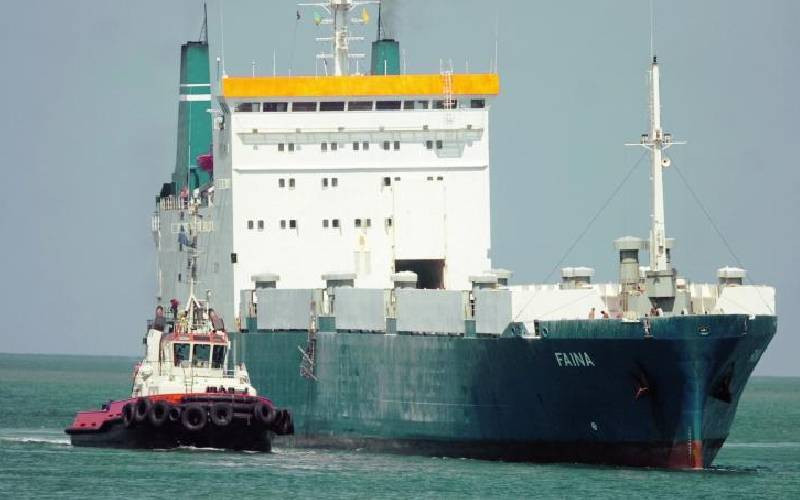
MV Faina when it was released by Pirates in 2015. [File, Standard]
Africa can no longer rely on foreign powers to safeguard its vast maritime domain, maritime experts have said, urging governments to invest in stronger navies, modern surveillance technology and regional cooperation to protect the continent's growing blue economy.
The call gained momentum during the Sea Power for Africa Symposium (SPAS) 2026 in Nigeria, where the Chief of the South African Navy, Vice Admiral Monde Lobese, challenged African nations to build indigenous maritime security capabilities instead of depending on external partners.
Recenty, calls for African-led solutions to solve maritime security challenges facing the continent have been rife in major maritime meets.
These calls gained momentum during the Sea Power for Africa Symposium (SPAS) 2026 in Nigeria, where the Chief of the South African Navy, Vice Admiral Monde Lobese, said Africa can not continue to depend on external powers to secure its vast maritime domain. These sentiments were echoed by maritime stakeholders drawn from Kenya and neighbouring Indian Ocean coastal states who further called for modernisation of African Navies and Coast guards, and also equip them with modern gear and equipment that could help them patrol the ocean waters from the shores and beyond.
Former Secretary General of the Seafarers Union of Kenya (SUK) Andrew Mwangura said Lobese's remarks should resonate across the continent.
''The question facing Africa today is not whether maritime security matters but whether African nations possess the political will to collectively build the capabilities required to protect their own waters, resources, trade routes, and maritime economies,'' he said.
Africa is a maritime continent with 38 countries being coastal or island nations. More than 90 per cent of Africa’s trade moves by sea with shipping lanes connecting Europe, Asia, and the Americas pass through Africa.
Despite this geographic advantage, Africa remains one of the world’s most vulnerable maritime regions.
Piracy, armed robbery at sea, illegal fishing, human trafficking, drug smuggling, marine pollution and maritime terrorism continue to undermine economic development and regional stability.
For instance, the Gulf of Guinea remains a hotspot for maritime crime, while illegal, unreported and unregulated (IUU) fishing costs African economies billions of dollars annually.
Even more concerning, security experts say African navies remain underfunded, under-equipped, and overstretched with most nation’s Exclusive Economic Zone (EEZ) larger than its capacity to monitor and patrol it.
"Admiral Lobese’s observation that Africa lacks the ability to adequately secure its maritime domain should not be viewed as criticism. It is an honest assessment of a strategic vulnerability that threatens the continent’s future prosperity," Mwangura said.
Mwangura points out that for decades, African maritime security initiatives have relied heavily on external actors.
Stay informed. Subscribe to our newsletter
"International naval forces patrol the Gulf of Aden. Foreign partners provide surveillance systems, training, and maritime intelligence. Development agencies fund maritime security projects," he said.
He said that while such partnerships remain valuable, they cannot substitute for indigenous capability. "No external power will ever prioritise African maritime interests to the same extent as Africans themselves. Foreign navies may assist in combating piracy or building capacity, but the responsibility for protecting African fisheries, securing African ports, safeguarding offshore energy infrastructure, and ensuring maritime sovereignty rests ultimately with African states,'' the former SUK official said.
The principle of “African solutions to African problems” must therefore extend beyond political rhetoric and become the foundation of maritime policy, he said.
A former KDF officer who wished to remain anonymous stated that one of the most significant messages from the Sea Power for Africa Symposium was the urgent need for greater cooperation among African navies.
"Maritime criminals do not recognise national borders, piracy networks, trafficking syndicates and illegal fishing fleets operate across multiple jurisdictions. Fragmented national responses are destined to fail. The future lies in regional maritime integration," he said.
"Organisations such as the African Union, IGAD, SADC, ECOWAS, and the Indian Ocean Rim Association must strengthen collaborative frameworks that facilitate intelligence sharing, joint patrols, coordinated responses, and common operating procedures."
The expert further explained that successful examples already exist.
"The multinational efforts that dramatically reduced Somali piracy demonstrated the value of coordinated maritime action. Similar models can be adapted and expanded across other African maritime regions,'' added the security expert.
The 2026 Sea Power for Africa Symposium emphasized leveraging technology to enhance maritime security—a focus that is particularly relevant because Africa’s maritime challenges cannot be solved with ships and personnel alone.
Modern maritime security increasingly depends on, Maritime Domain Awareness systems, Satellite surveillance, aerial systems, Artificial intelligence–driven analytics, Integrated coastal radar networks, Digital vessel tracking platforms as well as Real-time intelligence sharing.
"Technology can help African nations monitor vast maritime spaces more efficiently and at lower cost than traditional methods alone. However, acquisition is not enough. Africa must also invest in local expertise, research institutions, and maritime innovation ecosystems capable of developing and maintaining these systems independently,'' Mwangura added.
He went on to add that Maritime Security and the Blue Economy are inseparable. Maritime security is too often viewed exclusively through a military lens. That perspective is incomplete. Maritime security is fundamentally an economic issue. "The success of Africa’s Blue Economy agenda depends on safe and secure seas. Offshore energy projects, fisheries, maritime tourism, marine biotechnology, port development, and shipping services all require a stable maritime environment. Without security, investment declines, trade costs increase, and the Blue Economy remains an unrealized dream,'' he said.
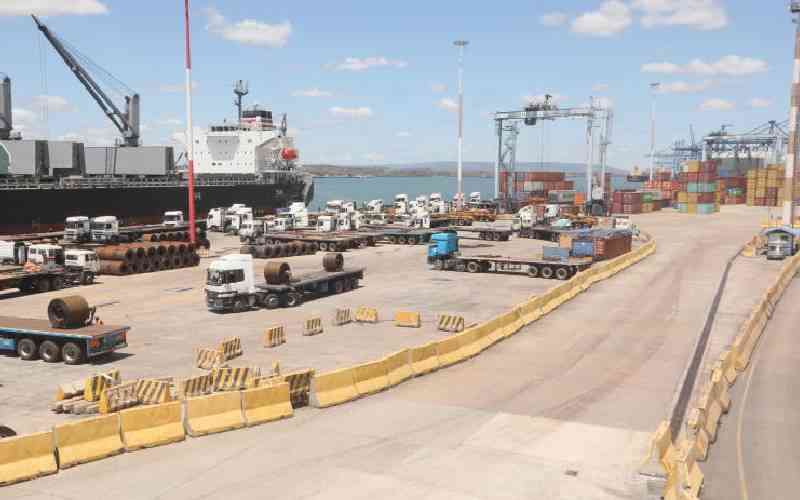
For Kenya and the wider Eastern African region, the message from SPAS carries particular significance. The Port of Mombasa remains a critical gateway for regional trade.
The development of the Port of Lamu, growth in offshore resources, expansion of the Blue Economy, and increasing maritime commerce across the Western Indian Ocean all depend on secure sea lanes. Kenya, Tanzania, Mozambique, Somalia, Seychelles, and other regional partners must continue strengthening maritime cooperation through information sharing, coordinated patrols, and joint training initiatives.
Equally important is the need to develop a robust maritime workforce, ships, surveillance systems, and infrastructure alone do not guarantee security.
Skilled seafarers, naval personnel, maritime administrators, marine engineers, and maritime lawyers are the backbone of any successful maritime nation.
Other observers stated that the Sea Power for Africa Symposium has once again provided an important platform for strategic dialogue among African maritime leaders.
Yet Africa’s maritime future will not be determined by symposium declarations alone—it will be determined by implementation. The continent has produced enough strategies, frameworks, and declarations. What is required now is sustained investment, stronger political commitment, and measurable action.


Subscribe to our newsletter and stay updated on the latest developments and special offers!











 join
join