×

The Standard e-Paper
Smart Minds Choose Us
 The Standard Group Plc is a
multi-media organization with investments in media platforms spanning newspaper
print operations, television, radio broadcasting, digital and online services. The
Standard Group is recognized as a leading multi-media house in Kenya with a key
influence in matters of national and international interest.
The Standard Group Plc is a
multi-media organization with investments in media platforms spanning newspaper
print operations, television, radio broadcasting, digital and online services. The
Standard Group is recognized as a leading multi-media house in Kenya with a key
influence in matters of national and international interest.

Audio By Vocalize
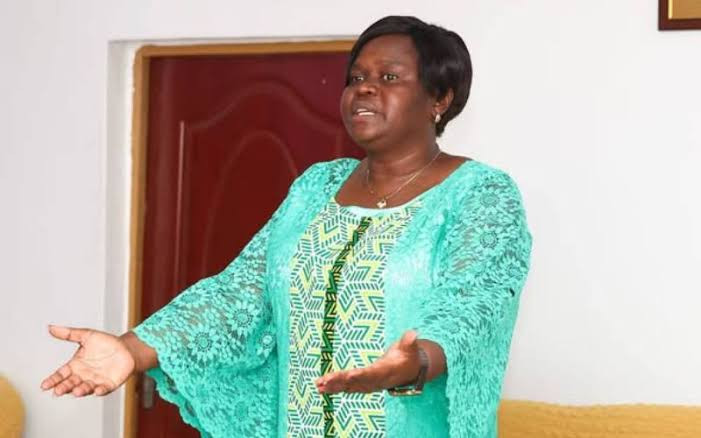
Homa Bay Governor Gladys Wanga has defended the state of roads in the county, saying the poor infrastructure exposed during the Linda Mwananchi tour over the weekend is evidence of decades of marginalisation.
In a statement, Wanga pointed to the condition of the Mbita-Sindo-Kiabuya-Sori corridor, saying the dusty road is a reflection of a wider infrastructure deficit that has affected the region for decades.
“The dust on the Mbita–Sindo-Kiabuya-Sori corridor tells a story. But it is not the story of a people who have failed. It is the story of a region that has waited far too long for the infrastructure required to unlock its potential,” she said.
Wanga said Homa Bay’s infrastructure challenges stretch back to independence, arguing that the county is among several regions that have experienced what she described as structural economic marginalisation.
She cited parts of Siaya, Nyatike, Turkana, Maasailand, Western Kenya and the Coast as other regions that, she said, have waited for decades for a fair share of national resources.
“These regions have experienced acute economic marginalisation reflected in an infrastructure deficit far greater than what their population, resources and potential should have allowed,” Wanga said.
The governor said the condition of the roads should not be blamed on one administration, arguing that their neglect has spanned successive governments since independence.
She also linked Homa Bay’s development challenges to the political history of the region, citing former Cabinet minister Tom Mboya and former Vice-President Jaramogi Oginga Odinga.
“We are convinced that these roads would have been tarmacked decades ago had Tom Mboya and Jaramogi Oginga Odinga remained in government. Jaramogi was forced out in 1966, Mboya assassinated in 1969, both on a path toward the presidency," she said.
But what does it mean for a region to be marginalised?
The Cambridge Dictionary defines “marginalised” as being treated as if someone or something is not important.
In Wanga’s argument, Homa Bay’s marginalisation is reflected in what she describes as a longstanding infrastructure deficit and inadequate development relative to the county’s population, resources and potential.
However, Homa Bay County as a whole is not among the 14 counties officially classified as marginalised for purposes of the Equalisation Fund.
The counties identified under the first marginalisation policy are largely in Kenya’s arid and semi-arid and coastal regions and were selected to receive targeted support through the Equalisation Fund, which is intended to improve access to basic services in marginalised areas.
Homa Bay, like other counties, receives funding through the national revenue-sharing system, including its equitable share.
Stay informed. Subscribe to our newsletter
For the 2026/27 financial year, the county was allocated Sh9.14 billion as its equitable share.
The state of the roads highlighted during the Linda Mwananchi tour also raises the question of which level of government is responsible for delivering them.
While county governments are responsible for county roads and other local infrastructure under their devolved functions, major trunk roads fall under the national government and its road agencies, including KENHA.
The Mbita-Sindo-Kiabuya-Sori road in this case is outside the responsibilities and is handled directly by KENHA.
According to Wanga, the 74-kilometre Mbita road has stalled since 2016, adding that “For the people who live along these roads, however, their condition is no joke; it is a daily reality that shapes access to markets and services, the cost of doing business, and the pace at which communities can develop."
Her remarks followed Linda Mwananchi's tour of Homa Bay, where images of the political convoy travelling along rough and untarmacked roads in parts of Suba South drew attention to the county’s infrastructure challenges.



Subscribe to our newsletter and stay updated on the latest developments and special offers!






 join
join