×

The Standard e-Paper
Home To Bold Columnists
 The Standard Group Plc is a
multi-media organization with investments in media platforms spanning newspaper
print operations, television, radio broadcasting, digital and online services. The
Standard Group is recognized as a leading multi-media house in Kenya with a key
influence in matters of national and international interest.

Audio By Vocalize
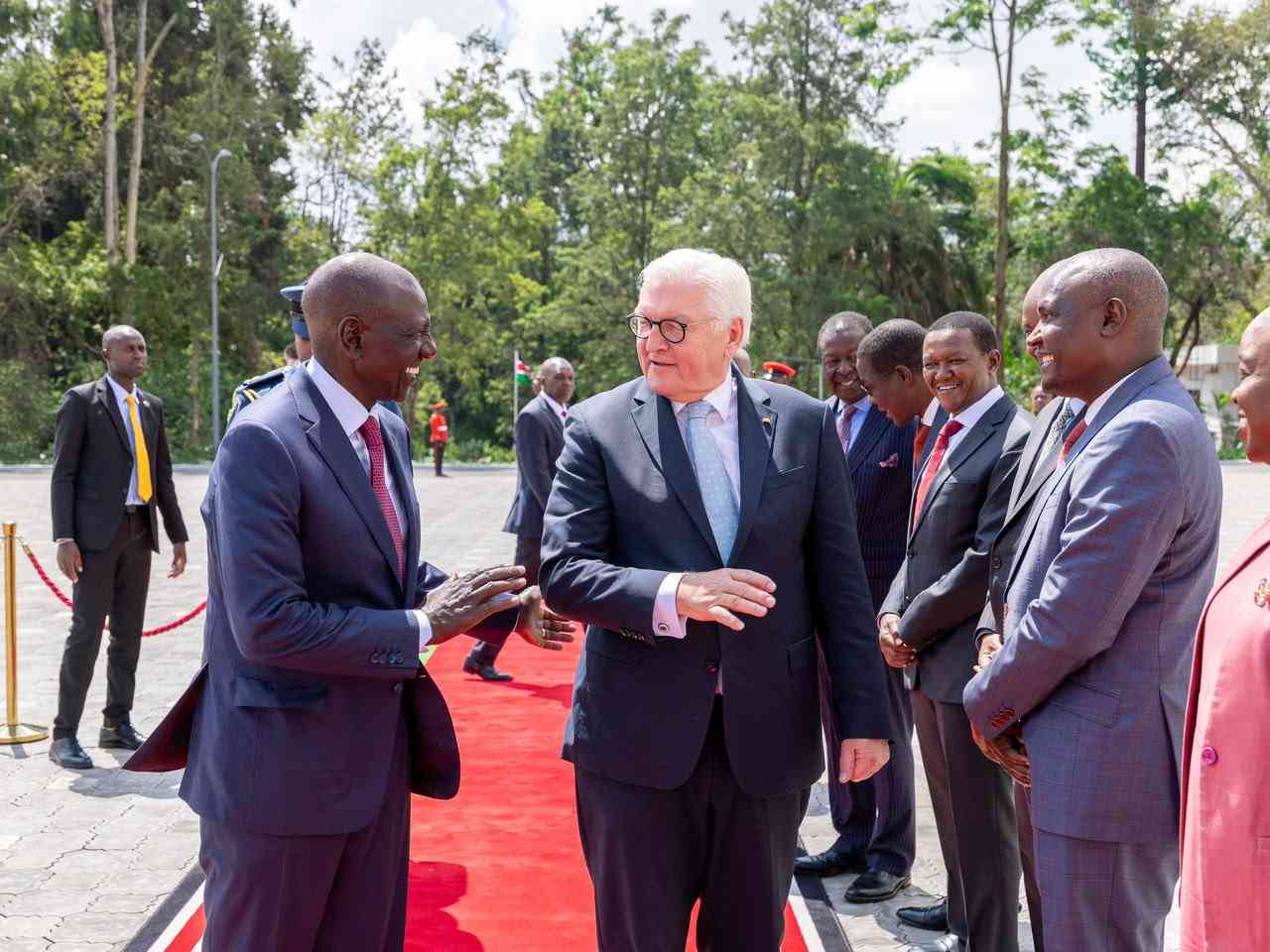
The number of Kenyans employed in Germany rose to 9,500 in March 2026 from 7,000 two years earlier, President William Ruto has announced.
Ruto attributed the increase to growing employment opportunities under the Comprehensive Migration and Mobility Partnership Agreement (CMMPA) between Kenya and Germany, which seeks to create pathways for skilled workers and trainees.
He also revealed that the number of Kenyan trainees contributing to Germany's social security system increased from 820 in March 2024 to 1,260 in March 2026.
The President made the announcement during a joint press conference with German President Frank-Walter Steinmeier at State House, Nairobi, on Wednesday, November 25, following bilateral talks between the two leaders.
Kenya and Germany signed the CMMPA in Berlin on September 13, 2024. It came into force on October 18, 2024, establishing a framework for cooperation in employment, vocational training, skills development and the protection of migrant workers.
The agreement also provides for cooperation in addressing irregular migration and the return of people who do not have the legal right to remain in either country.
Germany has been seeking skilled workers to address shortages in its labour market as its population ages. Its Federal Employment Agency (BA) identified 157 occupational categories facing skills shortages in 2025, including healthcare, construction and skilled trades.
Ruto said the two governments had discussed measures to streamline visa and recruitment procedures, expand language training and speed up the recognition of professional qualifications to help more Kenyans access employment opportunities.
The discussions also covered vocational training programmes aimed at equipping Kenyans with skills that respond to the needs of the German economy.
The two leaders explored further opportunities for Kenyan seafarers through specialised training, sea-time placements and partnerships with German shipping companies.
Their discussions also covered sustainable shipping, maritime logistics and investment in the sector, drawing on Germany's maritime expertise and Kenya's strategic position in the region.
Beyond employment, Ruto invited German companies to increase investment in Kenya, identifying manufacturing, agro-processing, infrastructure, healthcare, renewable energy and digital technology as priority sectors.
He said Kenya wanted to deepen partnerships between local and German enterprises, including joint ventures in manufacturing and integration into global value chains.
The President also pointed to opportunities for expanding Kenyan exports to Germany and the wider European market under the Kenya-European Union Economic Partnership Agreement (EPA).
He identified cut flowers, avocados and fresh vegetables among products with export potential, while calling for efforts to address market access barriers and help Kenyan exporters meet international quality standards.
Stay informed. Subscribe to our newsletter
The two countries also discussed agricultural cooperation in mechanisation, irrigation, climate-smart farming, post-harvest management and food chain infrastructure.
Ruto said the objective was to improve agricultural productivity, raise farmers' incomes, create jobs and strengthen food security.
The President also announced the conclusion of technical negotiations on a mutual data adequacy arrangement between Kenya and the European Union (EU).
He said the arrangement, once adopted and implemented, would facilitate secure cross-border data transfers, expand digital trade and strengthen Kenya's competitiveness in business process outsourcing (BPO) and digital services exports.
Ruto called for Germany's support in facilitating the adoption and implementation of the respective adequacy decisions.
He said the arrangement would create opportunities for Kenyans to access global employment through the digital economy.
The discussions also covered cooperation in digital public infrastructure, artificial intelligence (AI), cybersecurity and scientific research, including partnerships between universities, research institutions and technology companies.
On renewable energy, Ruto said Kenya was seeking German investment and technology in geothermal power, green hydrogen, energy storage and green infrastructure.
He described the energy transition as an opportunity to accelerate green industrialisation, strengthen manufacturing competitiveness and expand exports.
The President also thanked Germany for supporting the government's Shirika Plan, which seeks to move refugees from prolonged encampment and humanitarian dependency towards integrated settlements and self-reliance.
He called for continued cooperation in creating economic opportunities for refugees and host communities, noting that sustainable solutions to displacement must also address the conflicts and instability that drive it.
The two leaders further discussed cooperation in counter-terrorism, maritime security, military training and peace-support operations.
Ruto said Kenya appreciated Germany's contribution to peace and security initiatives in Africa and welcomed closer cooperation between the two countries.
The discussions also covered cultural relations, tourism and academic exchanges, with the President saying the two governments needed to translate their commitments into measurable outcomes for citizens.



Subscribe to our newsletter and stay updated on the latest developments and special offers!