×

The Standard e-Paper
Join Thousands Daily
 The Standard Group Plc is a
multi-media organization with investments in media platforms spanning newspaper
print operations, television, radio broadcasting, digital and online services. The
Standard Group is recognized as a leading multi-media house in Kenya with a key
influence in matters of national and international interest.
The Standard Group Plc is a
multi-media organization with investments in media platforms spanning newspaper
print operations, television, radio broadcasting, digital and online services. The
Standard Group is recognized as a leading multi-media house in Kenya with a key
influence in matters of national and international interest.

Audio By Vocalize
Midnight had fallen over Jantar Mantar in New Delhi. The chants had faded, protest banners folded away and thousands of demonstrators leaving the streets after weeks of occupying the area near India's Parliament. Against unexpected odds, they had won. The government accepted key education reform demands, and Education Minister Dharmendra Pradhan resigned. A movement born from a single insult dented Prime Minister Narendra Modi's carefully cultivated strongman image.
No serious group would willingly call themselves a cockroach. Yet India's Generation Z did exactly that, transforming a word meant to demean them into a potent political identity. The movement's founder, Abhijeet Dipke, sparked a national conversation with a simple question on X: "What if all cockroaches come together?"
His post was a direct response to remarks attributed to India's Chief Justice, who had casually described unemployed youth as "cockroaches." Rather than reject the insult, India's youth reclaimed it, transforming a term of contempt into a national rallying cry for dignity and systemic reform.
A leaked medical examination paper exposed structural frustrations that had been building for years: unemployment, repeated examination scandals, shrinking economic opportunities, and a growing distrust in public institutions.
India also demonstrated that even politically dominant governments can be compelled to respond to sustained public pressure. The resignation of Education Minister Dharmendra Pradhan proved no administration, regardless of its perceived political strength, is entirely insulated from a generation united by shared grievances and organised through modern digital platforms.
Careless political rhetoric rarely creates public anger entirely on its own. Instead, it activates deep-seated frustrations that already exist beneath the surface of daily life. A single careless remark can unite diverse groups of people who previously shared little except a common sense of socio-economic exclusion.
History offers recurring examples. During the 2016 US presidential campaign, Donald Trump's "nasty woman" remark was instantly embraced as #NastyWoman, becoming a major rallying cry for women activists. Conversely, Hillary Clinton's "basket of deplorables" comment was proudly adopted by millions of Trump supporters. In both instances, intended insults were swiftly transformed into enduring political identities.
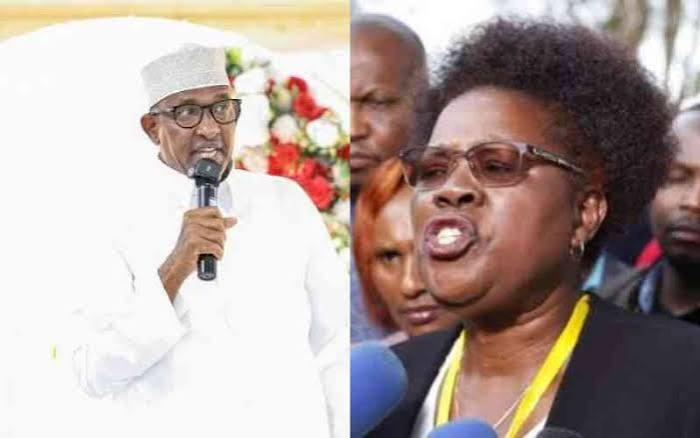
If India demonstrates how a careless label can evolve into a formidable movement, Kenya has recently shown how quickly political rhetoric can reshape political identities. Remarks by CS Aden Duale in Lafey on July 20, 2026, widely interpreted as a slur against the Mt Kenya community, sparked intense national controversy.
The matter quickly reached the floor of the Senate, prompted formal petitions before the High Court over leadership standards, and initiated an official investigation by the National Cohesion and Integration Commission (NCIC). The debate even fractured the Cabinet itself, drawing public criticism from Lands CS Alice Wahome, while Duale maintained his remarks had been taken out of context.
Outside the formal political arena, something equally revealing happened across social media. Many users identifying with the Kikuyu community changed their profile pictures and proudly declared, "I am a hyena," while promising political consequences at the ballot box. The public response illustrated how communities can reclaim labels intended to demean them and turn them into powerful symbols of political solidarity.
The political danger is not merely that offensive language hurts feelings; it is that it unlocks broader, lingering societal frustrations. Movements across Bangladesh and Nepal illustrate a similar lesson: seemingly isolated triggering incidents rapidly evolve into broader youth movements when they tap into long-standing frustrations over governance and accountability.
Kenya would be unwise to dismiss those lessons. Millions of youth are currently grappling with unemployment, rising cost of living, and declining trust in public institutions. Under such volatile economic conditions, political leaders must understand that careless rhetoric can easily become the catalyst that transforms private frustration into organised public action.
Rwanda offers an enduring and sobering reminder of where dehumanising language can ultimately lead. Before and during the 1994 Genocide against the Tutsi, political extremist propaganda repeatedly referred to Tutsis as "cockroaches," systematically stripping citizens of their humanity and normalising hatred long before mass violence erupted.
Stay informed. Subscribe to our newsletter
Kenya's democratic circumstances are different, but the core lesson endures: words shape human attitudes long before those attitudes shape historical actions. More than two thousand years ago, James warned that "the tongue is a fire" (James 3:5–6), while musician Joe Jones famously sang, "You talk too much." Separated by centuries, both expressed the same fundamental truth: words matter. Politicians may speak for a brief moment, but their words shape political identity, and ultimately, the future of a nation.
-The writer is a governance analyst.







Subscribe to our newsletter and stay updated on the latest developments and special offers!







 join
join