
 The Standard Group Plc is a multi-media organization with investments in media
platforms spanning newspaper print
operations, television, radio broadcasting, digital and online services. The
Standard Group is recognized as a
leading multi-media house in Kenya with a key influence in matters of national
and international interest.
The Standard Group Plc is a multi-media organization with investments in media
platforms spanning newspaper print
operations, television, radio broadcasting, digital and online services. The
Standard Group is recognized as a
leading multi-media house in Kenya with a key influence in matters of national
and international interest.

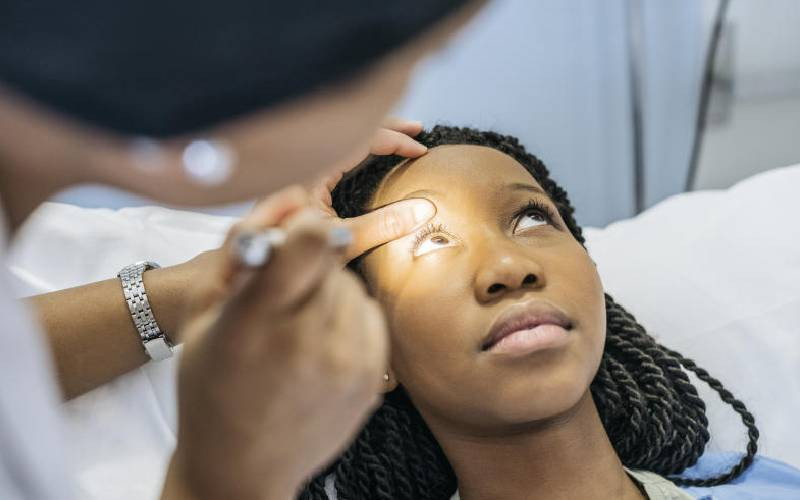
Samson Kambi, 71, is the main breadwinner in his family, alongside his son. He has one son and two daughters, all of whom are married, and lives with his son in Kokotoni, Rabai Sub-County, Kilifi County.
When cataracts developed in his eyes, Kambi grew increasingly anxious, knowing that worsening vision would eventually rob him of his livelihood and his ability to support his family.
As his sight deteriorated, he was forced to stop working altogether, placing the full responsibility of providing for the household on his son. Kambi has been completely blind in both eyes for the past two years due to bilateral cataracts.
His experience reflects a broader crisis facing many residents in remote parts of the county, where chronic eye conditions such as cataracts and glaucoma are common. Limited access to healthcare and the high cost of treatment mean that many people lose their sight simply because they cannot afford medical attention.
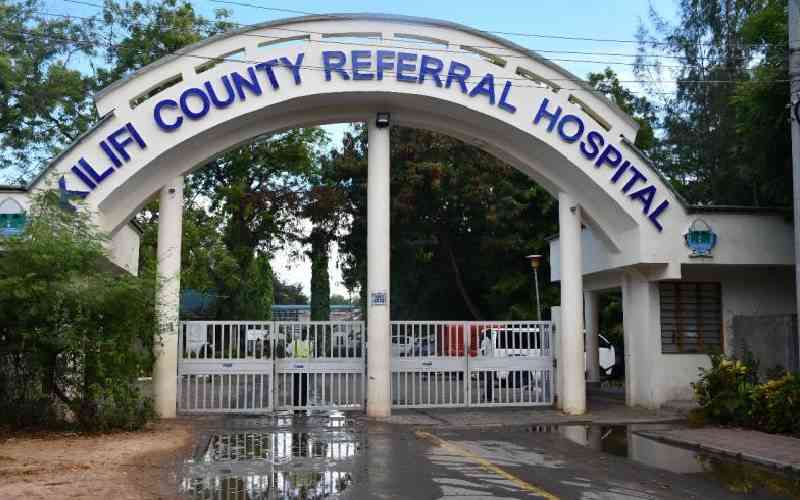
Earlier this year, Kambi’s son, Chengo, learned of an outreach programme offering free cataract surgeries at Kilifi County Referral Hospital and urged his father to seek help.
Initially sceptical, Kambi eventually agreed and embarked on a bumpy two-hour journey to the hospital, accompanied by four friends who were also suffering from eye diseases.
- Experts warn of rising preventable blindness in Kenya
- Kilifi residents benefit from free cataract surgery
- Trachoma: Poor hygiene, shared shelters fuel blindness in Samburu
- Nakuru residents benefit from free cataract surgeries
Keep Reading
“I have been blind for the last two years. My life has been restored,” Kambi says.
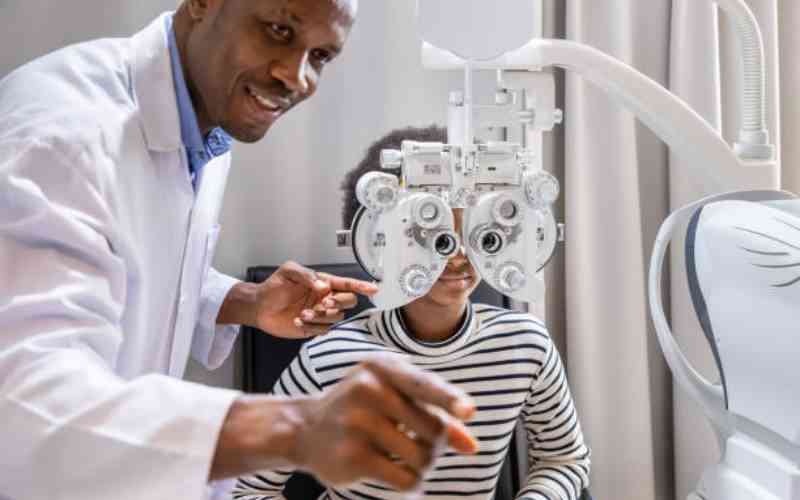
He was among dozens of villagers who underwent cataract surgery performed by a surgeon and a team of ophthalmic nurses at the hospital. After the procedure, Kambi wore an eye patch for several days and was advised to allow his eye to gradually adjust to sunlight. Within a short time, his sight was fully restored.
Long journeys
Hundreds of villagers who had lost their sight found their way to the hospital with the help of relatives, trekking for hours. Many had been blind for months, years, or even decades due to cataracts, the hardened, clouded lens tissue responsible for most cases of blindness worldwide.
Each patient underwent a twenty-minute microsurgery in a temporary field hospital, where medical teams worked with assembly-line efficiency, making tiny incisions and delicately removing cataracts.
Here, cataracts are not merely a condition of old age; they also affect the very young, often caused by infections and malnutrition.
Among those waiting to have their lives restored was 67-year-old Jumwa Katana. She had suffered from cataracts in both eyes for several years and had been completely blind for the past year. Unable to continue her work as a farmer, she now lives with her children.
Her life changed dramatically as her vision deteriorated, and everything began to appear like smoke. She could no longer enjoy cooking, her favourite activity, nor could she collect firewood from the forest to sell. Without an income, she became dependent on family and neighbours for food.
Jumwa lives in the remote and impoverished village of Tsangalaweni and did not know where to turn for help.
Restored dignity
For various reasons, medical teams rarely reach remote areas, contributing to a growing burden of chronic eye diseases that often lead to vision loss.
Blindness is believed to be widespread in many isolated villages, largely due to untreated cataracts. “I feel like a burden and have to ask for help with everything — washing, eating. I do not feel free,” she says.
For both Kambi and Jumwa, the chance to regain their sight means the possibility of returning to active, independent lives within their communities.
Just twenty-four hours after surgery, a nurse removes the bandages. One by one, the eye patches are lifted, and the world slowly comes back into focus.
Eye specialists explain that cataracts can be caused by eye injury and inflammation, prolonged exposure to intense heat, hereditary factors, smoking, long-term use of certain oral steroids, and diabetes.
Kilifi County Referral Hospital has been running outreach programmes to restore sight, with funding support from the Fred Hollows Foundation.
County ophthalmologist Dr Geofrey Anaya says cataracts remain one of the leading causes of blindness in the region, largely because many residents seek medical help only after their vision has significantly deteriorated.
“With the support of ophthalmic nurses, we have perfected small-incision cataract surgery, which takes just minutes during community outreaches,” he explains.
“When we began, there was a huge backlog of cataract blindness in Kilifi. We thought it would take a lifetime to address. But so far, we have performed more than 399 cataract surgeries, and encouragingly, people are now seeking treatment much earlier.”
Dr Anaya adds that poverty and limited access to healthcare continue to drive preventable blindness in the county. Leading the outreach team, he says his mission is simple but resolute: “My goal is to lead Kilifi out of darkness, one patient at a time.”
“The moment the patch comes off, there is first confusion, then recognition, and finally pure, unadulterated joy. I never get tired of witnessing that.”
Remote outreach
According to the Kilifi Department of Medical Services, at least 100,000 residents suffer from eye-related diseases, with more than 7,999 people — including children — living with blindness.
Medical Superintendent Dr Gilbert Angore says the programme is not limited to the referral hospital, as medical teams regularly travel to remote villages to screen residents who would otherwise struggle to access health facilities
“Ageing and diabetes are the biggest contributors to cataracts here. In the past two weeks alone, we have treated more than 1,000 patients,” he says.
Cataracts account for 39 per cent of visual impairment cases in the county, followed by glaucoma at 15 per cent. Glaucoma is caused by increased pressure in the eye, damaging the optic nerve and leading to irreversible blindness.
Nearly 940 villagers from remote parts of Kilifi have recently undergone eye surgery.
As bandages are removed, faces light up with quiet joy and wonder. Some patients break into smiles or laughter, while others gaze in awe at familiar landscapes and the faces of loved ones they had not seen for years.
“There is a special thrill when the bandage is removed and a person sees for the first time who changed their world,” says Mary Kalu, an ophthalmic nurse at Malindi General Hospital.
“Once someone goes blind in the developing world, their life expectancy drops to about one-third that of a healthy person. Restoring sight not only transforms their life but also frees their family,” she adds.
Doctors continue to urge residents experiencing eye discomfort or vision changes to seek early screening, warning that many cases of blindness can be prevented with timely treatment.





 join
join