
 The Standard Group Plc is a multi-media organization with investments in media
platforms spanning newspaper print
operations, television, radio broadcasting, digital and online services. The
Standard Group is recognized as a
leading multi-media house in Kenya with a key influence in matters of national
and international interest.
The Standard Group Plc is a multi-media organization with investments in media
platforms spanning newspaper print
operations, television, radio broadcasting, digital and online services. The
Standard Group is recognized as a
leading multi-media house in Kenya with a key influence in matters of national
and international interest.

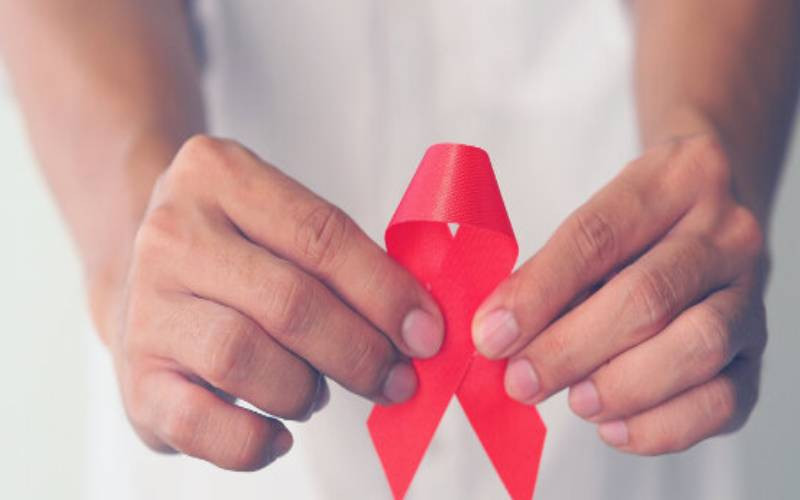
For decades, HIV has been framed largely as a biomedical crisis, one defined by infection rates, treatment access, and viral suppression. But at a time when new infections among adolescents persist across Africa, a growing number of health experts are challenging that narrow framing.
Their argument is increasingly blunt: HIV is not just a virus problem; it is a power problem.
At the World Health Summit Regional Meeting in Nairobi, health leaders, researchers, and advocates converged around a shared concern, the stubborn burden of HIV, early pregnancy, and gender-based violence among adolescents and young people, often referred to as the “triple threat”.
Despite years of programmes, funding, and policy commitments, progress remains uneven, especially for adolescent girls and young women. Experts now say the gap is not simply in interventions, but in how those interventions are designed, who they serve, and who holds decision-making power.
Power imbalance
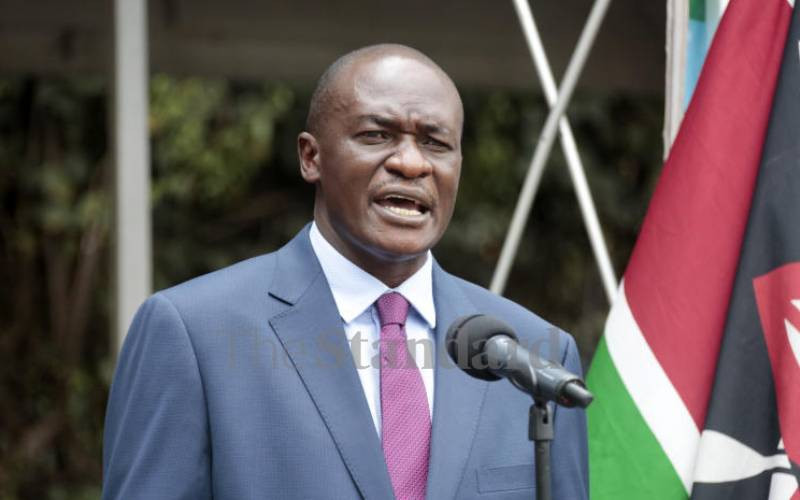
Speaking at the summit, Dr Samuel A. Ojong, Health Manager at the United Nations Children’s Fund (UNICEF), said the persistent fragmentation of adolescent health programmes is not accidental.
“It is fragmentation by design, and it is costing lives. HIV is not a virus problem. It is a power problem,” he said.
Dr Ojong said the continued vulnerability of adolescents reflects deeper structural inequalities that shape access to health, education, and protection.
- Africa must own its health crisis
- Why the rising healthcare spending has failed to heal a country on its sickbed
- Kenya's healthcare training evolves with career choices
- Break free from anxiety's grip: Face your fears and train your brain to feel calmer
Keep Reading
“We are speaking about adolescents who are old enough to vote, to work, even to serve in institutions we design for them,” he said. “But they are not trusted to decide, to lead, or to shape the systems that govern their lives.”
He stressed that adolescent health outcomes are driven less by biology and more by social and political environments.
“This is not just a health issue,” he said. “It is a question of power, autonomy, and justice.”
According to Dr Ojong, framing HIV, teenage pregnancy, and violence as isolated adolescent problems masks the real issue.
“The real issue is the vulnerability of young people to systemic and structural risks created and sustained by adults,” he said.
He added that what is prioritised in health systems, and what is ignored, is ultimately determined by those in power, often leaving adolescents unheard.
The statistics underline the urgency of that argument.
Youth Vulnerability
Data from the National AIDS and STI Control Programme (Nascop) shows adolescents and young people continue to account for a significant proportion of new HIV infections in Kenya.
In 2023, the country recorded 22,154 new HIV infections, with about 41 per cent occurring among those aged 15–24.
Across sub-Saharan Africa, the burden is even heavier. The United Nations Children’s Fund (UNICEF) and UNAIDS estimate that the region accounts for about 86 per cent of adolescents living with HIV globally. In 2024 alone, around 370,000 young people aged 15–24 were newly infected, most of them in sub-Saharan Africa.
The epidemic is also deeply gendered. Around 75 per cent of new infections among adolescents in the region occur among girls and young women, who are up to three times more likely to acquire HIV than boys of the same age.
UNICEF further estimates that more than 4,000 adolescent girls and young women are infected every week globally. Yet testing gaps remain wide, with fewer than a third of adolescent girls in Eastern and Southern Africa having tested for HIV in the past year.
Experts say these figures point to a structural crisis rather than a purely medical one, driven by inequality, limited access to services, and lack of agency.
Cultural change
Gender specialist Dr Mary Jimoh argues that cultural shifts have significantly altered how adolescents learn about their bodies and relationships.
“In the past, there were structured ways of teaching adolescents about their bodies, at home, at school, even through cultural systems. But that is changing,” she said.
She pointed to traditional systems where boys and girls were guided through puberty and sexuality education in community settings, systems she says are rapidly disappearing.
“Now, that system is largely gone. We have moved many of these conversations into hospitals or removed them altogether. What we have lost is not just tradition, but education and communication,” she said.
Dr Jimoh warned that digital platforms are increasingly filling that gap, often without accuracy or guidance.
“Is culture now coming from WhatsApp groups? From TikTok?” she asked.
“Because if that is the case, then we are losing control over how young people understand their bodies and relationships,” she asserted.
She also raised concerns about inequities in access to sexual and reproductive health services, particularly in rural areas where information and commodities remain limited.
“Even when we talk about condoms, who is ensuring they are available in rural communities? And when we talk about HIV prevention, who is teaching young people how to use them properly?” she asked.
Beyond HIV, she highlighted menstrual health challenges and untreated reproductive health conditions that often go unaddressed, particularly among adolescent girls.
She warned that adolescent health cannot be separated from the cultural systems that shape behaviour and access to care.
“Any programme or intervention must take cognisance of these cultural shifts,” she said.
“We must reprogramme how we engage communities and ensure young people have agency to take charge of their lives,” she added.
Her remarks reinforced a broader theme emerging from the summit: adolescent health challenges are deeply interconnected and rooted in structural inequalities.
Interlinked crisis
“We are not dealing with three separate crises. We are dealing with one interconnected system of vulnerability,” Dr Ojong said.
Dr Fatou Wurie, founder of Youterus Health, argues that meaningful change will only come when young people’s lived realities are placed at the centre of health system design.
She says the answers lie in confronting power directly.
“We keep speaking to power,” she said. “And we keep saying we cannot have these conversations without addressing power.”
Dr Wurie argues that what is often described as policy or funding gaps is, in reality, a deeper crisis of power and inequality.
“This is not just about policy gaps or economic gaps,” she said.
“What we are really describing is one crisis running through the same body, in the same community, at the same time, repeating itself across the continent and across generations,” she continued.
She traces vulnerability to early adolescence, often beginning with menstruation, where many girls experience shame, silence, and inadequate support systems.“Sometimes we focus only on whether a girl has access to pads or sanitation,” she notes.
“But we forget that her first experience of menstruation may already be shaped by pain, fear, and a lack of understanding of her own body.”
She adds that many adolescent girls grow up in environments where violence is not distant, but familiar, often occurring within trusted relationships.
These overlapping risks are reflected in broader health outcomes.
Early pregnancy remains a leading cause of health complications among adolescent girls globally, while newborns of adolescent mothers face higher risks of low birth weight and neonatal mortality.
Gender-based violence further compounds vulnerability, increasing the risks of HIV infection and unintended pregnancy.
Yet services addressing violence, HIV, and reproductive health often remain disconnected.





 join
join