×

The Standard e-Paper
Join Thousands of Readers
 The Standard Group Plc is a multi-media organization with investments in media
platforms spanning newspaper print operations, television, radio broadcasting,
digital and online services. The Standard Group is recognized as a leading
multi-media house in Kenya with a key influence in matters of national and
international interest.
The Standard Group Plc is a multi-media organization with investments in media
platforms spanning newspaper print operations, television, radio broadcasting,
digital and online services. The Standard Group is recognized as a leading
multi-media house in Kenya with a key influence in matters of national and
international interest.

Audio By Vocalize
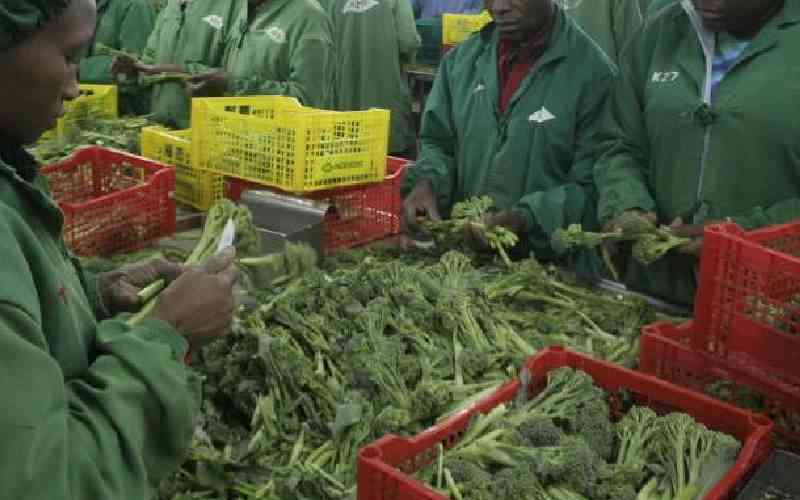
Avenews, an agri-fintech company, and the Fresh Produce Consortium of Kenya (FPCK) have announced a strategic partnership that aims to address a critical cash flow constraint within Kenya’s fresh produce sector.
The collaboration introduces a financing solution that enables produce suppliers to access working capital within hours of delivery, reducing reliance on extended payment cycles of up to 90 days. At the centre of the initiative is Agri-Supplier Financing, an invoice discounting solution that converts verified receivables into immediate cash.
This allows fresh produce suppliers, distributors, aggregators, and exporters to restock, fulfil orders, and maintain a consistent supply without waiting for delayed payments.
Jonathan Tselon, CEO of Avenews, said the company understands that the fresh produce value chain operates as a just-in-time, perishable business where every hour counts.
“At Avenews, we understand that the fresh produce value chain operates as a just-in-time, perishable business where every hour counts. Access to immediate, flexible capital is not a luxury; it is what keeps the entire value chain alive,” Tselon says.
“This is why we continue to innovate smart financing solutions for agribusinesses that move at the speed of trade, not the convenience of traditional financial systems.”
The partnership was launched at a joint dinner workshop held in Nairobi, bringing together over 100 members of the Fresh Produce Consortium of Kenya and key stakeholders across the value chain.
By aligning financing with the pace of trade, the solution enables businesses to operate continuously, maintain supply cycles, and reduce dependence on informal or high-cost credit. It directly addresses what industry players identify as a structural constraint in the sector.
Okisegere Ojepat, CEO of the Fresh Produce Consortium of Kenya, explained that in a sector defined by perishability and tight timelines, delays in financing can disrupt shipments, strain supply relationships, and result in product loss.
“In a sector defined by perishability and tight timelines, delays in financing can disrupt shipments, strain supply relationships, and result in product loss. One of the biggest barriers to entry is access to timely, tailored financing,” he says.
Ojepat added that through the partnership with Avenews, they are addressing this gap and opening the door for more entrepreneurs, especially youth and women, to participate and grow within the fresh produce value chain.
“Our industry already supports over 3 million people directly and indirectly, and with these solutions in place, we are looking at scaling that impact to over 10 million livelihoods across the country,” he said.
Nancy Kinyanjui, Managing Director of Avenews, said the partnership reflects a broader shift toward embedded financing models, where capital is structured around real economic activity and trade flows, rather than traditional lending timelines.
“We are working one value chain at a time to fix long-standing structural gaps in agribusiness, unlocking capital through practical, time-based financial solutions that support, rather than slow, the movement of goods,” she said.
She added that the result is a more resilient and efficient ecosystem, where businesses are no longer constrained by payment delays but are enabled by financing that moves with trade.
Stay informed. Subscribe to our newsletter

Subscribe to our newsletter and stay updated on the latest developments and special offers!













 join
join