
 The Standard Group Plc is a multi-media organization with investments in media
platforms spanning newspaper print
operations, television, radio broadcasting, digital and online services. The
Standard Group is recognized as a
leading multi-media house in Kenya with a key influence in matters of national
and international interest.
The Standard Group Plc is a multi-media organization with investments in media
platforms spanning newspaper print
operations, television, radio broadcasting, digital and online services. The
Standard Group is recognized as a
leading multi-media house in Kenya with a key influence in matters of national
and international interest.

A global body that monitors and provides data on large-scale land acquisitions has revealed that carbon offsets are ‘false’ climate solutions.
In its latest report, the Land Matrix surveyed carbon land deals dating back to the year 2000.
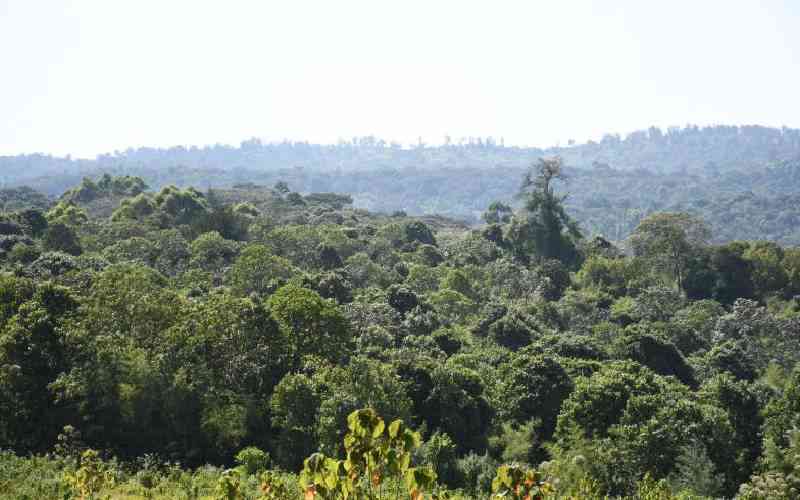
The deals included projects aimed at avoiding deforestation, restoring wetlands, planting trees, and managing grasslands.
“In this report, we investigate the rising pressure from large-scale land acquisitions for carbon offsetting, covering both domestic and transnational deals, and examine their role in driving land acquisition,” the report stated.
Carbon markets allow companies to purchase carbon credits instead of directly reducing their own emissions through equivalent reductions elsewhere. Carbon credits are issued by registries that certify projects which avoid, reduce, or remove greenhouse gas (GHG) emissions.
The growth of carbon markets has expanded in recent years, driven by demand from companies seeking to achieve carbon neutrality.
- Eat to live: How your plate could save the planet
- State moves to reform radioactive waste care policies
- Nuclear power can light up Kenya but radioactive waste disposal poses risks
Keep Reading
However, the integrity of these projects has been called into question due to overestimation of emission reductions.
The carbon projects also require extensive land resources, raising concerns among indigenous communities over the acquisition of large tracts of land.
By July 2025, the Land Matrix database indicated that it had recorded 217 land-based carbon offset projects at various stages of implementation worldwide
These projects had either secured land access through large-scale land acquisitions after 2000 or were in the process of doing so.
The total area of carbon offset projects—close to nine million hectares is based on initiatives begun after 2000.
However, the report noted that transparency is limited for some projects, particularly grouped initiatives, making it difficult to assess whether new land acquisitions have actually taken place.
“At the same time, negotiations have been entered into for millions of hectares of additional land, such as in the case of the Dubai-based investor Blue Carbon, which has signed MoUs or frameworks of collaboration with several African countries, including Angola, Kenya, Liberia, Tanzania, Zambia, and Zimbabwe, covering an area comparable to the size of Great Britain,” the report revealed.
It added: “Yet, these deals remain highly opaque, and it is unclear whether they will rely on state land—likely state forests—where only carbon rights are transferred, or whether they will involve leases and concessions that hand investors full territorial control.”
In the new report, Land Matrix highlighted that, beyond the actual mitigation potential of the voluntary carbon markets, the current state of the sector remains questionable due to overstated claims regarding emissions reductions.













 join
join